Immigrant Voices That Are Redefining the American Story

Just as the landscape of America continues to evolve, so too do the narratives that shape your understanding of this nation. Immigrants from diverse backgrounds are not only adding layers to the cultural fabric but also challenging and transforming the traditional American story. In this post, you’ll explore the powerful stories and contributions of these voices, shedding light on how their experiences enrich your worldview and redefine what it means to be American today.

Breaking Stereotypes: Immigrant Narratives That Challenge Perceptions

Immigrant stories often counteract prevailing stereotypes, illustrating the complex realities faced by diverse communities. These narratives not only spotlight resilience but also highlight the contributions immigrants make to society, challenging outdated prejudices and biases through their lived experiences.

  • Highlighting diverse backgrounds and professions
  • Sharing moments of courage and innovation
  • Emphasizing an interwoven future with American culture
  • Fostering understanding and empathy through storytelling
  • The power of personal narratives to shift public discourse

The narratives you encounter reveal how personal experiences intricately weave together to challenge perceptions and reshape collective understanding.

Personal Stories of Triumph: Voices from the Frontlines

Stories of triumph reflect the spirit and determination of immigrants overcoming obstacles. From success in business to advocacy work, these voices encapsulate the journey of perseverance through hardships. For instance, consider the immigrant entrepreneur who started a food truck, not just to provide for their family but also to share their cultural heritage through cuisine, directly impacting the local community.

The Role of Media in Shaping Immigrant Identity

Media plays a significant part in presenting immigrant narratives, affecting public perception and relations. Through films, documentaries, and journalism, these platforms have the ability to humanize stories, breaking down stereotypes. Realistic portrayals can dismantle biases, allowing audiences to see beyond statistics and instead connect with individual experiences.

Engaging with multimedia platforms allows you to explore diverse immigrant stories in depth. Films like “The Farewell” and series such as “Master of None” present nuanced perspectives on the immigrant experience, showcasing both struggles and achievements. Documentaries shed light on socio-political issues while news outlets highlight current challenges faced by immigrant communities. This dynamic exchange not only amplifies voices but also raises awareness, fostering a more inclusive dialogue that shapes a multifaceted understanding of identity in the American landscape. The representation of immigrant stories in media has propelled engagement and sparked conversations about race, culture, and belonging, making it a pivotal factor in shaping modern American identity.

Cultural Renaissance: Flourishing Art and Innovation

Immigrants have breathed new life into the American cultural landscape, infusing it with vibrant artistic expressions and innovative ideas. From the murals of street artists in urban neighborhoods to the culinary masterpieces showcased in renowned restaurants, the creative output of immigrant communities is redefining the very essence of American art and culture. This renaissance not only celebrates diverse heritages but also draws on rich histories, transforming them into contemporary narratives that resonate with all of us.

The Influence of Diverse Cultures on American Art

Your understanding of American art fundamentally changes when you recognize the multitude of cultural perspectives that shape it. Artists from various backgrounds have introduced new styles, techniques, and themes, allowing for a captivating fusion that reflects a tapestry of experiences. The contributions of artists from Latin America, Asia, Africa, and Europe illustrate the importance of storytelling through a diverse lens, ensuring that the American narrative includes a rich array of voices and visions.

How Immigrants are Leading Technological Advancements

Immigrants stand at the forefront of technological innovation in the United States, driving advancements that have serious implications for the global economy. Your smartphone’s software, the latest in artificial intelligence, and breakthrough medical technologies often trace back to the ingenuity of immigrant entrepreneurs and engineers. This diverse talent pool, representing over 30% of U.S. entrepreneurs, continually propels industries forward, fueling economic growth and creating new job opportunities for everyone.

Consider the profound impact of tech-focused immigrant communities, such as the rise of Silicon Valley. Founders from around the world, including individuals like Sergey Brin (co-founder of Google) and Elon Musk (CEO of SpaceX and Tesla), demonstrate how their unique backgrounds help shape revolutionary ideas. Furthermore, a 2020 report from the National Foundation for American Policy revealed that immigrants founded more than half of U.S. startups valued at over $1 billion. By integrating diverse perspectives and problem-solving approaches, these innovators are not just transforming technology; they are redefining what it means to innovate in America.

The Economic Impact: Immigrants as Catalysts for Growth

Immigrants significantly bolster the American economy, fueling job creation and stimulating innovation. Their contributions span various sectors, from agriculture to tech, enhancing productivity and creating a diverse labor force. As backbone industries evolve, immigrant participation becomes increasingly vital, showcasing their role as not just workers but as key players driving economic expansion.

Contributions to Key Industries: A Statistical Analysis

Immigrants comprise nearly 17% of the workforce yet account for over 23% of the labor force in critical sectors like agriculture, construction, and healthcare. Their willingness to take on roles often viewed as less desirable is instrumental in keeping these industries thriving. For instance, without immigrants, the agricultural economy could see a dramatic reduction in productivity, estimated at over $60 billion annually.

Entrepreneurial Spirit: Immigrants Driving Small Business Development

Your understanding of the economic landscape will reveal that immigrant entrepreneurs are pivotal in sparking local economies. They launch businesses at rates much higher than their native-born counterparts, creating jobs and fostering innovation. Statistically, immigrants founded 25% of all new businesses in the last decade, highlighting their role in dynamic economic growth.

This entrepreneurial spirit drives innovation across industries, transforming the American marketplace. For instance, consider the tech startup boom where immigrant founders like Sergey Brin (Google) and Elon Musk (Tesla) have made substantial impacts. Small businesses owned by immigrants not only enrich local cultures but also produce tangible economic benefits, generating over $60 billion in annual sales. Your community thrives as these businesses open, providing goods, services, and thousands of jobs, thus illustrating the invaluable role immigrants play in shaping the American economic narrative.

Bridging Divides: Immigrants as Community Builders

Immigrants play a vital role in bridging divides within communities, bringing diverse perspectives and experiences that foster unity. By actively engaging in local organizations, they create inclusive spaces that celebrate multiculturalism and shared values. Your neighborhood thrives as immigrants initiate programs that address communal needs, strengthen local economies, and cultivate resilience among residents. These efforts demonstrate how embracing diversity can turn differences into advantages, forging strong connections among various demographics.

Fostering Inclusivity Through Advocacy and Activism

Advocacy and activism serve as powerful tools for immigrants to advocate for their rights and the rights of their communities. You witness firsthand how grassroots organizations emerge from immigrant populations to address pressing social issues, demonstrating their commitment to inclusivity and equity. These initiatives often build coalitions that amplify voices historically marginalized, creating a ripple effect that nurtures solidarity across communities.

Real Stories: Immigrant-Led Community Successes

Many immigrant-led initiatives have transformed neighborhoods into thriving centers of growth and opportunity. For instance, the Immigrant Services Coalition in San Diego has successfully launched various job-training programs that empower newcomers with skills to advance in the workforce. These success stories not only enhance individual lives but also contribute to the economic vitality of their communities, showcasing the remarkable resilience and determination of immigrant populations in effecting positive change.

In Philadelphia, the New Americans Advisory Council brings together immigrants to address specific challenges, leading to increased access to healthcare and educational resources. By fostering collaboration, such initiatives showcase how immigrant voices can drive systemic change and improve overall community well-being. Furthermore, organizations like the Asian American Federation highlight the collective achievements of diverse immigrant groups, proving that when people come together, they can create remarkable outcomes that benefit everyone. The stories of these community successes reinforce the idea that immigrants are not just residents but imperative architects of a richer, more inclusive American narrative.

Lessons from Diverse Experiences: Shifts in Policy and Perspective

Understanding how immigrant narratives shape policies provides insight into a more inclusive future. As advocacy efforts evolve, policies reflecting the realities of immigrant experiences become increasingly prevalent, driving significant reform. Recently, grassroots movements have pushed lawmakers to reconsider rigid immigration laws, resulting in legislation that prioritizes the protection of vulnerable populations. These changes indicative of shifting public sentiment demonstrate how your voice and collective actions can influence policy, create community support structures, and foster a sense of belonging for everyone.

The Evolution of Immigration Policy Through Immigrant Advocacy

Immigrant advocacy has been instrumental in shaping progressive immigration policies. Organizations like the American Civil Liberties Union (ACLU) and United We Dream have campaigned for equitable practices, bringing attention to issues like family separation and the undocumented status of many laborers. As these groups amplify immigrant voices, they engage and educate the public, fostering empathy and inspiring legislative changes that protect immigrant rights and promote societal inclusion.

Learning from Challenges: How Diverse Experiences Shape American Values

Diverse immigrant experiences serve as a foundational aspect of American values like resilience, inclusivity, and innovation. Each challenge faced by individuals from various backgrounds not only enriches the American tapestry but also allows for broader perspectives that can guide the nation toward a more equitable future. For instance, programs like DACA highlight immigrant contributions and community strength, while stories of triumph in adversity resonate deeply with the core of the American spirit, echoing the belief in opportunity and equality for all.

Hearing stories of immigrants overcoming obstacles highlights the power and strength inherent in diversity, as their struggles often lead to greater creativity in problem-solving and collaboration. For example, consider how immigrant entrepreneurs have established over 30% of small businesses in the U.S., illustrating resilience shaped by their unique experiences. Learning from these encounters fosters a culture that embraces various perspectives, ultimately enriching your understanding of what it means to be American and emphasizing the importance of supporting one another in the pursuit of shared goals.

Conclusion

With this in mind, you can see how immigrant voices play a pivotal role in reshaping the American narrative. Their experiences, perspectives, and contributions enrich the cultural landscape, making it more vibrant and diverse. By acknowledging and amplifying these stories, you foster a greater understanding and appreciation for the multifaceted identity of America. Engaging with immigrant narratives not only broadens your worldview but also reinforces the values of resilience and innovation that have always defined this nation.

Top News Headlines You Need to Know Today

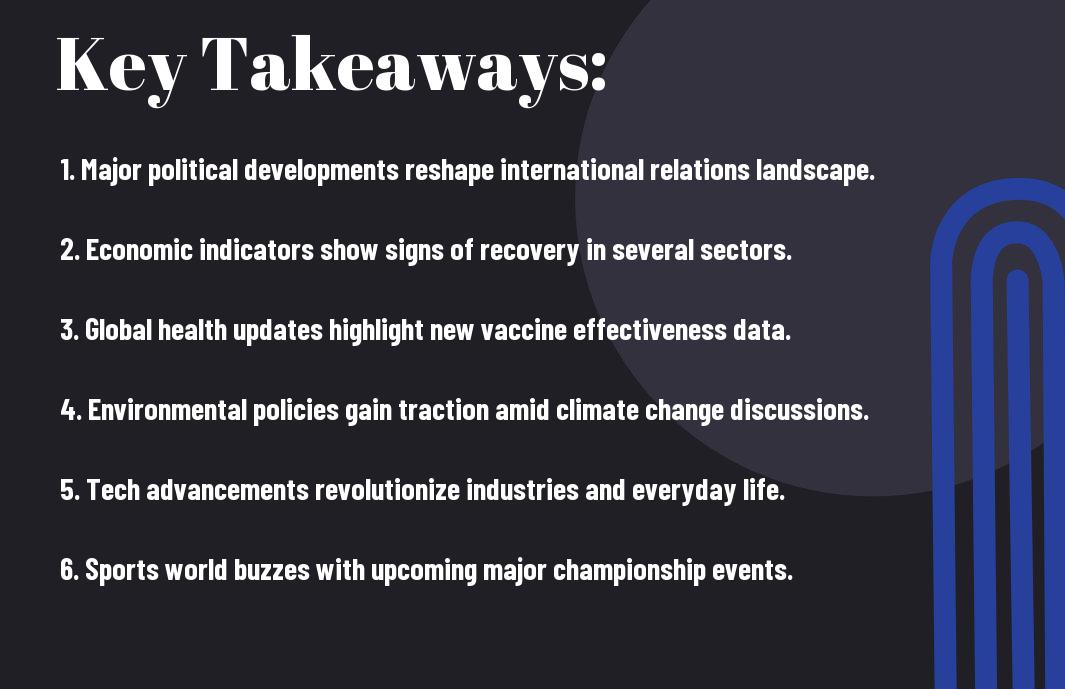
Many key developments are unfolding today that could impact your life and the world around you. Staying informed on the latest news headlines is crucial for understanding the current landscape, from politics to health and technology. In this post, you’ll find a curated selection of the day’s most significant stories, ensuring you are up to date and equipped to engage in relevant discussions. Let’s investigate what you need to know right now.

National News

While the nation grapples with various pressing issues, today’s headlines bring significant stories that impact you and your community. From political shifts to economic changes, it’s vital to stay informed about events that could affect your daily life and decisions moving forward.

Political Updates

Across the political spectrum, debates intensify as lawmakers push forward their agendas. You may find interest in the newly proposed legislation that aims to address healthcare reforms and the upcoming elections, where candidates are vying for your support.

Economic Developments

Before you make any financial decisions, it’s important to understand the latest economic developments that have potential implications for your investments and overall financial well-being. From inflation rates to job growth figures, these updates provide you with insights to better navigate your financial landscape.

Also, recent reports indicate fluctuations in key economic indicators, which could impact your household budgets and purchasing power. You might want to examine the effects of rising interest rates on loans and mortgages, as well as the latest trends in employment, which can influence your job opportunities and income stability.

International News

There’s a multitude of significant developments unfolding across the globe today. From geopolitical shifts to key diplomatic engagements, staying informed about international news can enhance your understanding of our interconnected world. You’ll want to take note of how these stories may impact not only foreign relations but also your daily life.

Global Affairs

Beside the headlines from your local area, global affairs are equally important to track. Recent discussions at the United Nations highlight ongoing partnerships and tensions between nations. You might find it beneficial to engage with these issues as they often affect international trade, security, and environmental policies.

Humanitarian Crises

Affairs concerning humanitarian crises are at the forefront of international news, shedding light on the hardships faced by millions worldwide. You should be aware of the significant challenges affecting displaced populations and vulnerable communities, as your knowledge can foster greater compassion and action.

News from various regions reveals that ongoing conflicts and natural disasters have led to urgent humanitarian needs. You may discover that organizations are mobilizing to provide aid, but resources remain strained. Following these developments can empower you to contribute positively, whether by raising awareness or supporting relief efforts in your community.

Technology Updates

Not only is technology evolving rapidly, but recent advancements are shaping the way you interact with the digital world. From cutting-edge devices to new software developments, these updates are influencing various industries and your everyday life. Stay informed to keep pace with these changes and understand how they might affect you.

Innovations and Launches

Beside the exciting product launches, tech companies are pushing boundaries with innovative solutions that enhance your experience. Recent entries in the market include state-of-the-art smartphones, AI-driven applications, and smart home devices designed to streamline your daily routine. These innovations aim to provide greater convenience and efficiency in your life.

Cybersecurity Threats

Among the pressing concerns in technology today are the increasing cybersecurity threats that you face daily. As digital attacks become more sophisticated, it’s crucial to remain vigilant to protect your sensitive information.

It’s critical to stay updated on the latest cybersecurity threats targeting individuals and organizations. Malware, phishing attacks, and data breaches are on the rise, posing significant risks to your personal data. To safeguard yourself, consider employing strong passwords, enabling multi-factor authentication, and regularly updating your software. Awareness of potential threats can empower you to take proactive measures in protecting your digital presence.

Health News

Keep yourself informed with the latest health news, as it plays a significant role in shaping the wellbeing of you and your community. Today’s updates cover important public health announcements and groundbreaking medical breakthroughs that could impact your healthcare options. Stay proactive and engaged with these crucial developments to maintain your health awareness.

Public Health Announcements

Public health officials urge you to stay vigilant as new guidelines have been issued regarding vaccination drives and preventive measures for seasonal illnesses. Authorities stress the importance of adhering to these recommendations to safeguard not just your health but also the wellbeing of those around you. Stay updated on local health initiatives for the best practices in your area.

Medical Breakthroughs

News from the medical field highlights innovative treatments and therapies that can potentially enhance your health outcomes. This week, several studies reveal significant advancements in areas such as cancer treatment, gene therapy, and mental health management, showcasing promising new options for patients.

Indeed, these medical breakthroughs may transform your healthcare experience. For instance, researchers have developed a revolutionary immunotherapy for certain types of cancer, significantly improving recovery rates. Moreover, advancements in gene editing technologies offer new hope for tackling genetic disorders, while progress in mental health treatments is fostering a better understanding of conditions like depression and anxiety. Staying informed about such discoveries enables you to engage in informed discussions with your healthcare providers and consider cutting-edge options for your well-being.

Environmental Issues

Unlike many concerns that can be easily addressed, environmental issues require your immediate attention. With the planet facing significant challenges such as pollution, deforestation, and climate change, it’s crucial for you to stay informed. Awareness and action can help mitigate these problems, ensuring a healthier environment for future generations.

Climate Change Initiatives

Above all, various climate change initiatives are gaining traction worldwide. From renewable energy investments to policies aimed at reducing carbon emissions, your participation is vital. By supporting sustainable practices in your community, you contribute to a collective movement that seeks to combat the adverse effects of climate change.

Natural Disasters

Issues like natural disasters are becoming increasingly prevalent, and they can have devastating effects on communities. You may find that climate change is intensifying storms, floods, and wildfires, leading to more frequent and severe events. Staying informed about these disasters will help you and your loved ones prepare and respond effectively.

At the same time, it’s important for you to understand the broader context of natural disasters. As climate patterns shift and ecosystems are disrupted, the frequency of hurricanes, floods, and wildfires is likely to increase. Being aware of these trends allows you to advocate for better infrastructure and emergency preparedness in your community, thereby enhancing resilience against the impacts of these natural events.

Sports Highlights

Your go-to source for today’s most exciting moments in the world of sports, showcasing remarkable performances and captivating outcomes across various events. From thrilling matches to standout athletes, you won’t want to miss these highlights that define today’s sports landscape.

Major Events

Highlights include the latest clashes in professional leagues, key tournament results, and significant matchups that had fans on the edge of their seats. With standout performances and game-changing plays, these events are reshaping standings and creating unforgettable memories for spectators.

Athlete Achievements

Major accomplishments by athletes this week have set new benchmarks in various sports, showcasing exceptional talent and determination. From breaking records to clinching titles, these athletes continue to inspire with their unwavering commitment to excellence.

It’s impressive how some athletes have achieved remarkable milestones, such as breaking longstanding records and consistently topping leaderboards. Their hard work and dedication not only elevate their personal careers but also inspire young athletes and fans around the world. With every triumph, these athletes remind you of the power of perseverance and ambition.

Conclusion

Presently, staying informed with the top news headlines of the day is necessary for understanding the world around you. By keeping up with significant events and developments, you can better engage in discussions and make informed decisions. Your awareness of current affairs empowers you to connect with others and remain knowledgeable about topics that may impact your life. Make it a habit to check in regularly with reliable sources to ensure you’re always in the loop.

Breaking News – Latest Updates on Global Events

Updates are vital for staying informed about the constantly evolving global landscape. In this blog post, you will discover the latest developments impacting nations, economies, and communities worldwide. From political shifts to natural disasters, our comprehensive coverage ensures you don’t miss the vital information that shapes your world. Equip yourself with the knowledge you need to engage thoughtfully with the current events unfolding around you.

Major Political Developments

To stay informed about the latest political waves shaping our world, you should pay attention to the key events that are unfolding globally. The landscape of governance continues to evolve with emerging power dynamics and shifting alliances impacting national policies and international relations. As citizens, it’s important for you to grasp these developments as they affect global stability and economic prospects.

Key Elections and Leadership Changes

Against a backdrop of rising tensions and public demand for change, several significant elections are set to take place that will reshape leadership in various countries. These elections could redefine political platforms and influence global governance, making it important for you to engage with the electoral processes that may bring new voices to power.

International Relations and Diplomacy

Major international developments are influencing how countries interact on a global stage, impacting trade agreements, security alliances, and diplomatic efforts. This evolving landscape requires your attention, as shifts in power can lead to significant ramifications in both regional and international contexts.

For instance, recent summits between world leaders have focused on addressing pressing issues like climate change and security threats, where negotiations have resulted in new treaties and collaborative efforts. You may find it vital to follow how these partnerships evolve, as they not only affect diplomatic relationships but also improve or strain bilateral ties, shaping the future of international cooperation and peace efforts.

Economic Impact of Global Events

Some of the most significant global events have far-reaching economic impacts that resonate across borders. You should consider how geopolitical tensions, natural disasters, or pandemics can alter economic landscapes, affecting everything from market stability to employment rates. These fluctuations not only influence local economies but also have profound effects on global trade and investment strategies, shaping the financial decisions you may face.

Market Reactions and Trends

Along with the unfolding of global events, market reactions often reflect immediate investor sentiments and trends. You might observe sudden fluctuations in stock prices, commodity values, or currency exchange rates as the markets respond to news and developments. Staying informed will help you navigate these changes and understand their implications for your financial portfolio.

Trade Agreements and Conflicts

Trends in trade agreements and conflicts play a vital role in shaping the global economy. You can see how negotiations or disputes between nations can lead to shifts in tariffs, trade barriers, and international relations affecting your industry.

Impact of such trade agreements or conflicts can result in significant economic ripple effects. You might find that changes in policies can lead to increased costs for goods, delays in supply chains, or even opportunities for new markets. Understanding these dynamics is vital for making informed decisions in your business dealings and investments, as they can directly influence your financial outcomes and market positioning.

Social Movements and Civil Rights

Once again, you are witnessing an invigorated push for justice and equality globally, as social movements continue to mobilize individuals seeking change. From marches advocating for climate action to calls for racial equality, people are uniting to challenge the status quo. This surge in collective action reflects not only an awakening of civic responsibility but also a determination to secure civil rights for all, empowering you to engage in conversations that matter.

Protests and Activism Worldwide

On the streets of cities around the world, you can see the powerful impact of protests and grassroots activism. People are coming together in solidarity, raising their voices against issues such as climate change, inequality, and systemic injustice. These movements demonstrate your capacity to effectuate change and inspire hope for a better future.

Legislative Changes and Social Policies

Social movements are influencing significant legislative changes and shaping social policies across nations. As activists rally support, you see governments responding with reforms aimed at addressing social inequalities and human rights violations. This dynamic push for change reflects your collective voice and the demand for a fairer society.

At the forefront of this transformation, you may find that various legal frameworks are being revised to promote inclusivity and protect marginalized communities. Policies addressing issues like gender equality, anti-discrimination, and climate action are gaining traction, reflecting the urgent needs highlighted by grassroots movements. As more citizens, like you, advocate for these changes, the potential for comprehensive policy reform strengthens, paving the way for a more equitable society.

Environmental Updates

Unlike previous years, 2023 has seen a marked increase in global awareness regarding environmental issues, with many nations taking significant steps towards sustainability. Efforts are being directed at reducing carbon footprints, promoting renewable energy sources, and reforestation projects, highlighting a collective responsibility to combat climate change. As you engage with these updates, consider how these changes may affect your local environment and community initiatives.

Climate Change Initiatives

One notable initiative gaining traction is the Global Carbon Project, encouraging countries to pledge reductions in greenhouse gas emissions. As you stay informed, you’ll see how local governments and organizations are aligning with these international goals, fostering a culture of sustainability that can benefit your lifestyle and the world at large.

Natural Disasters and Responses

Natural disasters continue to pose challenges across the globe, prompting an urgent need for effective response strategies. Awareness of these events allows you to understand the impact on affected communities and the importance of preparation in your own area.

This year, regions around the world have experienced unprecedented natural disasters, including wildfires, hurricanes, and floods. Emergency response teams and local governments are collaborating to enhance resilience and improve recovery strategies. As you follow these developments, consider how advances in technology and community engagement are transforming disaster response efforts, ensuring that your area is better prepared for future challenges.

Health Alerts and Global Health Issues

Not all health alerts signify immediate danger; however, staying informed about emerging global health issues is imperative. The rapid spread of diseases can disrupt communities and economies alike. Consequently, being aware of health advisories allows you to take necessary precautions to protect yourself and your loved ones while supporting public health efforts worldwide.

Pandemic Updates and Vaccination Efforts

Above all, ongoing pandemic updates reveal the importance of vaccination efforts around the world. As new variants arise, health organizations are working tirelessly to develop and distribute effective vaccines. You are encouraged to stay informed about vaccination guidelines in your area to ensure your safety and the well-being of your community.

Public Health Policies and Innovations

Policies affecting public health are evolving rapidly, with many nations implementing innovative strategies to combat health crises. These include enhanced surveillance systems, improved access to healthcare services, and integration of technology in health monitoring. You can play a role in these advancements by advocating for policies that prioritize public health and engaging in discussions that shape health initiatives.

Public health innovations focus on creating solutions that not only address existing health threats but also prevent future outbreaks. By adopting measures like telehealth, data analytics, and community outreach programs, healthcare systems aim to improve accessibility and effectiveness in healthcare delivery. You hold the power to influence these developments by supporting initiatives that enhance public health infrastructure and promote equitable access to health resources.

Technology and Innovation News

Now, as technology continues to evolve at an unprecedented pace, advancements in various sectors highlight its impact on our daily lives. From breakthroughs in artificial intelligence to eco-friendly innovations, you can see the landscape of your world transforming. These developments not only enhance convenience but also reshape global economies, making it important for you to stay updated on the latest trends and advancements in technology.

Breakthroughs in Science and Technology

Above the standard developments, remarkable breakthroughs in science and technology have been reported this month. You will find advancements in quantum computing that promise superior processing power and innovations in renewable energy sources that aim to combat climate change. These discoveries not only showcase the potential of modern science but also pave the way for a sustainable future.

Cybersecurity and Global Implications

Between rising technology adoption and increasing cyber threats, you must be aware of your online safety and security. Cyberattacks are becoming more sophisticated and are impacting businesses and governments worldwide, necessitating enhanced measures to protect sensitive information. Your awareness and readiness to adapt to these challenges play a significant role in ensuring safety in the digital realm.

It is important to understand that the implications of cybersecurity extend beyond individual concerns; they affect entire nations and economies. As cybercriminals target critical infrastructure, you will see governments and organizations investing heavily in cybersecurity measures. By staying informed and adopting best practices to secure your personal data, you contribute to a broader culture of security that safeguards both individual and collective interests in an interconnected world.

To wrap up

Considering all points, staying updated with breaking news is important for you as it enables informed decision-making and keeps you connected to global events shaping your world. With rapidly evolving situations and diverse perspectives, engaging with credible sources ensures you have accurate information at your fingertips. As events unfold, your understanding can expand, contributing to both personal and communal awareness. Embrace the habit of seeking out the latest updates, as it empowers you to navigate the complexities of our dynamic world more confidently.

How Social Media is Changing the Way We Consume News

Media in today’s digital landscape is not just about traditional broadcasting; it has evolved into a multifaceted platform where you engage with news in real-time. As you scroll through social media feeds, you encounter breaking news updates, opinion pieces, and varied perspectives that influence your understanding of current events. This shift has led to changes in your news consumption habits, prompting you to seek diverse sources and share information at an unprecedented pace. Explore how social media reshapes not only the way you receive news but also how it impacts your worldview.

The Rise of Social Media as a News Source

The emergence of social media has significantly transformed how you engage with news content. Platforms like Twitter, Facebook, and Instagram allow you to access real-time information, breaking news, and diverse perspectives at your fingertips. You’re no longer confined to traditional news outlets for updates; instead, social media has democratized information sharing, enabling anyone to share news and opinions, thereby creating a more dynamic and interactive news landscape.

Overview of Social Media Platforms

Beside traditional news sources, various social media platforms have become prominent in delivering news. Each platform caters to different audiences with unique features and content styles, making it necessary for you to navigate through these options to find reliable information. Here’s a brief overview:

Social Media Platforms Overview

Platform Key Features
Twitter Real-time updates, short posts, trending topics
Facebook Community engagement, share articles, diverse content types
Instagram Visual storytelling, short videos, influencer narratives

Comparison with Traditional News Outlets

Behind the rapid rise of social media as a news source lies a fundamental shift in how you perceive and consume news. While traditional news outlets provide structured journalism, social media offers a more immediate and sometimes less-verifiable approach. This disparity in information delivery has changed your expectations and the distinction between trusted sources and user-generated content.

Traditional News vs. Social Media

Aspect Traditional News Outlets
Verification Extensive fact-checking and editorial standards
Speed Slower news updates
Interaction Limited audience interaction

News from traditional outlets tends to offer more depth and fact-checked reporting, allowing you to gain insights into complex issues. In contrast, social media excels in offering rapid information dissemination, often prioritizing speed over accuracy. Depending on your preferences, you may find yourself relying on a mix of both, while being cautious about the credibility of the sources you follow to ensure you are well-informed.

Changing Consumption Habits

Even in a world dominated by traditional media, your habits are shifting as social media emerges as a primary news source. You likely find yourself scrolling through feeds to stay updated, rather than seeking out and consuming news through conventional outlets. This shift reflects the growing preference for personalized content, often curated and tailored to resonate with your interests. As you adapt to this digital landscape, the way you access news continues to evolve.

Speed and Accessibility of Information

Beside the immediacy of news updates, the accessibility provided by social media platforms has transformed your relationship with information. You can capture breaking news in real-time, often before it’s reported by mainstream channels. This instantaneous flow of information ensures you’re constantly informed, but it may also leave you navigating an overwhelming amount of content, making it important to discern between credible and unreliable sources.

Impact of Mobile Technology

Habits of news consumption have shifted dramatically due to the rise of mobile technology. With smartphones in hand, you have the world’s information at your fingertips, enabling you to access the latest headlines from any location. This convenience has fostered a culture of news on-the-go, where you can seamlessly integrate news consumption into your daily routines, whether during commutes or while waiting in line.
Changing your news habits through mobile technology allows you to tailor your experiences to fit your lifestyle. You can easily follow specific topics or influencers relevant to your interests, enabling a more personalized approach to information gathering. By utilizing news apps and social media platforms, you have the power to prioritize what matters most to you, controlling not only the content you engage with but also the pace at which you consume it. This transformation in how you access and engage with news is not just a trend; it’s a fundamental shift in your media landscape.

The Role of Algorithms in News Delivery

For many, algorithms play a central role in determining what news content you encounter daily. These complex systems analyze your online behavior, preferences, and interactions to curate a selection of articles, videos, and reports tailored to your interests. As a result, algorithms transform your news consumption experience, often influencing your perceptions and understanding of current events based on what is presented to you.

Personalization of News Feeds

News feeds have become personalized to a remarkable extent, with algorithms shaping what you see based on your past interactions. This customization can enhance your engagement with the news, making it feel more relevant to your interests, beliefs, and habits; however, it also raises questions about the diversity of perspectives you are exposed to in your daily reading.

Filter Bubbles and Echo Chambers

Filter bubbles create an environment where you’re frequently exposed to news that aligns with your existing viewpoints. This often leads to echo chambers, where differing perspectives are minimized or absent altogether. While this may provide a sense of community and affirmation, it can also limit your understanding of broader social issues and inhibit critical thinking.

Feeds designed by algorithms can inadvertently reinforce filter bubbles and echo chambers. By continuously showing you content that aligns with your preferences, you may miss out on different viewpoints and vital stories that challenge your biases. This narrowed perspective can lead to an incomplete understanding of the world around you, making it necessary to seek out diverse sources and engage with a variety of opinions to enrich your news consumption.

User-Generated Content and Citizen Journalism

Keep in mind that the rise of social media has empowered individuals to break news as they experience it, transforming everyday citizens into journalists. User-generated content enables you to share firsthand accounts and insights, giving you a unique perspective on events as they unfold. This democratization of news means you’re not just a passive consumer; you can actively contribute to the narrative of current affairs in real time.

The Power of the Public Voice

One significant aspect of user-generated content is the amplification of the public voice. Through platforms like Twitter, Facebook, and Instagram, you can express your opinions and share your experiences, reaching a vast audience. This shift has provided you with a sense of agency, as your perspective can influence the broader conversation around important issues and drive awareness to topics that may have been overlooked by traditional media.

Challenges of Credibility and Misinformation

Challenges regarding credibility and misinformation are prevalent in user-generated content. With the speed at which information spreads online, it becomes increasingly difficult for you to discern what is accurate. Misinformation can be amplified by algorithms that prioritize engagement over quality, leading you to encounter false narratives more frequently than reliable sources. Therefore, as you navigate social media for news, it’s vital to verify the origins of the information and remain aware of the potential for bias and manipulation.

In addition to the spread of misinformation, the lack of editorial oversight in user-generated content can further complicate your ability to assess the credibility of news. Unlike traditional journalism, which often adheres to strict standards of fact-checking and source verification, citizen journalism can vary significantly in quality. You may find yourself sifting through a mix of verified reports and misleading claims, making it imperative to approach social media as a source with caution and skepticism. Engaging with reputable fact-checking organizations and cross-referencing sources can help ensure that the information you consume is accurate and reliable.

Social Media’s Influence on Public Opinion

Many individuals today rely on social media as their primary source of news, profoundly shaping public opinion. Platforms such as Twitter and Facebook allow for rapid dissemination of information, leading to immediate reactions from users. This instant access not only informs your perspectives but also facilitates conversations around trending topics, often creating echo chambers that amplify certain viewpoints while marginalizing others.

Instant Feedback and Engagement

About the way you engage with news on social media, instant feedback is a game-changer. You can express your views through likes, shares, and comments almost immediately, allowing for real-time discussions. This active participation transforms traditional passive consumption of news into a dynamic dialogue, directly influencing how stories are perceived and spread within your network.

The Viral Nature of News

With the ever-increasing speed of information sharing, news can go viral in a matter of minutes. When a story resonates with you, it’s easy to share it within your network, amplifying its reach exponentially. This virality not only affects how information is consumed but also impacts the narrative surrounding the news, as each share may add a personal twist or opinion that alters the original message.

For instance, you might find a news story about a local event gaining traction as friends and family share their perspectives. As the story spreads, it evolves; new facts may emerge while opinions complicate the narrative. This transformation can contribute to misunderstandings or, conversely, may raise awareness about important issues that warrant further discussion. The viral nature of news stretches beyond just sharing; it creates a participatory culture where your voice can sway public perception significantly.

Ethical Considerations in Social Media News

Despite the rapid evolution of social media as a news source, ethical considerations remain pivotal. The way you consume news through these platforms raises questions about accuracy, trustworthiness, and the potential for misinformation. As a responsible consumer, you must navigate these challenges and be aware of the implications your engagement with social media can have on your understanding of current events.

Responsibility of Platforms

Considerations around the responsibility of social media platforms are crucial for ensuring accurate news dissemination. You should question whether these platforms are doing enough to combat misinformation and provide users with reliable sources. Their algorithms often prioritize engagement over accuracy, which can skew your perception of reality.

Journalistic Integrity in the Digital Age

The landscape of journalism is continuously shifting in the digital age, presenting challenges to journalistic integrity. You may find that traditional journalistic standards can sometimes falter in the rush to break news online, leading to sensationalism and unchecked facts. With the abundance of information available, it’s up to you to determine which sources uphold ethical reporting standards.

Due to the immediate nature of the internet and millisecond timelines, journalists often face pressure to publish stories without thorough fact-checking. This dynamic can compromise the quality of the news you receive. As you navigate this complex environment, it is important to prioritize sources that adhere to ethical journalism practices and foster a commitment to accuracy and balance. Engaging with credible outlets not only enriches your understanding but also supports quality journalism.

Conclusion

With these considerations, you can see that social media is significantly altering how you consume news. It offers immediate access to a variety of perspectives, but it also presents challenges like misinformation and confirmation bias. By staying aware of these dynamics and critically evaluating the sources you engage with, you can navigate the evolving landscape of news consumption more effectively, leading to a more informed understanding of current events.

The Rise of AI in Journalism – What It Means for the Future

Just as technology has reshaped various industries, artificial intelligence (AI) is making significant strides in journalism. You may wonder how this evolving landscape will impact your experience as a reader or even as a participant in the field. From automated content generation to data-driven storytelling, AI is redefining the way news is produced and consumed. In this blog post, you will explore the implications of AI’s rise in journalism and what it means for the future of reporting, engagement, and information dissemination.

Understanding AI Technology

A growing presence of artificial intelligence (AI) in journalism is reshaping storytelling methods, enhancing productivity, and transforming how news is produced and consumed. This technological evolution provides tools that augment human capabilities, enabling journalists to focus on more in-depth reporting and analysis.

Definition of AI in Journalism

Technology in journalism encompasses algorithms and software designed to analyze data, generate content, and engage with audiences. By leveraging these capabilities, AI improves the efficiency and accuracy of news reporting, automates routine tasks, and offers personalized news experiences for readers.

Different Types of AI Tools

There are several types of AI tools available to journalists, each serving distinct purposes to enhance your work. Some common tools include:

  • Natural Language Processing (NLP)
  • Automated Reporting Systems
  • Data Visualization Tools
  • Sentiment Analysis Software
  • Chatbots for audience engagement

Assume that you employ these tools to streamline your reporting process and add valuable insights to your articles.

AI Tool Function
Natural Language Processing (NLP) Analyzes and understands human language
Automated Reporting Systems Generates news stories from data inputs
Data Visualization Tools Transforms data into visual representations
Sentiment Analysis Software Evaluates audience reactions
Chatbots Enhances user engagement

Tools like these significantly contribute to your efficiency and effectiveness in journalism. They allow you to focus on more creative and insightful storytelling endeavors while managing repetitive tasks efficiently.

  • Automated content generation
  • Enhanced audience insights
  • Real-time data analysis
  • Improved accuracy in reporting
  • Streamlined workflows

Assume that by integrating these AI solutions, you can elevate your journalism to new heights, ensuring that your audience receives timely and relevant information.

Type of AI Tool Benefits
Natural Language Processing Improves content comprehension and relevancy
Automated Reporting Saves time on routine news coverage
Data Visualization Enhances reports with visual data
Sentiment Analysis Helps gauge public opinion
Chatbots Facilitates user interaction and feedback

Benefits of AI in Journalism

Even in its early stages, the integration of AI in journalism offers considerable advantages. Automated tools help streamline content creation, reducing the time you spend on repetitive tasks. This technological advancement not only increases productivity but also allows you and your team to focus on storytelling and creative aspects of journalism. By leveraging machine learning and natural language processing, AI can support your endeavors in producing timely and accurate news, enhancing both the quality and accessibility of information.

Enhanced Reporting Efficiency

Along with saving time, AI facilitates more efficient reporting by automating mundane tasks such as data entry and verification. This allows you to allocate more resources to investigation and analysis. With AI tools analyzing news elements in real time, you can ensure that your coverage remains relevant and responsive to fast-changing events and stories.

Improved Data Analysis

An important advantage of AI in journalism lies in its enhanced data analysis capabilities. Advanced algorithms can sift through vast amounts of information quickly, identifying trends and patterns that may not be immediately apparent. This ability equips you to uncover deeper insights and build more compelling narratives based on real-time data.

For instance, when covering complex topics like economic trends or public health issues, AI can analyze datasets to reveal correlations and causations that support your reporting. By harnessing AI-powered analytics, you can provide more comprehensive context for your stories, sparking greater interest and engagement among your audience. This level of detail not only enhances the depth of your reporting but also establishes your credibility as a journalist committed to delivering informed content.

Challenges and Ethical Considerations

To navigate the integration of AI in journalism, you must confront various challenges and ethical dilemmas. Issues such as job displacement, bias in algorithmic outputs, and maintaining credibility demand your attention as journalists adapt to this evolving landscape. You need to reflect on your responsibility to uphold ethical standards while leveraging technology to enhance storytelling.

Job Displacement Concerns

Among the most pressing issues related to AI in journalism are the concerns about job displacement. As AI systems become more adept at generating articles and news summaries, there is fear that human journalists may find their roles diminished or even obsolete. You should consider how this trend may impact your career and the broader industry, balancing the potential benefits of efficiency with the human touch that resonates with audiences.

Issues of Bias and Credibility

Above all, you should be aware of the potential biases inherent in AI systems and the importance of maintaining credibility in journalism. AI algorithms are trained on existing data, which can perpetuate existing biases or inaccuracies. This raises significant ethical questions about the reliability of AI-generated content, challenging your duty to provide fair and accurate information to your audience.

Considerations regarding bias and credibility are vital as you embrace AI in journalism. You must scrutinize the data used to train AI systems, as biased input leads to biased outputs, undermining the integrity of your work. Ensuring transparency in how AI tools are utilized and fostering a culture of accountability will be pivotal in maintaining trust and credibility with your audience. Ultimately, your commitment to journalistic ethics will define how AI complements, rather than compromises, your role in informing the public.

Case Studies of AI in Journalism

Unlike traditional journalism, which relies heavily on human effort, AI has successfully integrated into various newsrooms, enhancing efficiency and accuracy. Here are some notable case studies:

  • The Associated Press generated over 3,700 earnings reports in 2014 using AI, significantly reducing the time taken for financial news coverage.
  • Reuters employs AI-driven tools to produce automated reports during breaking news, allowing for up-to-the-minute updates.
  • Bloomberg uses its AI software, Cyborg, to analyze data and generate concise financial reports, aiding in faster decision-making for clients.
  • Local newspapers in the U.S. utilize AI for generating sports reports, saving reporters hours of work each week.

Successful Implementations

Alongside these advancements, news organizations have highlighted successful implementations of AI, demonstrating its potential to reshape how stories are told. For example, AI-generated articles have improved report turnaround time by up to 50%, enabling journalists to focus on in-depth investigations while routine reporting is automated.

Lessons Learned

To fully understand the implications of AI in journalism, it’s necessary to analyze the lessons learned from these case studies. Organizations have recognized the importance of maintaining ethical standards and transparency while adopting AI technology.

Considering the expanding role of AI, media professionals must adapt to ensure that innovation aligns with journalistic integrity. Your focus should be on utilizing AI as a tool to enhance storytelling while upholding factual accuracy. Additionally, emphasizing collaboration between AI systems and human writers can lead to richer content, as the human element remains paramount in engaging audiences. Balancing technology with public trust is vital for fostering a sustainable future in journalism.

The Future of AI in Journalism

Your understanding of journalism will be redefined as AI continues to evolve, influencing not just how news is gathered but also how it is produced and consumed. With machine learning algorithms improving at a rapid pace, expect AI to take on more complex roles in newsrooms, enhancing accuracy and personalization in reporting. As you navigate this landscape, be prepared for significant changes in how information is disseminated and curated, enabling a more efficient flow of news to audiences worldwide.

Predictions for Industry Transformation

After years of gradual change, the journalism landscape will likely undergo a seismic shift fueled by AI technologies. You can anticipate enhanced data analysis capabilities that will streamline the reporting process, enabling journalists to focus more on storytelling rather than data collection. As AI becomes a staple in newsrooms, it is predicted that the industry could see an influx of tailored content designed to meet the specific preferences of diverse audience segments.

Potential for New Journalism Models

Future journalistic practices are poised to evolve dramatically with AI integration. You have the chance to witness the emergence of new models that blend traditional journalism with innovative technologies, allowing for interactive storytelling and real-time reporting. This transformation could facilitate collaboration between journalists and AI tools, fostering a new wave of investigative reporting that tackles complex issues efficiently.

This shift towards AI-driven models will open doors for hyper-local news initiatives, automated content creation, and enhanced reader engagement. You may find that new journalistic practices can leverage AI to source information quickly, analyze vast datasets for trends, and even provide personalized news experiences. This evolution not only enriches the reader’s experience but may also disrupt existing business models in journalism, propelling the industry into uncharted territory. As you explore these advancements, consider how they might influence your connection to the news and the role that technology plays in shaping public discourse.

Conclusion

Following this exploration of the rise of AI in journalism, you should recognize its potential to transform the industry significantly. As AI tools continue to evolve, they will impact your news consumption and production, enhancing efficiency while raising ethical considerations. You have the opportunity to engage with these advancements thoughtfully, ensuring that the essence of journalism remains intact while embracing innovation. Your understanding of this shift will empower you to navigate the future landscape of media with a critical eye and informed perspective.

Misinformation in the Digital Age – How to Spot Fake News

Misinformation can easily distort your understanding of current events in the digital age. With an overwhelming amount of information at your fingertips, knowing how to spot fake news is vital for navigating today’s media landscape. In this guide, you will discover practical tips and strategies to discern credible sources from unreliable ones, enabling you to make informed decisions and engage in meaningful discussions. Arm yourself with the tools you need to critically evaluate the news you encounter online.

Understanding Misinformation

As you navigate the vast world of information online, understanding misinformation becomes necessary. Misinformation refers to false or misleading information that is spread regardless of intent. This includes a wide array of content you might encounter, from social media posts to sensational headlines, which can shape your beliefs and perceptions significantly.

Definition of Misinformation

Understanding misinformation is key to becoming a savvy consumer of information. It encompasses any information that is inaccurate or misleading, regardless of whether the spreader intends to deceive you. This form of communication can greatly affect public opinion and distort reality.

Types of Fake News

Any sharp-eyed reader should familiarize themselves with the various types of fake news that may circulate. Here are some common types:

Type Description
Satire Exaggerated humor that misleads readers about real events.
Clickbait Eye-catching headlines that lead to misleading content.
Fabricated News Completely false stories created to deceive.
Manipulated Content Genuine information distorted to mislead.
Imposter Content Using genuine sources to spread false narratives.

This knowledge equips you to discern the various types of fake news that may cloud your judgment. Here’s a closer look at each type:

  • Satire can often blur the lines between humor and fact.
  • Clickbait tactics pull you in but usually contain no substance.
  • Fabricated news poses a serious threat, as it is entirely made up.
  • Manipulated content distorts truths, often confusing verifiable facts.
  • Imposter content misleads you by masquerading as reputable sources.
Type Impact
Satire Can misinform if taken seriously.
Clickbait Reduces trust in media.
Fabricated News Leads to misinformation spread.
Manipulated Content Erodes understanding of real events.
Imposter Content Confuses reliable sources with falsehoods.

Any engagement with this information keeps you vigilant against the influences of misinformation in your digital life.

How to Identify Fake News

It can be challenging to navigate the sheer volume of information available online today. To distinguish fact from fiction, you need to employ a series of strategies. By honing your skills in identifying fake news, you can become a more informed consumer of information, making wise decisions about what to share and believe.

Analyze the Source

There’s a good chance that the source of the information you encounter can reveal a lot about its legitimacy. Always check whether the website, news outlet, or social media channel is reputable. Established news organizations adhere to strict journalistic standards, while unknown or obscure sources may have biases or intentions that warrant caution.

Check the Author’s Credentials

Little attention is often paid to who wrote an article, but the author’s background can lend credibility to the information presented. Investigate if the author is a recognized expert or has experience in the subject area being discussed.

Analyze their credentials by looking for their previous work, qualifications, or affiliations. A credible author should have a clear track record in journalism or expertise relevant to the topic. If there are no details available or the author lacks a professional background, it may raise red flags regarding the reliability of the article.

Fact-Checking Resources

All too often, misinformation spreads quickly, but you can combat this by utilizing fact-checking resources. These tools enable you to verify the authenticity of information and ensure that you are consuming and sharing accurate content. With the right resources, you can discern fact from fiction, empowering you to make informed decisions based on reliable information.

Reliable Fact-Checking Websites

While there are numerous websites dedicated to fact-checking, some of the most reputable include Snopes, FactCheck.org, and PolitiFact. These platforms analyze claims, validate sources, and provide evidence-based assessments of the information you encounter. Making a habit of checking these sources can significantly enhance your ability to identify misinformation in your news feed.

Tools and Apps for Verification

On the go, you can also rely on tools and apps designed for verification. Popular options include Google Fact Check Tools and Storyful, both of which provide insights to help you discern the credibility of news stories and social media posts. These handy resources can be invaluable when you need quick answers while browsing content.

With mobile applications like CrowdTangle and Hoaxy, you can effectively trace information back to its origins and assess how widely it has been shared. These tools allow you to monitor the spread of certain stories, which can provide context about the authenticity of the information. Incorporating these apps into your routine can significantly improve your ability to verify news and reduce the likelihood of sharing false information.

Tips for Critical Thinking

Your ability to think critically is important for navigating the digital landscape. Here are some tips to enhance your critical thinking skills:

  • Evaluate the source of the information.
  • Check for supporting evidence.
  • Be aware of emotional language.
  • Consider alternative viewpoints.

This approach not only helps determine the credibility of information but also cultivates a mindset geared toward thoughtful analysis.

Questioning Information

To effectively spot misinformation, you should actively question the validity of the information presented. Always consider the who, what, when, where, and why. Ask yourself: Who created this? What is their purpose? When was it published? Where did it come from, and why should you believe it? This rigorous questioning helps to sift through misleading claims and connect with credible sources.

Recognizing Bias

Information often comes with an underlying bias that can shape your perception. Evaluating the motivations behind a piece of content is important to understanding its context.

For instance, if a news article predominantly features one perspective on a controversial issue, it may omit vital information that could provide a balanced view. By assessing who benefits from the narrative being presented and examining language choices, you can uncover biases that distort the true message. Being aware of these subtle influences allows you to form a more rounded understanding of the topic.

Social Media Awareness

Not every post you encounter on social media is reliable. In the fast-paced digital landscape, misinformation spreads quickly, making it crucial for you to verify the information before sharing it. By staying vigilant and applying critical thinking, you can help combat the spread of fake news within your network.

Evaluating Content on Social Platforms

There’s an abundance of content on social media, and not all of it is accurate. When evaluating a post, consider the source, check for supporting evidence, and look for expert opinions. By asking yourself whether the information is presented objectively and assessing the credibility of the accounts you follow, you can become more discerning about what you believe and share.

Reporting and Flagging Fake News

While you navigate social media, it’s crucial to actively participate in maintaining accuracy. When you come across misleading or false information, utilize the reporting tools available on these platforms to flag it for review. This helps ensure that others are not misled and supports the creators of content to be held accountable for their claims.

Plus, using the reporting feature not only aids you in combating misinformation but also contributes to creating a more informed community. Social media platforms often rely on user feedback to identify and address fake news. By participating in this process, you play an active role in promoting accuracy and fostering a safer online environment for your peers and followers.

Factors Contributing to Misinformation

Despite the ease of accessing information today, several factors contribute to the spread of misinformation. Key contributors include:

  • Lack of media literacy
  • Social media algorithms
  • Confirmation bias
  • Rapid information sharing

Assume that by understanding these factors, you can better navigate the digital landscape and protect yourself from misleading content.

Algorithms and Echo Chambers

There’s an inherent risk in how algorithms tailor your online experience. They often create echo chambers, where you are exposed primarily to opinions and information that reinforce your beliefs. This selective exposure limits your perspective and heightens the potential for misinformation to be accepted uncritically.

Emotional Manipulation and Clickbait

Chambers of misinformation thrive on emotional manipulation, using clickbait tactics to capture your attention and provoke strong reactions. These sensational headlines and misleading content are designed to spark curiosity or fear, leading you to share them without verifying the facts.

Algorithms play a significant role in amplifying this emotional manipulation, prioritizing content that elicits strong emotions over factual accuracy. This focus on engagement often results in a cycle where stories that provoke outrage or excitement dominate your feed. Therefore, by critically assessing headlines and considering the emotional pull of the content, you can avoid falling prey to clickbait and reduce your exposure to false information.

The Impact of New Policies on Everyday Life

Impacting various aspects of your daily life, new policies can reshape how you work, commute, and interact within your community. These changes can affect everything from your financial obligations to your healthcare access, prompting necessary adjustments in your routines and priorities. Understanding how these policies influence your life is imperative for navigating potential challenges and embracing new opportunities. In this post, we will explore the implications of recent policy changes and how they resonate in practical terms for you and your community.

Overview of Recent Policies

Your understanding of new policies can significantly shape your daily life. Recent changes have been rolled out across various sectors, impacting everything from economic stability to social welfare. As you navigate this landscape, you’ll find that these policies can directly influence your interactions, financial decisions, and community engagement.

Economic Policies

The current economic policies have introduced measures aimed at stimulating growth and addressing inflation. These changes may affect your job prospects, purchasing power, and overall financial health. Be aware that shifts in taxation, subsidies, and government spending can create ripples in your everyday economic interactions.

Social Policies

To enhance quality of life, the latest social policies focus on education, healthcare, and social justice. These initiatives aim to decrease inequalities and provide better resources for marginalized communities, impacting your community and social landscape.

Considering the breadth of social policies, they affect various aspects of your life, from access to healthcare services to educational opportunities for your children. These changes not only aim to uplift disadvantaged groups but also create a more interconnected society. As you engage with these policies, you may find opportunities for community involvement, advocacy, and support for local programs that resonate with your values.

Changes in Employment Trends

Even as new policies emerge, the landscape of employment trends is shifting significantly. You may find that industries are adapting to new regulations, affecting job availability and required skills. Staying informed about these changes can help you navigate your career path more effectively in this evolving environment.

Job Creation

Above all, job creation has been a focal point of recent policies aimed at stimulating economic growth. You might notice new opportunities arising in sectors that prioritize innovation and sustainable practices, which can benefit your job search and career longevity.

Workforce Displacement

Beside the creation of new jobs, workforce displacement is a major concern in this changing employment landscape. You could experience shifts in job security and must be prepared to adapt your skills to align with market demands.

Also, workforce displacement often occurs as automation and technological advancements replace traditional roles. You may find yourself needing to upskill or reskill to remain competitive in this fast-paced environment. Understanding the sectors most affected can help you proactively seek training programs or opportunities to diversify your skill set, ensuring you stay relevant and employable despite these challenges.

Impact on Healthcare Access

Once again, new policies are reshaping the landscape of healthcare access in your community. As regulations evolve, you may notice both positive and negative consequences, influencing how easily you can obtain medical services. These changes can impact your access to various providers and the affordability of care, ultimately affecting your overall well-being. Understanding these shifts is vital for navigating your healthcare journey.

Insurance Coverage

Access to quality healthcare services often begins with your insurance coverage. Recent policy changes may alter the types of plans available to you, affecting your premiums, co-pays, and out-of-pocket expenses. Depending on these adjustments, you might find yourself needing to reassess your options and understand how they impact your financial responsibilities and access to necessary treatments.

Quality of Care

By focusing on the quality of care, you can better understand how new healthcare policies might influence your treatment experiences. Changes in reimbursement models and provider incentives can lead to varying levels of care across different facilities.

In addition, the quality of care you receive may also depend on how healthcare providers adapt to new guidelines and regulations. Some facilities may implement improved practices and technologies aimed at enhancing patient outcomes. Conversely, others might struggle with resource allocation and staffing, leading to potential disparities. It’s vital to stay informed and proactive in seeking the best possible care as policies continue to evolve.

Educational Reforms

Not all educational reforms are welcomed with open arms; however, they can lead to significant changes in your daily academic life. These policies often aim to improve the quality of education and better prepare students for their future careers. As a student or a parent, it’s necessary to stay informed about how various reforms may affect your educational environment and resources.

Funding Allocations

For many educational institutions, funding allocations have shifted dramatically due to new policies aimed at enhancing resource distribution. These changes can directly impact the quality of education your child receives, influencing everything from class sizes to access to technology and extracurricular programs. Understanding how funds are allocated helps you grasp the potential benefits and limitations of the reforms you’re dealing with.

Curriculum Changes

One major aspect of educational reforms revolves around curriculum changes, which are designed to keep pace with modern job market demands. These updates often include a greater emphasis on STEM education, critical thinking, and soft skills, thus broadening the scope of learning in your educational setting. Keeping an eye on these changes can help you adapt to the evolving academic landscape.

Consequently, these curriculum changes not only alter what is taught, but also how students engage with the material. You may find that traditional rote learning is being replaced by project-based assessments and collaborative group work. This shift encourages you to develop necessary life skills, such as teamwork and problem-solving, which are increasingly valuable in the workforce. Engaging with these new methods can enhance your overall learning experience and prepare you better for future challenges.

Effects on Housing Market

Despite the new policies aimed at stabilizing the housing market, you may notice a complex shift in trends affecting your daily life. With regulations designed to promote affordability and increase housing supply, the market could be experiencing fluctuations in prices and availability. These changes can have a significant impact on your options when it comes to buying or renting a home.

Affordability Issues

By implementing stricter regulations, policymakers are attempting to tackle rising housing costs, yet these actions may inadvertently lead to new affordability challenges for you. Increased demand for affordable housing often outpaces the supply, resulting in higher prices that might strain your budget. It’s important to stay informed about these developments as they directly influence your options.

Urban Development

Issues surrounding urban development have become increasingly prominent in the wake of new housing policies. Development projects can face delays due to regulatory changes, impacting the availability of housing in your area. This might lead to a slowdown in new construction, which can exacerbate the housing shortage you experience and increase competition for available homes.

A closer examination of urban development reveals that the focus on sustainable and community-centric growth can also affect your living environment. As cities attempt to adapt to new regulations, you may observe shifts towards mixed-use developments, green spaces, and improved public transportation. While these changes aim to enhance your quality of life, they often require time and investment, making it vital for you to engage with your local authorities to understand how these developments can benefit you in the long run.

Public Response and Adaptation

All around you, communities are experiencing varied responses to recent policy changes. Some individuals quickly adapt their routines, while others express concerns regarding potential implications. As a result, public opinion diverges, reflecting both support and apprehension regarding these policies. You may notice an increasing emphasis on dialogue and cooperation as your neighbors come together to navigate the challenges presented by new regulations.

Community Initiatives

After the implementation of new policies, you may see local organizations take proactive steps to foster understanding and resolve challenges. Community initiatives often aim to provide resources, create awareness, and support those most affected by the changes. These grassroots efforts enable you and your fellow citizens to connect, share experiences, and collaboratively develop strategies to adapt effectively.

Advocacy and Activism

Against the backdrop of policy changes, a wave of advocacy and activism is often sparked. You might find passionate individuals and groups rallying for the rights and needs of affected communities. This heightened awareness leads to calls for more equitable solutions, pushing policymakers to reconsider the impact of their decisions.

But advocacy and activism go beyond mere vocal opposition; they often serve as platforms for education and informed dialogue. You may witness workshops, community meetings, and social media campaigns geared towards raising awareness and fostering a collective voice. Engaging with initiatives like these can empower you to contribute to a movement that influences positive change in your community and beyond.

Conclusion

On the whole, the impact of new policies on your everyday life can be significant, shaping various aspects such as your financial situation, healthcare access, and environmental quality. By understanding these policy changes, you can better navigate their effects and make informed decisions that enhance your well-being. Staying engaged with policy developments enables you to adapt proactively and to advocate for changes that align with your values and needs. Ultimately, being aware of how these policies influence your life empowers you to take action and contribute positively to your community.

Global Conflicts and Their Effect on the Economy

You may not realize how deeply global conflicts impact your everyday life and the economy as a whole. As tensions rise in various regions, the ripple effects can lead to variations in trade, inflation, and employment rates, influencing your purchasing power and job security. Understanding the link between conflict and economic shifts allows you to navigate financial decisions more effectively. This post will explore how ongoing global tensions affect economic stability and what it means for you personally.

Historical Overview of Global Conflicts

A thorough understanding of global conflicts necessitates a look back at history. Over the centuries, various wars and disputes have shaped nations and economies alike. From colonial conquests to cold wars, each conflict has played a substantial role in developing international relations and economic frameworks. By examining these events, you can grasp how past conflicts have cemented the world’s current geopolitical landscape and shaped modern economies.

Major Conflicts of the 20th Century

For many, the 20th century stands out due to its plethora of major conflicts, including the World Wars, the Korean War, and the Vietnam War. These events significantly impacted economies through wartime production, post-war recovery, and shifts in power dynamics. As you analyze these conflicts, you’ll notice their extensive influence on global trade patterns, alliances, and the economic policies that followed.

Recent Conflicts and Trends

Behind the scenes, recent conflicts are reshaping the global economy in significant ways. Issues such as terrorism, civil wars, and trade disputes have altered economic landscapes, influencing investments and resource allocation. These conflicts often spur not just immediate economic impacts but also long-term shifts in how nations interact and trade with one another.

Further exploring recent conflicts, you’ll find that their effects extend beyond immediate economic fluctuations. The rise of cybersecurity threats and the potential for economic sanctions reflect how conflicts now encompass a broader range of issues, including technology and global commerce. You should pay attention to how these evolving trends result in collaborations or confrontations, directly affecting your economic environment, whether through job security, prices, or access to resources.

Economic Impact of War

If you consider the ramifications of war, it becomes clear that the economic landscape is significantly altered. War disrupts trade, inflates prices, and reallocates government spending toward military endeavors rather than vital services, leading to overall instability. Challenges arise from damaged infrastructure, loss of workforce, and shifts in consumer confidence, all of which can diminish economic growth and magnify hardship for ordinary citizens.

Short-term Economic Effects

After the outbreak of conflict, economies often experience a sharp downturn. Investment plummets as uncertainty reigns, and resources are diverted to military spending. Consumer spending typically contracts, leading to increased unemployment and production slowdowns. Price volatility, particularly in commodities such as oil and food, can further exacerbate economic challenges for both individuals and businesses.

Long-term Economic Consequences

Against a backdrop of prolonged conflict, the long-term economic consequences can be profound. Systems can become entrenched in debt, infrastructure can suffer extensive damage, and societal divisions may deepen, impeding growth. Reconstruction efforts often take years, diverting funds from critical public services like education and healthcare, potentially downgrading the overall quality of life for future generations.

Indeed, the long-term effects of war can reshape entire economies, leaving scars that linger for decades. When infrastructure is destroyed, it takes significant resources and time to rebuild. You may find that countries emerging from conflict face challenges like high levels of debt and unemployment, which can hinder recovery efforts. Additionally, your community may struggle with increased political instability and social unrest, complicating economic development and making it difficult to attract foreign investment. This cyclical pattern can lead to a persistent state of economic fragility and reduced growth prospects for generations.

Case Studies of Specific Conflicts

Unlike other factors, specific global conflicts have historically influenced economies in multifaceted ways. Here are some case studies that illustrate these impacts:

  • 2003 Iraq War: Oil prices surged by 66% in 2003, impacting global markets.
  • Syrian Civil War: The conflict led to a displacement crisis affecting economic stability in neighboring countries, with Turkey alone bearing over $40 billion in costs.
  • U.S.-China Trade War: Tariffs initiated in 2018 impacted both economies, with U.S. goods exports to China dropping by 20% in 2019.
  • Afghan Conflict: The U.S. spent approximately $2.2 trillion over 20 years, with significant repercussions for the defense industry.

The Middle East and Oil Prices

Above all, the Middle East has been a significant player in global oil markets, where conflicts have consistently triggered price volatility. Historical events such as the Gulf War in 1990 saw prices rise by over 90% shortly after the onset of hostilities, demonstrating how regional insecurity can ripple through to your local fuel costs and influence overall inflation rates globally.

The Impact of Ukraine-Russia Conflict

One of the most notable recent examples is the Ukraine-Russia conflict, which has reverberated throughout the global economy. As a result of the war, energy prices surged, with natural gas prices in Europe increasing threefold within six months of the conflict’s start, impacting your energy bills and contributing to inflationary pressures worldwide.

East Europe, particularly countries that rely heavily on Russian energy supplies, faced immediate economic challenges following the escalation of the Ukraine-Russia conflict. This situation has prompted nations to seek alternative energy sources, leading to substantial investments in renewables and further affecting tax revenues and the profitability of traditional energy sectors. The global economy feels the strain as supply chains adjust, causing shifts in market dynamics that directly affect your purchasing power.

Global Trade and Conflicts

For businesses and economies worldwide, conflicts can have a profound impact on global trade dynamics. Interruptions due to political unrest, military actions, or diplomatic tensions can hinder free trade, resulting in rising tariffs, decreased exports, and disrupted markets. This ripple effect not only influences local economies but also affects consumers who may face increased prices and limited product availability.

Disruption of Supply Chains

On a practical level, conflicts can severely disrupt supply chains that are global in nature. When transportation routes become unsafe or blocked, you might notice delays in product delivery, shortage of raw materials, and increased operational costs. This instability can lead to a reevaluation of supplier relationships, forcing companies to find alternative sources or adjust their inventories to adapt to the new landscape.

Effects on International Trade Agreements

Below the surface, conflicts can also impact international trade agreements, potentially leading to renegotiations or cancellations. As countries impose sanctions or face diplomatic challenges, you could see a decline in trade partnerships that previously fostered cooperation and economic growth. This shifting trade environment often compels nations to seek new agreements or realign existing ones to safeguard their interests.

Plus, navigating the complexities of changing trade agreements can be daunting for you and other businesses trying to stay competitive. Uncertainties from altered tariffs, quotas, or trade regulations may require you to invest time and resources into legal consultations and strategic planning. Adjusting to these shifts is vital to maintaining market positions and ensuring compliance, influencing both short-term operations and long-term growth trajectories in the ever-evolving landscape of global trade.

Humanitarian Costs and Economic Burden

Many global conflicts create immense humanitarian costs that extend far beyond immediate loss of life, often burdening economies with significant financial strain. The repercussions manifest in decreased labor productivity, increased healthcare costs, and strained social services, impacting not just the regions directly involved but also interconnected global markets. You should note that while military expenditures rise, critical resources required for economic development are diverted, stifering growth in affected regions.

Refugee Crises and Labor Markets

Any conflict can lead to a surge in refugee populations, causing immediate disruption in local and regional labor markets. As host countries struggle to accommodate an influx of displaced individuals, you may find increased competition for jobs, affecting wages and employment opportunities for both refugees and locals. The integration of refugees into the workforce can either strain resources or, conversely, stimulate economic growth if managed effectively.

Infrastructure Damage and Reconstruction Costs

For countries embroiled in conflict, the destruction of infrastructure necessitates extensive reconstruction efforts, which can come with exorbitant costs. Damage to roads, schools, and health facilities does not just hinder daily life but also restricts economic activity and investment. You should be aware that these costs can overwhelm national budgets, diverting funds from other necessary services and slowing recovery times.

Another critical aspect of infrastructure damage is the long-term economic outlook. Rebuilding efforts often require foreign aid and investment, which may take years to mobilize. It is necessary for you to recognize that the rebuilding phase creates opportunities for companies in construction and engineering, yet without effective planning, there is a risk of mismanaged resources and prolonged stagnation. Moreover, communities may face ongoing challenges regarding access to utilities and transportation that impede their ability to engage in commercial activities fully.

Political Responses and Economic Policies

Once again, conflicts around the globe prompt governments to implement various political responses and economic policies. These measures can significantly influence both local and global economies, often leading to shifts in trade patterns, employment rates, and investment environments. As you analyze these policies, it’s vital to understand how they affect not only the immediate parties involved but also the broader economic landscape where interconnectedness plays a vital role.

Sanctions and Their Economic Ramifications

At the heart of many political responses are sanctions imposed on nations deemed to be violating international laws or human rights. These sanctions can lead to severe economic ramifications, crippling the target country’s economy while also affecting global markets. You should consider how these sanctions might not only restrict access to financial systems and resources but also disrupt trade relationships, impacting your investments and the goods available in your region.

International Aid and Economic Recovery

Between political unrest and economic instability, international aid often plays a notable role in supporting recovery efforts for affected nations. This aid can take various forms, including financial assistance, food supplies, and infrastructure development, all of which are vital for rebuilding economies and restoring stability. You might notice that nations receiving such support often experience a gradual improvement in living conditions, which in turn can stimulate economic growth and open up new opportunities.

Policies focused on international aid can significantly boost recovery by addressing immediate humanitarian needs while laying the groundwork for long-term economic stability. These strategies often involve collaboration between governments, NGOs, and international organizations, providing a comprehensive approach to rebuilding communities. As you explore this topic, consider the effectiveness of these policies in fostering resilience, as well as the potential challenges and avenues for sustainable development following a conflict.

To wrap up

Summing up, understanding global conflicts and their effect on the economy is vital for you as a global citizen. These conflicts can disrupt trade, inflate prices, and alter investment patterns, directly impacting your financial landscape. By recognizing the interconnectedness of geopolitical issues and their economic repercussions, you can make informed decisions about your investments, savings, and overall financial strategies. Keeping abreast of these dynamics empowers you to navigate challenges and seize opportunities in an ever-evolving global economy.

How Elections Are Shaping the Future of Governance

There’s a profound impact that elections have on the way governance evolves over time. As you participate in the electoral process, you help define the policies and leadership that influence your community and beyond. Understanding how elections shape governance not only enhances your voting power but also informs your perspective on democratic engagement. In this post, you will explore the various ways elections set the stage for future leadership, accountability, and public policy, illuminating the direct link between your vote and the decisions that affect your daily life.

The Impact of Electoral Systems

As you explore the complex dynamics of governance, it’s vital to understand how electoral systems shape political landscapes. The method by which votes are translated into political power deeply influences not only the representation of various societal interests but also the overall stability and responsiveness of a government. Selecting the appropriate electoral system can enhance or undermine democracy, dictate party systems, and affect how effectively leaders respond to your needs and concerns.

Majoritarian vs. Proportional Representation

About 70 countries utilize majoritarian systems, which typically favor larger parties and can lead to single-party governments, while others employ proportional representation, promoting a broader spectrum of political voices. Your understanding of these systems is important, as each one will impact both the political environment and the quality of governance you experience. In majoritarian systems, you may find more stability but less diversity in representation, whereas proportional systems encourage coalition-building, reflecting a wider array of your community’s views.

Voter Turnout and Engagement

With your participation in elections being a cornerstone of democracy, understanding voter turnout and engagement is important. The level of turnout can significantly affect the legitimacy of the governance you experience, as higher engagement typically leads to representatives who are more attuned to your needs. Factors that influence turnout include the perceived importance of elections, the accessibility of voting, and the overall political culture within your community.

Due to the various barriers that can impede your participation—such as voter ID laws, registration issues, and overall disenchantment with the political process—turnout can often be lower than expected. Engaging communities and fostering a sense of responsibility among citizens are key to improving participation rates. Initiatives that inform you about the election process and the significance of your vote can bridge the gap, facilitating a more vibrant democracy that directly responds to your concerns and aspirations.

The Role of Technology in Elections

If you think of modern elections, it’s impossible to ignore the role of technology. Digital tools are transforming the electoral landscape, enhancing voter engagement and facilitating faster information dissemination. Social media, data analytics, and online platforms are now vital in how campaigns operate, allowing candidates to connect with voters like never before. This tech-driven approach offers a glimpse into the future of governance, where accessibility and transparency may reign supreme.

Digital Campaigning

Role of digital campaigning in elections is paramount as it allows candidates to reach wider audiences efficiently. Through social media, websites, and targeted ads, you can witness how campaigns are tailored to resonate with different voter demographics. This approach not only fosters engagement but also shapes the narrative around candidates and their policies, ultimately influencing voter perception and behavior on a much larger scale.

Online Voting and Security Concerns

Around the world, online voting has emerged as a convenient alternative to traditional polling methods, but it raises significant security concerns. As you explore this innovative voting mechanism, it’s vital to consider the potential risks, such as hacking, data breaches, and voter fraud. Due diligence and robust security measures must be implemented to protect your voice in the electoral process and maintain public trust in democratic systems.

To ensure that online voting is a viable option in the future, it is vital to address these security concerns thoroughly. Your confidence in the electoral process will depend on transparent measures that protect your data and credibly validate your vote. Developing advanced encryption technologies, conducting regular security audits, and educating voters about safe practices are necessary steps to enhance the integrity of online voting, ensuring that it can be embraced widely without sacrificing security or trust.

Political Polarization and Governance

To understand the landscape of modern governance, you need to recognize how political polarization shapes decision-making processes. As parties become increasingly divided, collaboration diminishes, often resulting in a gridlock that hampers effective governance. This polarization can reflect and exacerbate public sentiment, making it challenging to address pressing issues in a cohesive manner. You may find that this hyper-partisanship not only influences electoral outcomes but also significantly impacts the long-term trajectory of governmental policies.

Effects on Policy-Making

Beside the visible divides in public opinion, polarized politics can lead to drastic shifts in policy-making. You might observe that when one party comes to power, it often reverses the policies of the previous administration, creating an unstable and inconsistent policy environment. This inconsistency can stifle innovation and create uncertainty for citizens and businesses alike, ultimately affecting your day-to-day life.

The Rise of Populism

One significant consequence of political polarization is the rise of populism, which often thrives in an environment of distrust toward traditional political institutions. You may notice that populist leaders capitalize on this sentiment, presenting themselves as champions of the ‘common people’ against a perceived elite. This approach can reshape the political landscape, making governance more reactive than proactive.

Understanding the rise of populism involves recognizing its roots in economic and social discontent. You see this phenomenon manifest in various forms across different countries, often fueled by people feeling left behind by globalization or disconnected from the political process. Populist movements tend to simplify complex issues, appealing to emotions rather than rational debate, which can lead to policies that prioritize immediate gratification over long-term solutions. Engaging with these movements can pose challenges for conventional governance, as they often demand rapid changes that disrupt established norms.

Global Perspectives on Election Practices

After examining election practices around the world, you will find that variations in governance styles and electoral processes significantly influence democratic engagement. From the frequency of elections to the methods employed, each country’s context shapes how citizens interact with their political systems. Understanding these global perspectives enables you to appreciate the complexities of electoral practices and their implications on future governance.

Comparisons Between Democracies

Around the globe, democracies vary in their electoral systems and practices. The table below highlights some key differences:

Comparison of Electoral Systems

Type of Electoral System Examples
Majoritarian United States, United Kingdom
Proportional Representation Sweden, Netherlands
Mixed Systems Germany, New Zealand

Lessons from Authoritarian Regimes

Around the world, authoritarian regimes offer contrasting lessons that can inform democratic practices. These governments often employ compelling narratives that can unify their populations under a single vision, albeit through suppression. By analyzing their strategies, you can identify aspects that may inadvertently improve democratic processes, such as the importance of clear communication and the role of civic engagement.

With a closer examination of authoritarian regimes, you can uncover their ability to mobilize citizens, often leveraging nationalist sentiments or socio-economic insecurities. While their methods may infringe on freedoms, the emphasis on effective governance and public participation highlights valuable lessons for democracies. For instance, a focus on addressing citizens’ needs is vital, ensuring that governance remains accountable and responsive in your own political environment.

The Influence of Media on Elections

Keep in mind that media plays a pivotal role in shaping public opinion during elections. With the rapid evolution of technology, the way you consume news and information about candidates and policies has transformed dramatically. As media platforms evolve, you are exposed to a wealth of information that can significantly influence your voting choices and perceptions about governance.

Traditional Media vs. Social Media

Before the rise of social media, traditional media outlets such as television, radio, and newspapers dominated the election landscape. These platforms provided news coverage that was often curated and fact-checked, allowing you to rely on a certain standard of information. However, with social media’s emergence, you now have access to diverse viewpoints and real-time updates, which can be both beneficial and overwhelming.

Misinformation and Its Consequences

Between the vast amount of information circulating through social media and traditional channels, misinformation has become increasingly prevalent. This can affect your understanding of candidates and issues, leading to misguided perceptions. As misinformation spreads, it can create divisions and undermine trust in the electoral process, ultimately challenging the foundations of democracy.

Further, misleading information can have real-world effects on electoral outcomes, as you may be swayed by false narratives or fabricated stories that cater to your biases. This can distort public discourse, making it difficult for you to make informed decisions when voting. By recognizing the potential for misinformation and critically evaluating the sources of your information, you can better navigate the complex media landscape and engage in the electoral process more effectively.

Future Trends in Electoral Processes

Not only do elections reflect your preferences, but they are also evolving rapidly to adapt to modern challenges. New technologies and societal shifts are reshaping electoral processes, making them more accessible and efficient. With a focus on innovation and inclusivity, future elections may incorporate diverse methods that suit the needs of every voter, fostering greater participation in democracy.

Innovations in Voting

Trends indicate that technology will play a significant role in transforming how you experience the voting process. From online platforms to blockchain-based systems, innovations aim to enhance security and transparency, making it easier for you to cast your ballot. As these technologies develop, ensuring they meet the highest standards of integrity will be paramount.

The Rise of Remote and Alternative Voting Methods

Along with technological advancements, there’s a growing emphasis on remote and alternative voting methods that cater to your lifestyle and needs. These options promise to increase participation by breaking down barriers faced by traditional polling methods.

A significant shift toward remote and alternative voting methods can be observed, which includes mail-in ballots, online voting, and even voting via mobile applications. These options address accessibility issues and accommodating various circumstances, such as disabilities or long-distance travel. The emphasis on such voting methods aims to eliminate hurdles, ensuring you can engage in the democratic process from the comfort of your home or wherever you may be. Over time, this approach may redefine what it means to participate in elections, creating a more inclusive environment for all voters.

To wrap up

Upon reflecting, you can see that elections are not just about choosing leaders; they are pivotal in shaping the future of governance and defining relations between citizens and their government. Your participation in the electoral process influences policy decisions, accountability, and democratic values. Engaging in elections helps you advocate for issues that matter to you, ultimately steering the course of societal development. By understanding the impact of your vote, you become an active participant in creating a political landscape that aligns with your vision for the future.

The Role of the United Nations in Addressing Global Issues

Issues that affect our world, from climate change to international conflicts, require a coordinated response. You might wonder how these complex challenges are tackled on a global scale. The United Nations (UN) plays an important role in facilitating cooperation among countries, promoting peace, and addressing humanitarian crises. By understanding the UN’s structure and its initiatives, you can better appreciate how this organization strives to coordinate global efforts and provide solutions that impact every nation’s welfare.

Historical Context of the United Nations

The United Nations (UN) was established in 1945, following the devastation of World War II, with the aim of preventing future conflicts and fostering international cooperation. This landmark event marked a commitment from member states to work together in addressing global challenges, promoting peace, and upholding human rights. The UN’s founding emerged from a desire to create a more just and secure world, paving the way for its role in various humanitarian, social, and economic initiatives.

Founding Principles and Objectives

By initiating a platform for dialogue among nations, the UN’s founding principles emphasize collective security, human rights, and social progress. You can see these objectives articulated in the UN Charter, which acts as the organization’s guiding document. It promotes diplomacy over conflict and encourages nations to cooperate in the pursuit of peace and development.

Evolution of the UN’s Role over Time

Across the decades, the UN has expanded its scope beyond traditional peacekeeping, adapting to the changing global landscape and emerging challenges.

It has taken on a more active role in addressing issues such as climate change, humanitarian crises, and health pandemics, reflecting the evolving needs of the international community. Your understanding of the UN’s changing responsibilities highlights its adaptability, as it engages in peacebuilding, development initiatives, and global partnerships. The organization now focuses on sustainable development goals (SDGs), ensuring a holistic approach to global challenges that affect you and future generations. As the world continues to face complex issues, the UN’s ability to evolve will be vital in fostering collaboration and finding effective solutions.

The UN and Global Peacekeeping

It is crucial to recognize the United Nations’ significant role in maintaining global peace through its peacekeeping missions. These operations are designed to monitor and support the implementation of peace agreements in conflict areas, facilitating stability, and promoting dialogue among conflicting parties. With over 70 years of experience, the UN’s peacekeeping forces work to create safer environments, allowing communities to rebuild and thrive.

Operations and Missions

On a global scale, the UN operates numerous peacekeeping missions, each tailored to address specific conflicts and challenges. These missions typically involve the deployment of multinational forces tasked with protecting civilians, assisting in the disarmament process, and fostering communication between warring factions. Your understanding of these operations can empower you to appreciate the complexity and diversity of peacekeeping efforts worldwide.

Challenges and Criticisms

To effectively address global conflicts, the UN faces numerous challenges and criticisms that can impact the success of its peacekeeping operations. Issues such as troop shortages, lack of funding, and the consent of host nations often hinder the effectiveness of these missions. Additionally, criticisms regarding the UN’s response time and the inability to prevent violence or protect civilians have raised important questions about its role in international peace and security.

Peacekeeping missions encounter various obstacles that hinder their effectiveness, including inadequate resources and political constraints. You may be surprised to learn that often, peacekeepers are deployed in volatile regions without sufficient training or equipment. Moreover, the complexity of local conflicts can lead to misunderstandings or misinterpretations of their mandate. These challenges can result in a lack of trust from local populations and ultimately diminish the success of peacekeeping initiatives, necessitating ongoing discussions about how to better support and enhance these vital operations.

Addressing Human Rights Issues

Once again, the United Nations plays a pivotal role in promoting and protecting human rights across the globe. By setting international standards, monitoring human rights violations, and providing a platform for dialogue, the UN aims to uphold the dignity and rights of all individuals. Through various treaties and missions, the organization works tirelessly to address issues such as discrimination, freedom of expression, and the rights of vulnerable populations, ensuring that everyone’s voice is heard.

Mechanisms for Protection

Mechanisms such as the Universal Periodic Review and the Human Rights Council provide consistent oversight of member states’ human rights practices. These frameworks ensure compliance with international norms, allowing for targeted actions against violators. By employing special rapporteurs and expert committees, the UN also gathers data and reports on specific human rights issues, enabling you to stay informed about global developments and hold leaders accountable.

Case Studies and Success Stories

Case studies highlight the effectiveness of the UN in protecting human rights. Here are some notable examples:

  • In 2018, the UN intervened in Myanmar, leading to a significant reduction of Rohingya refugees crossing borders, dropping from 1 million to 600,000.
  • Following UN-led initiatives, 40 countries committed to eliminating child labor, resulting in a 25% decrease in child labor rates in affected regions by 2021.
  • The UN’s efforts in South Sudan led to the establishment of peace agreements that reduced violent conflict by 30% in the following year.

Success stories showcase tangible outcomes achieved through UN intervention. These examples illustrate the organization’s ability to impact human rights positively across the globe. Stay informed about these developments and consider how you can support initiatives that aim to further advance human rights for all.

  • Global campaigns against human trafficking launched by the UN resulted in a 40% increase in victim identification and support services offered.
  • In Syria, UN agencies helped deliver aid to 12 million people, reflecting a 70% increase in humanitarian assistance during times of crisis.
  • The UN’s advocacy for women’s rights resulted in a 50% increase in women’s representation in political positions worldwide since 2015.

The UN’s Role in Sustainable Development

To address the complex challenges of sustainable development, the United Nations plays an vital role in promoting global cooperation and shared responsibility. By providing a platform for dialogue and collaboration, the UN supports countries in implementing policies that foster environmental sustainability, social equity, and economic growth. Your active participation in these efforts is vital to achieving a more sustainable future for all.

Agenda 2030 and the Sustainable Development Goals

At the heart of the UN’s sustainable development initiatives is Agenda 2030 and the Sustainable Development Goals (SDGs). These 17 interconnected goals serve as a universal call to action for all nations to end poverty, protect the planet, and ensure prosperity for everyone. By engaging with the SDGs, you are contributing to a global framework that seeks to create lasting change in your community and beyond.

Partnerships and Global Initiatives

Sustainable development is achieved through partnerships and global initiatives that foster collaboration among governments, the private sector, civil society, and individuals. The UN actively encourages multi-stakeholder partnerships that harness diverse perspectives and resources to address pressing global challenges. You can play a pivotal role in these partnerships by contributing your skills, knowledge, and innovation to create a more sustainable world.

This collaborative approach involves initiatives like the Global Sustainable Development Report and various UN-led programs that aim to strengthen the implementation of the SDGs. By participating in partnerships, you have the opportunity to share best practices, leverage funding, and mobilize resources that enhance local and global efforts. These collective actions not only empower communities but also create pathways towards achieving the United Nations’ vision for a sustainable future for all.

The United Nations and Climate Change

After decades of scientific warnings and increasing environmental crises, the United Nations has recognized climate change as a fundamental global challenge that requires collaborative action. With its integrated approach, the UN facilitates discussions, fosters international cooperation, and mobilizes resources to combat climate change effectively. You can see this commitment reflected in various initiatives, partnerships, and the UN’s influential role in the global arena, drawing nations together to prioritize sustainable development and reduce greenhouse gas emissions.

International Agreements and Frameworks

To address the climate crisis, the United Nations has established vital international agreements and frameworks, among which the Paris Agreement stands out as a landmark commitment. You should know that this accord unites countries in the shared goal of limiting global warming and enhancing resilience to climate impacts. By participating in these agreements, nations can collectively create binding emissions reduction targets and foster transparency, ensuring a concerted effort in the fight against climate change.

Impact of UN Efforts

After implementing various climate programs and initiatives, the UN’s efforts show a measurable impact on global climate policies and practices. You might notice that the active engagement of member states in the UN’s climate dialogues has led to increased awareness, investment in renewable energy, and stronger national emissions targets. Additionally, these efforts have promoted climate-resilient agriculture and sustainable development practices, illustrating the effectiveness of collaborative global action.

Frameworks like the UN’s Sustainable Development Goals also reinforce these efforts by providing a roadmap for addressing intertwined challenges such as poverty and environmental degradation. Your engagement with these global initiatives can inspire further action, ensuring that communities worldwide are better equipped to face climate challenges. As you explore the impact of the UN’s climate efforts, consider how these actions collectively drive change and empower individuals and nations to make a difference.

Humanitarian Aid and Global Crises

Now, the United Nations plays a vital role in providing humanitarian aid during global crises, addressing the needs of affected populations in times of conflict, natural disasters, and health emergencies. By mobilizing resources, coordinating international efforts, and ensuring the delivery of imperative services, the UN strives to alleviate suffering and support recovery. You may recognize their work through initiatives like the World Food Programme and coordinated responses to pandemics, which aim to minimize the impact of crises on vulnerable communities worldwide.

Response Mechanisms and Coordination

Before any humanitarian assistance can reach those in need, the UN establishes effective response mechanisms that rely on accurate assessment and coordination among various agencies and partners. You will find that special frameworks have been developed to streamline operations, ensuring that resources are allocated efficiently and that efforts are complementary rather than duplicative. This collaborative approach maximizes the reach and impact of humanitarian aid, which ultimately saves lives.

Evaluating Effectiveness

Coordination among various agencies makes it imperative to evaluate the effectiveness of humanitarian responses to optimize efforts and improve future interventions. You might be surprised to learn that the UN conducts thorough assessments and analyses that focus on outcomes and the overall impact of their assistance. This critical evaluation allows them to identify strengths, weaknesses, and areas for improvement, ensuring that humanitarian efforts are both adaptable and responsive to the evolving landscapes of global crises.

Even small changes in strategy can have significant implications for the lives of people affected by crises. Through systematic evaluations, the UN learns from past experiences and adjusts its approaches, which ultimately helps enhance the effectiveness of humanitarian aid. By focusing not just on immediate relief but also on long-term recovery and resilience, you can be confident that the UN is prioritizing sustainable solutions that will serve communities well beyond the crises themselves.

To wrap up

Ultimately, understanding the role of the United Nations in addressing global issues empowers you to appreciate the vital collaborative efforts that shape our world. By promoting peace, fostering development, and advocating for human rights, the UN serves as a critical platform for international dialogue and action. As you engage with global challenges, recognizing this institution’s influence can inspire your involvement in advocating for solutions that transcend borders and contribute to a more harmonious global community.