

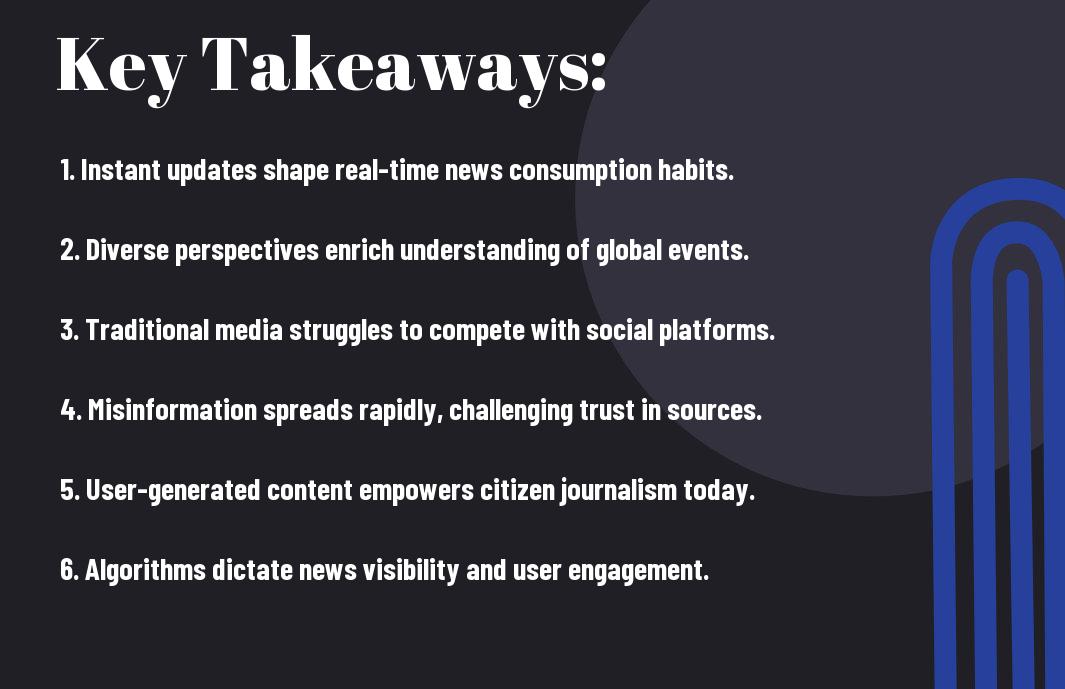
Media in today’s digital landscape is not just about traditional broadcasting; it has evolved into a multifaceted platform where you engage with news in real-time. As you scroll through social media feeds, you encounter breaking news updates, opinion pieces, and varied perspectives that influence your understanding of current events. This shift has led to changes in your news consumption habits, prompting you to seek diverse sources and share information at an unprecedented pace. Explore how social media reshapes not only the way you receive news but also how it impacts your worldview.
The Rise of Social Media as a News Source
The emergence of social media has significantly transformed how you engage with news content. Platforms like Twitter, Facebook, and Instagram allow you to access real-time information, breaking news, and diverse perspectives at your fingertips. You’re no longer confined to traditional news outlets for updates; instead, social media has democratized information sharing, enabling anyone to share news and opinions, thereby creating a more dynamic and interactive news landscape.
Overview of Social Media Platforms
Beside traditional news sources, various social media platforms have become prominent in delivering news. Each platform caters to different audiences with unique features and content styles, making it necessary for you to navigate through these options to find reliable information. Here’s a brief overview:
Social Media Platforms Overview
| Platform | Key Features |
|---|---|
| Real-time updates, short posts, trending topics | |
| Community engagement, share articles, diverse content types | |
| Visual storytelling, short videos, influencer narratives |
Comparison with Traditional News Outlets
Behind the rapid rise of social media as a news source lies a fundamental shift in how you perceive and consume news. While traditional news outlets provide structured journalism, social media offers a more immediate and sometimes less-verifiable approach. This disparity in information delivery has changed your expectations and the distinction between trusted sources and user-generated content.
Traditional News vs. Social Media
| Aspect | Traditional News Outlets |
|---|---|
| Verification | Extensive fact-checking and editorial standards |
| Speed | Slower news updates |
| Interaction | Limited audience interaction |
News from traditional outlets tends to offer more depth and fact-checked reporting, allowing you to gain insights into complex issues. In contrast, social media excels in offering rapid information dissemination, often prioritizing speed over accuracy. Depending on your preferences, you may find yourself relying on a mix of both, while being cautious about the credibility of the sources you follow to ensure you are well-informed.

Changing Consumption Habits
Even in a world dominated by traditional media, your habits are shifting as social media emerges as a primary news source. You likely find yourself scrolling through feeds to stay updated, rather than seeking out and consuming news through conventional outlets. This shift reflects the growing preference for personalized content, often curated and tailored to resonate with your interests. As you adapt to this digital landscape, the way you access news continues to evolve.
Speed and Accessibility of Information
Beside the immediacy of news updates, the accessibility provided by social media platforms has transformed your relationship with information. You can capture breaking news in real-time, often before it’s reported by mainstream channels. This instantaneous flow of information ensures you’re constantly informed, but it may also leave you navigating an overwhelming amount of content, making it important to discern between credible and unreliable sources.
Impact of Mobile Technology
Habits of news consumption have shifted dramatically due to the rise of mobile technology. With smartphones in hand, you have the world’s information at your fingertips, enabling you to access the latest headlines from any location. This convenience has fostered a culture of news on-the-go, where you can seamlessly integrate news consumption into your daily routines, whether during commutes or while waiting in line.
Changing your news habits through mobile technology allows you to tailor your experiences to fit your lifestyle. You can easily follow specific topics or influencers relevant to your interests, enabling a more personalized approach to information gathering. By utilizing news apps and social media platforms, you have the power to prioritize what matters most to you, controlling not only the content you engage with but also the pace at which you consume it. This transformation in how you access and engage with news is not just a trend; it’s a fundamental shift in your media landscape.

The Role of Algorithms in News Delivery
For many, algorithms play a central role in determining what news content you encounter daily. These complex systems analyze your online behavior, preferences, and interactions to curate a selection of articles, videos, and reports tailored to your interests. As a result, algorithms transform your news consumption experience, often influencing your perceptions and understanding of current events based on what is presented to you.
Personalization of News Feeds
News feeds have become personalized to a remarkable extent, with algorithms shaping what you see based on your past interactions. This customization can enhance your engagement with the news, making it feel more relevant to your interests, beliefs, and habits; however, it also raises questions about the diversity of perspectives you are exposed to in your daily reading.
Filter Bubbles and Echo Chambers
Filter bubbles create an environment where you’re frequently exposed to news that aligns with your existing viewpoints. This often leads to echo chambers, where differing perspectives are minimized or absent altogether. While this may provide a sense of community and affirmation, it can also limit your understanding of broader social issues and inhibit critical thinking.
Feeds designed by algorithms can inadvertently reinforce filter bubbles and echo chambers. By continuously showing you content that aligns with your preferences, you may miss out on different viewpoints and vital stories that challenge your biases. This narrowed perspective can lead to an incomplete understanding of the world around you, making it necessary to seek out diverse sources and engage with a variety of opinions to enrich your news consumption.

User-Generated Content and Citizen Journalism
Keep in mind that the rise of social media has empowered individuals to break news as they experience it, transforming everyday citizens into journalists. User-generated content enables you to share firsthand accounts and insights, giving you a unique perspective on events as they unfold. This democratization of news means you’re not just a passive consumer; you can actively contribute to the narrative of current affairs in real time.
The Power of the Public Voice
One significant aspect of user-generated content is the amplification of the public voice. Through platforms like Twitter, Facebook, and Instagram, you can express your opinions and share your experiences, reaching a vast audience. This shift has provided you with a sense of agency, as your perspective can influence the broader conversation around important issues and drive awareness to topics that may have been overlooked by traditional media.
Challenges of Credibility and Misinformation
Challenges regarding credibility and misinformation are prevalent in user-generated content. With the speed at which information spreads online, it becomes increasingly difficult for you to discern what is accurate. Misinformation can be amplified by algorithms that prioritize engagement over quality, leading you to encounter false narratives more frequently than reliable sources. Therefore, as you navigate social media for news, it’s vital to verify the origins of the information and remain aware of the potential for bias and manipulation.
In addition to the spread of misinformation, the lack of editorial oversight in user-generated content can further complicate your ability to assess the credibility of news. Unlike traditional journalism, which often adheres to strict standards of fact-checking and source verification, citizen journalism can vary significantly in quality. You may find yourself sifting through a mix of verified reports and misleading claims, making it imperative to approach social media as a source with caution and skepticism. Engaging with reputable fact-checking organizations and cross-referencing sources can help ensure that the information you consume is accurate and reliable.
Social Media’s Influence on Public Opinion
Many individuals today rely on social media as their primary source of news, profoundly shaping public opinion. Platforms such as Twitter and Facebook allow for rapid dissemination of information, leading to immediate reactions from users. This instant access not only informs your perspectives but also facilitates conversations around trending topics, often creating echo chambers that amplify certain viewpoints while marginalizing others.
Instant Feedback and Engagement
About the way you engage with news on social media, instant feedback is a game-changer. You can express your views through likes, shares, and comments almost immediately, allowing for real-time discussions. This active participation transforms traditional passive consumption of news into a dynamic dialogue, directly influencing how stories are perceived and spread within your network.
The Viral Nature of News
With the ever-increasing speed of information sharing, news can go viral in a matter of minutes. When a story resonates with you, it’s easy to share it within your network, amplifying its reach exponentially. This virality not only affects how information is consumed but also impacts the narrative surrounding the news, as each share may add a personal twist or opinion that alters the original message.
For instance, you might find a news story about a local event gaining traction as friends and family share their perspectives. As the story spreads, it evolves; new facts may emerge while opinions complicate the narrative. This transformation can contribute to misunderstandings or, conversely, may raise awareness about important issues that warrant further discussion. The viral nature of news stretches beyond just sharing; it creates a participatory culture where your voice can sway public perception significantly.
Ethical Considerations in Social Media News
Despite the rapid evolution of social media as a news source, ethical considerations remain pivotal. The way you consume news through these platforms raises questions about accuracy, trustworthiness, and the potential for misinformation. As a responsible consumer, you must navigate these challenges and be aware of the implications your engagement with social media can have on your understanding of current events.
Responsibility of Platforms
Considerations around the responsibility of social media platforms are crucial for ensuring accurate news dissemination. You should question whether these platforms are doing enough to combat misinformation and provide users with reliable sources. Their algorithms often prioritize engagement over accuracy, which can skew your perception of reality.
Journalistic Integrity in the Digital Age
The landscape of journalism is continuously shifting in the digital age, presenting challenges to journalistic integrity. You may find that traditional journalistic standards can sometimes falter in the rush to break news online, leading to sensationalism and unchecked facts. With the abundance of information available, it’s up to you to determine which sources uphold ethical reporting standards.
Due to the immediate nature of the internet and millisecond timelines, journalists often face pressure to publish stories without thorough fact-checking. This dynamic can compromise the quality of the news you receive. As you navigate this complex environment, it is important to prioritize sources that adhere to ethical journalism practices and foster a commitment to accuracy and balance. Engaging with credible outlets not only enriches your understanding but also supports quality journalism.
Conclusion
With these considerations, you can see that social media is significantly altering how you consume news. It offers immediate access to a variety of perspectives, but it also presents challenges like misinformation and confirmation bias. By staying aware of these dynamics and critically evaluating the sources you engage with, you can navigate the evolving landscape of news consumption more effectively, leading to a more informed understanding of current events.