

Misinformation can easily distort your understanding of current events in the digital age. With an overwhelming amount of information at your fingertips, knowing how to spot fake news is vital for navigating today’s media landscape. In this guide, you will discover practical tips and strategies to discern credible sources from unreliable ones, enabling you to make informed decisions and engage in meaningful discussions. Arm yourself with the tools you need to critically evaluate the news you encounter online.

Understanding Misinformation
As you navigate the vast world of information online, understanding misinformation becomes necessary. Misinformation refers to false or misleading information that is spread regardless of intent. This includes a wide array of content you might encounter, from social media posts to sensational headlines, which can shape your beliefs and perceptions significantly.
Definition of Misinformation
Understanding misinformation is key to becoming a savvy consumer of information. It encompasses any information that is inaccurate or misleading, regardless of whether the spreader intends to deceive you. This form of communication can greatly affect public opinion and distort reality.
Types of Fake News
Any sharp-eyed reader should familiarize themselves with the various types of fake news that may circulate. Here are some common types:
| Type | Description |
| Satire | Exaggerated humor that misleads readers about real events. |
| Clickbait | Eye-catching headlines that lead to misleading content. |
| Fabricated News | Completely false stories created to deceive. |
| Manipulated Content | Genuine information distorted to mislead. |
| Imposter Content | Using genuine sources to spread false narratives. |
This knowledge equips you to discern the various types of fake news that may cloud your judgment. Here’s a closer look at each type:
- Satire can often blur the lines between humor and fact.
- Clickbait tactics pull you in but usually contain no substance.
- Fabricated news poses a serious threat, as it is entirely made up.
- Manipulated content distorts truths, often confusing verifiable facts.
- Imposter content misleads you by masquerading as reputable sources.
| Type | Impact |
| Satire | Can misinform if taken seriously. |
| Clickbait | Reduces trust in media. |
| Fabricated News | Leads to misinformation spread. |
| Manipulated Content | Erodes understanding of real events. |
| Imposter Content | Confuses reliable sources with falsehoods. |
Any engagement with this information keeps you vigilant against the influences of misinformation in your digital life.
How to Identify Fake News
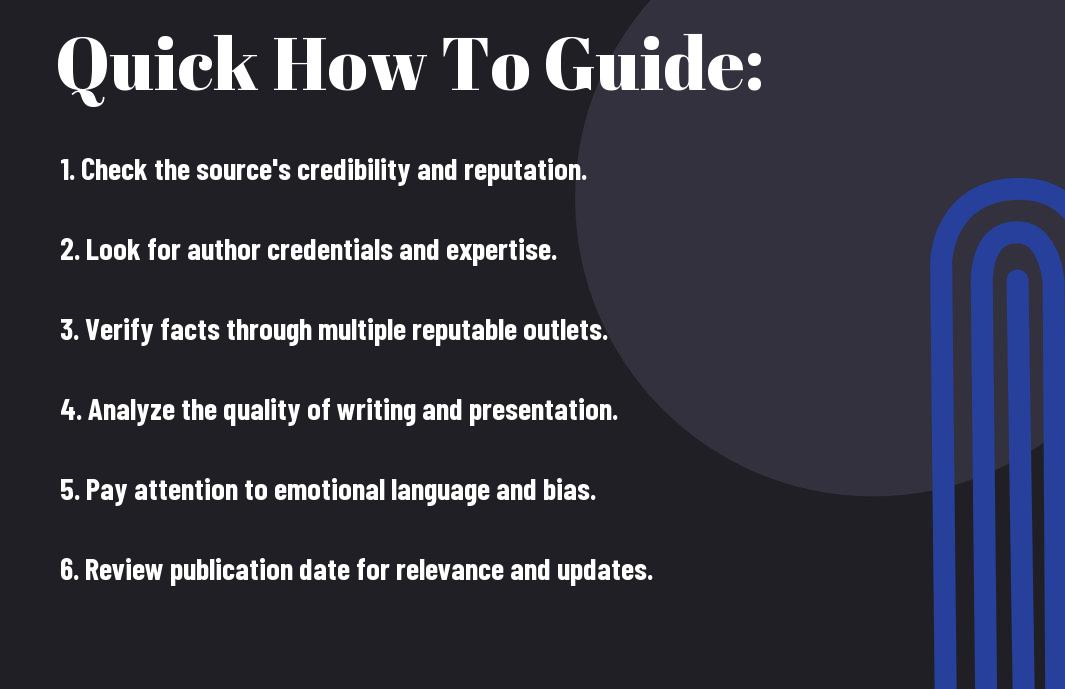
It can be challenging to navigate the sheer volume of information available online today. To distinguish fact from fiction, you need to employ a series of strategies. By honing your skills in identifying fake news, you can become a more informed consumer of information, making wise decisions about what to share and believe.
Analyze the Source
There’s a good chance that the source of the information you encounter can reveal a lot about its legitimacy. Always check whether the website, news outlet, or social media channel is reputable. Established news organizations adhere to strict journalistic standards, while unknown or obscure sources may have biases or intentions that warrant caution.
Check the Author’s Credentials
Little attention is often paid to who wrote an article, but the author’s background can lend credibility to the information presented. Investigate if the author is a recognized expert or has experience in the subject area being discussed.
Analyze their credentials by looking for their previous work, qualifications, or affiliations. A credible author should have a clear track record in journalism or expertise relevant to the topic. If there are no details available or the author lacks a professional background, it may raise red flags regarding the reliability of the article.

Fact-Checking Resources
All too often, misinformation spreads quickly, but you can combat this by utilizing fact-checking resources. These tools enable you to verify the authenticity of information and ensure that you are consuming and sharing accurate content. With the right resources, you can discern fact from fiction, empowering you to make informed decisions based on reliable information.
Reliable Fact-Checking Websites
While there are numerous websites dedicated to fact-checking, some of the most reputable include Snopes, FactCheck.org, and PolitiFact. These platforms analyze claims, validate sources, and provide evidence-based assessments of the information you encounter. Making a habit of checking these sources can significantly enhance your ability to identify misinformation in your news feed.
Tools and Apps for Verification
On the go, you can also rely on tools and apps designed for verification. Popular options include Google Fact Check Tools and Storyful, both of which provide insights to help you discern the credibility of news stories and social media posts. These handy resources can be invaluable when you need quick answers while browsing content.
With mobile applications like CrowdTangle and Hoaxy, you can effectively trace information back to its origins and assess how widely it has been shared. These tools allow you to monitor the spread of certain stories, which can provide context about the authenticity of the information. Incorporating these apps into your routine can significantly improve your ability to verify news and reduce the likelihood of sharing false information.

Tips for Critical Thinking
Your ability to think critically is important for navigating the digital landscape. Here are some tips to enhance your critical thinking skills:
- Evaluate the source of the information.
- Check for supporting evidence.
- Be aware of emotional language.
- Consider alternative viewpoints.
This approach not only helps determine the credibility of information but also cultivates a mindset geared toward thoughtful analysis.
Questioning Information
To effectively spot misinformation, you should actively question the validity of the information presented. Always consider the who, what, when, where, and why. Ask yourself: Who created this? What is their purpose? When was it published? Where did it come from, and why should you believe it? This rigorous questioning helps to sift through misleading claims and connect with credible sources.
Recognizing Bias
Information often comes with an underlying bias that can shape your perception. Evaluating the motivations behind a piece of content is important to understanding its context.
For instance, if a news article predominantly features one perspective on a controversial issue, it may omit vital information that could provide a balanced view. By assessing who benefits from the narrative being presented and examining language choices, you can uncover biases that distort the true message. Being aware of these subtle influences allows you to form a more rounded understanding of the topic.
Social Media Awareness
Not every post you encounter on social media is reliable. In the fast-paced digital landscape, misinformation spreads quickly, making it crucial for you to verify the information before sharing it. By staying vigilant and applying critical thinking, you can help combat the spread of fake news within your network.
Evaluating Content on Social Platforms
There’s an abundance of content on social media, and not all of it is accurate. When evaluating a post, consider the source, check for supporting evidence, and look for expert opinions. By asking yourself whether the information is presented objectively and assessing the credibility of the accounts you follow, you can become more discerning about what you believe and share.
Reporting and Flagging Fake News
While you navigate social media, it’s crucial to actively participate in maintaining accuracy. When you come across misleading or false information, utilize the reporting tools available on these platforms to flag it for review. This helps ensure that others are not misled and supports the creators of content to be held accountable for their claims.
Plus, using the reporting feature not only aids you in combating misinformation but also contributes to creating a more informed community. Social media platforms often rely on user feedback to identify and address fake news. By participating in this process, you play an active role in promoting accuracy and fostering a safer online environment for your peers and followers.
Factors Contributing to Misinformation
Despite the ease of accessing information today, several factors contribute to the spread of misinformation. Key contributors include:
- Lack of media literacy
- Social media algorithms
- Confirmation bias
- Rapid information sharing
Assume that by understanding these factors, you can better navigate the digital landscape and protect yourself from misleading content.
Algorithms and Echo Chambers
There’s an inherent risk in how algorithms tailor your online experience. They often create echo chambers, where you are exposed primarily to opinions and information that reinforce your beliefs. This selective exposure limits your perspective and heightens the potential for misinformation to be accepted uncritically.
Emotional Manipulation and Clickbait
Chambers of misinformation thrive on emotional manipulation, using clickbait tactics to capture your attention and provoke strong reactions. These sensational headlines and misleading content are designed to spark curiosity or fear, leading you to share them without verifying the facts.
Algorithms play a significant role in amplifying this emotional manipulation, prioritizing content that elicits strong emotions over factual accuracy. This focus on engagement often results in a cycle where stories that provoke outrage or excitement dominate your feed. Therefore, by critically assessing headlines and considering the emotional pull of the content, you can avoid falling prey to clickbait and reduce your exposure to false information.