

Most people today are increasingly aware of the health and environmental advantages that come with adopting a plant-based diet. As you explore this dietary shift, you’ll discover how incorporating more plant-based foods into your meals can enhance your well-being while also contributing to a sustainable future. From improving heart health to reducing your carbon footprint, you’ll find that the benefits are both significant and compelling. Join us as we explore deeper into the reasons behind the rise in plant-based diets and the positive impacts they can have on your life and the planet.
Understanding Plant-Based Diets
Before submerging into the details, it’s crucial to grasp what plant-based diets truly encompass. These diets emphasize whole, minimally processed foods derived from plants, and they can be adopted for various health and ethical reasons. By understanding the basics, you can better appreciate the vast array of choices available to enhance your health and minimize environmental impact.
Definition and Types
Along your journey to understanding plant-based diets, here are some definitions and types to consider:
| Type | Description |
|---|---|
| Vegetarian | Excludes meat, fish, and poultry. |
| Vegan | Eliminates all animal products, including dairy and eggs. |
| Pescatarian | Includes fish but no other meat or poultry. |
| Flexitarian | Primarily plant-based but allows occasional meat or fish. |
| Whole-food Plant-based | Focuses on whole foods and excludes processed items. |
Knowing the different types can help you choose a diet that aligns with your health goals and lifestyle preferences.
Popular Plant-Based Diets
Any discussion on plant-based eating would be incomplete without exploring the various popular diets that you can choose from. These options cater to different preferences and nutritional needs, allowing for flexibility while embracing a plant-centered lifestyle.
Further exploration of popular plant-based diets reveals how each offers unique benefits and considerations, ensuring you can find the right fit for your preferences. From vegetarianism, which is more inclusive of some animal-derived products, to strict veganism, where every animal product is excluded, understanding these distinctions gives you tools to make informed dietary choices. You may also find the flexitarian diet appealing, promoting balance by encouraging plant-based meals while allowing occasional meat or fish. Each option presents pathways to enhance your health and reduce your environmental footprint.

Health Benefits of Plant-Based Diets
Any transition to a plant-based diet can significantly enhance your health by providing a wealth of nutrients while reducing harmful dietary components. Filled with vitamins, minerals, and fiber, plant foods promote better digestion, support weight management, and improve overall well-being. Adopting a diet rich in fruits, vegetables, whole grains, nuts, and seeds can lead to improved energy levels and a greater sense of vitality.
Nutritional Advantages
To maximize your health, a plant-based diet offers a diverse array of necessary nutrients such as antioxidants, fiber, healthy fats, and proteins. By embracing whole foods instead of processed items, you can ensure that your body receives high-quality nourishment. This nutrient density supports healthy bodily functions and strengthens your immune system, keeping you energized throughout the day.
Impact on Chronic Diseases
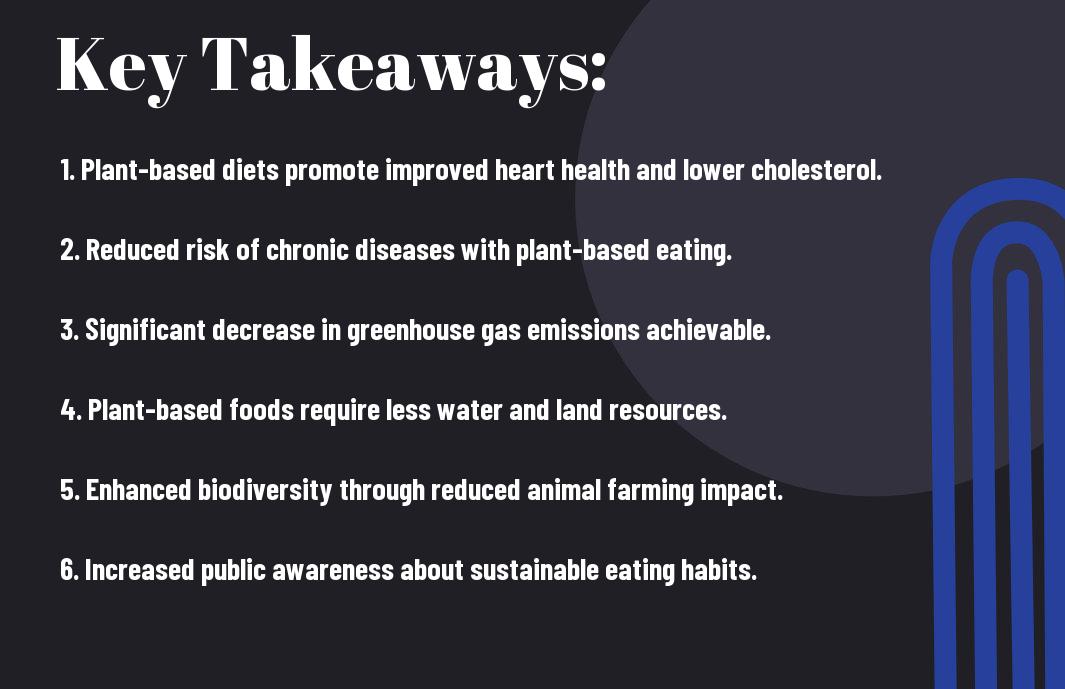
Besides boosting overall health, adopting a plant-based diet can significantly lower your risk of developing chronic diseases such as heart disease, diabetes, and certain cancers. The abundance of fiber and phytochemicals found in plant foods can help reduce inflammation, manage blood sugar levels, and improve heart health.
Plant-based nutrition addresses many risk factors associated with chronic diseases. Studies have shown that individuals following a plant-based diet typically have lower blood pressure, improved cholesterol levels, and better blood sugar regulation, leading to a decreased likelihood of experiencing severe health issues. By nourishing your body with healthy plant-based foods, you’re not just promoting good health; you are also taking proactive steps towards disease prevention and longevity.

Environmental Benefits of Plant-Based Diets
After adopting a plant-based diet, you contribute significantly to environmental sustainability. This dietary choice reduces land use, lowers greenhouse gas emissions, and minimizes waste associated with animal agriculture. By shifting your eating habits, you are actively supporting the planet’s health, promoting biodiversity, and conserving ecosystems, making a positive impact on future generations.
Reduction of Carbon Footprint
Around 14.5% of global greenhouse gas emissions come from livestock production. By choosing plant-based foods, you can drastically decrease your carbon footprint. Each meal you prepare with fruits, vegetables, legumes, and grains creates less demand for resource-intensive animal products, helping to mitigate climate change and its associated risks.
Conservation of Water and Resources
Behind the scenes, animal agriculture is a water-intensive industry. The production of meat requires significantly more water compared to growing plants directly for human consumption. By opting for a plant-based diet, you not only help save water but also assist in reducing the environmental strain caused by over-farming and depletion of natural resources.
This shift towards plant-based eating can lead to substantial water conservation. For example, producing a single pound of beef requires approximately 1,800 gallons of water, while a pound of lentils only uses about 50 gallons. By incorporating more plant-based foods into your meals, you help preserve freshwater supplies, reduce pollution from agricultural runoff, and promote sustainable farming practices. Overall, your dietary choice can play a significant role in conserving vital resources for future generations.

Economic Impacts of Plant-Based Diets
To understand the economic effects of plant-based diets, you must consider how they influence agricultural markets, consumer spending, and food production industries. As demand for plant-based products increases, shifts in consumption patterns can lead to new opportunities for businesses and farmers alike. These transitions can drive economic growth while potentially reducing healthcare costs associated with diet-related illnesses.
Market Growth and Trends
Impacts of the growing plant-based market are evident in increasing sales figures and expanding product offerings. You’ll find that major retailers and restaurants are rapidly adopting plant-based options to meet consumer demand. Innovations in food technology continue to enhance flavor and texture, making alternative proteins more appealing and accessible, which further boosts market trends.
Job Creation in Sustainable Agriculture
Sustainable farming practices are vital for a thriving plant-based economy, leading to increased job opportunities in this sector. You can expect a rising demand for skilled workers in areas like organic farming, crop management, and food processing, creating a robust job market that supports local communities.
This trend towards job creation is significant; as you engage with the plant-based movement, you’ll notice how it fosters not only local economies but also sustainable practices in agriculture. The shift toward sustainable agriculture not only enhances food security but also cultivates a workforce capable of adapting to environmentally friendly farming techniques. This creates a ripple effect, encouraging investment in training and education, ensuring that you and future generations will have the skills needed for a sustainable future.
Challenges and Misconceptions
Once again, embracing a plant-based diet can lead to various challenges and misconceptions that might deter you from fully committing. You may encounter skepticism from friends or family who question the diet’s effectiveness or legitimacy. Additionally, some might mistakenly believe that a plant-based diet is limited in variety and flavor. Understanding these challenges can empower you to navigate them confidently while enriching your dietary choices.
Nutritional Concerns
Nutritional adequacy is a common concern for those considering a plant-based lifestyle. You may worry about obtaining sufficient protein, iron, calcium, or necessary vitamins such as B12. However, with careful planning and knowledge of plant-based sources, you can easily meet your nutritional needs while enjoying a variety of delicious foods.
Cultural and Social Barriers
Above all, cultural and social barriers can pose significant obstacles when transitioning to a plant-based diet. You might find that your social circles or cultural traditions predominantly feature animal-based dishes, making it challenging to maintain your dietary preferences. Adapting to these social contexts often requires creativity and communication, as you learn to navigate gatherings and shared meals.
The impact of cultural and social barriers on your plant-based journey can be profound. The way people engage with food is often rooted in tradition and shared experiences, which can make it difficult for you to deviate from established norms. You may face pressure at family gatherings, where your choices might feel alien to others. Overcoming these barriers involves open conversations about your dietary choices, introducing your friends and family to new, plant-based dishes, and celebrating the diversity of food beyond animal products. By doing so, you can not only honor your dietary choices but also help educate others about the benefits of a plant-based lifestyle.
How to Transition to a Plant-Based Diet
Despite the potential challenges of shifting to a plant-based diet, you can ease this transition with the right approach. Start by gradually incorporating more plant-based meals into your weekly routine, rather than an abrupt change. This will help your palate adjust while reducing the chances of feeling overwhelmed.
Tips for Beginners
Diet changes can be daunting, but with a few practical tips, you can make the switch smoother:
- Start slowly by replacing one meal a day with a plant-based option.
- Experiment with new fruits, vegetables, and whole grains to keep meals interesting.
- Explore plant-based recipes online or in cookbooks for inspiration.
- Join online communities or groups for support and advice.
Knowing what works for you will make the process more enjoyable.
Meal Planning and Preparation
One effective way to maintain a plant-based lifestyle is by focusing on meal planning and preparation. Setting aside time each week to prepare and plan your meals helps you stay organized and avoid last-minute unhealthy choices.
The key to successful meal planning is to create a balanced menu that includes a variety of nutrients. Designate a specific day for grocery shopping, and choose recipes that incorporate seasonal produce. Batch cooking can be a great way to save time; prepare large portions of grains, beans, and veggies to mix and match throughout the week. Packing meals in advance ensures you’ll have healthy options ready to grab, keeping your commitment to a plant-based diet both simple and sustainable.
Final Words
Drawing together the health and environmental benefits of plant-based diets, you can see how making the switch not only enhances your well-being but also contributes to a more sustainable planet. By incorporating more plant-based foods into your meals, you improve your nutritional intake while reducing your carbon footprint. As you consider making dietary changes, you empower yourself to lead a healthier lifestyle and play a part in addressing global environmental challenges, paving the way for a future where well-being and sustainability go hand in hand.


