How Immigrant Communities Are Reshaping Local Journalism

Over the past decade, you’ve seen immigrant communities transform local journalism by introducing multilingual reporting, covering overlooked issues, and building trust in underserved neighborhoods. Their voices are redefining newsrooms, challenging mainstream narratives, and expanding what local stories get told and who gets to tell them.

The Fading Pulse of Legacy Newsrooms

You’ve seen the headlines shrink, the staff dwindle, the local paper arrive later each week or vanish altogether. Once-dominant newsrooms in cities and towns across the country are no longer the steady heartbeat of community life they once were. Cuts in funding, shifting ad revenues, and corporate consolidation have left many outlets unable to cover the full breadth of their communities-especially immigrant neighborhoods. You’re left with a void where accountability once lived, and stories once thrived.

New Voices in the Neighborhood

You hear their stories at the corner bakery, in bilingual school newsletters, and through community radio broadcasts that hum through open windows on weekend mornings. These voices-once overlooked by mainstream outlets-now shape how local events are covered and understood. You’re seeing immigrant journalists report on housing, education, and culture with firsthand insight, challenging old narratives and expanding who gets to tell the story of your city.

Cultural Lenses and the Definition of News

You define news not just by what happens, but by what matters to your community. For immigrant audiences, a local festival, a policy change on language access, or a religious celebration may carry the weight of a front-page story. Your lived experience shapes what counts as urgent or newsworthy, challenging mainstream outlets to expand their editorial视野. This shift isn’t about preference-it’s about representation and relevance.

Bridging the Information Divide

You see firsthand how immigrant-led media fill gaps left by mainstream outlets. These platforms deliver news in multiple languages, reflect cultural nuances, and cover issues overlooked by dominant narratives. You rely on them during emergencies, elections, and community debates. They don’t just translate information-they reshape how it’s shared, ensuring you stay informed on matters that directly impact your life.

Economic Models of the New Press

You rely on subscription models that reflect the values of immigrant audiences-affordable, community-driven, and ad-light. Many of these outlets operate through hybrid funding, blending small donations, local sponsorships, and nonprofit grants. You see sustainability not in mass scale, but in tight-knit support, where readers become stakeholders. This shift redefines what financial success looks like in local journalism.

The Transformation of Civic Engagement

You now see town halls filled with voices once overlooked, where immigrant-led media outlets spotlight local issues that mainstream outlets miss. Your understanding of community involvement expands as bilingual newsletters, radio broadcasts, and digital platforms invite participation in languages spoken at home. These channels don’t just report news-they connect people to schools, elections, and public services, turning information into action within neighborhoods that are finally being heard.

Final Words

With this in mind, you see how immigrant communities are redefining local journalism by introducing diverse voices, languages, and perspectives. Their presence shifts news coverage to reflect broader realities, challenging mainstream narratives and expanding public understanding. You witness a more inclusive media emerge, shaped by the stories, needs, and experiences of those long overlooked.

How Immigrant Journalists Bring New Perspectives to Storytelling

You hear stories every day, but immigrant journalists shape them in ways that reflect lived experiences across borders. Their backgrounds inform deeper context, challenge dominant narratives, and highlight underrepresented voices. You gain a broader, more accurate picture of the world because they report not just from the outside, but from within multiple cultures at once.

The Dual Lens of Displacement

You see both the place you left and the one you now call home with sharper clarity. Distance reshapes memory, and presence demands new understanding. This dual vision allows you to detect nuances others overlook, turning personal dislocation into a powerful storytelling tool grounded in lived contrast.

Observing the unseen in familiar landscapes

What feels ordinary to longtime residents often strikes you as strange or revealing. You notice rituals, tensions, and patterns hidden in plain sight-how people queue at a bus stop, the silence between political statements, the way accents shift block by block. These details become entry points into deeper truths about community and identity.

Translating silence into narrative

Silence speaks volumes when you’ve learned to listen. You recognize what goes unspoken in families, institutions, and public discourse-the grief, fear, or resistance held in quiet. Your stories give shape to these absences, turning what’s withheld into a narrative force that resonates with those who’ve also lived in the gaps.

That silence you carry isn’t empty-it’s layered with history, trauma, and survival. You’ve learned to interpret pauses in conversation, the hesitation before an answer, the way elders change the subject. These moments aren’t omissions; they’re signposts. In your hands, silence becomes a source of meaning, not a void, revealing truths that dialogue alone could never convey.

Linguistic Nuance and Cultural Codes

Immigrant journalists carry an intimate understanding of how language shapes meaning across cultures. Their fluency in multiple tongues allows them to detect subtle shifts in tone, idiom, and context that monolingual reporters might overlook. This sensitivity sharpens storytelling, revealing layers of truth embedded in everyday speech.

Breaking the limitations of a single tongue

You access deeper truths when you move beyond one language. Words in a native dialect often hold emotional weight that resists direct translation. By writing across languages, you expose meanings that exist only in the gaps between them, enriching narratives with authenticity and precision.

Deciphering the unspoken rituals of the Other

You notice what others miss-the glance, the pause, the gesture that carries cultural weight. These small acts speak volumes in communities where tradition shapes behavior. Your presence allows readers to see not just what people say, but how they live their beliefs.

Immigrant journalists interpret behaviors that seem ordinary but are deeply symbolic-how elders are addressed, how meals are shared, how grief is expressed in silence. You understand these rituals because you’ve lived them, and you translate them not through explanation, but through inclusion. This kind of insight doesn’t come from research; it comes from memory, from belonging. When you write about a community’s customs, you’re not observing from the outside-you’re guiding readers from within, revealing the quiet logic of cultural identity that words alone can’t capture.

Reimagining the Center from the Periphery

You see the world differently when you’ve reported from the margins. Immigrant journalists often bring stories not from the capital, but from the neighborhoods newsrooms overlook. Their lived experience shifts the narrative axis, placing overlooked communities at the heart of public discourse.

Challenging the dominant editorial gaze

They question whose reality gets framed as universal. When you’ve grown up outside Western editorial norms, you recognize bias in what’s deemed newsworthy. Your reporting disrupts inherited assumptions, replacing them with narratives shaped by pluralism and lived truth.

Reshaping the hierarchy of human importance

You know whose pain is often ignored. Immigrant journalists elevate voices dismissed as peripheral-refugees, day laborers, undocumented families. Their stories insist these lives matter, recalibrating media’s moral compass with quiet insistence.

Media has long operated with an unspoken ranking of whose suffering, joy, or struggle deserves attention. You’ve seen how a story from a war zone is reduced to statistics until a Westerner is involved. Immigrant journalists dismantle this hierarchy by centering humanity over geography. They report grief in a village with the same gravity as in a capital city. Their presence in newsrooms challenges the reflex to prioritize certain lives over others, making coverage more ethically balanced and emotionally honest. This shift doesn’t just diversify content-it redefines journalistic responsibility.

The Burden and Beauty of the Bridge

Carrying dual identities, you move between cultures with both responsibility and grace. Your reporting doesn’t just translate language-it translates experience, offering audiences insights that resonate across divides. This bridge you build is fragile, often unseen, yet important in shaping a more layered public narrative.

Navigating the friction of two worlds

Living between homelands means you often feel fully at home in neither. You hear subtle tensions in language, custom, and expectation that others overlook. These tensions shape your storytelling, infusing it with a depth that reflects real human complexity, not just headlines.

Building trust within marginalized enclaves

Communities open up to you because they see themselves in your presence. You speak their language, honor their silences, and understand unspoken rules. This access allows you to share stories that mainstream outlets often miss or misrepresent.

When you enter a neighborhood where suspicion of media runs deep, your background becomes your credibility. People don’t just hear a reporter-they recognize someone who has lived through similar struggles, who knows which questions to ask and, just as important, which moments to hold in quiet. You don’t extract stories; you earn them through presence, patience, and shared memory. This kind of journalism doesn’t happen from a distance-it grows from proximity and respect, revealing truths that only emerge when people feel safe enough to speak.

Historical Memory as a Reporting Tool

Immigrant journalists often carry generational memories that shape how they interpret current events. Their reporting draws from histories not always visible in mainstream narratives, offering depth that transforms simple stories into layered accounts rooted in real human continuity.

Connecting present events to distant echoes

You recognize patterns others might miss. When conflict erupts abroad, your awareness of past upheavals in your country of origin adds context that enriches your reporting. These distant echoes aren’t background noise-they’re important clues to understanding today’s headlines.

Anchoring news in the weight of lived experience

Your family’s journey through displacement or political change informs how you cover migration or policy shifts. This lived history isn’t bias-it’s a lens that grounds stories in emotional and historical truth, making them resonate more deeply with diverse audiences.

When you report on asylum seekers arriving at borders, you don’t just cite statistics-you recall your aunt’s account of crossing a minefield at night. That personal history doesn’t override journalistic standards; it sharpens your questions and deepens your empathy. You know silence can be as telling as testimony, and timing often mirrors the rhythms of survival. These nuances, drawn from real experience, allow you to present news not as isolated incidents but as chapters in longer human struggles.

The Evolution of the Global Witness

You carry stories shaped by borders crossed and lives rebuilt. Immigrant journalists don’t just report events-they’ve lived the shifts in power, displacement, and resilience that define global narratives. Your presence transforms the role of the witness, turning distant crises into personal testimony and grounding international news in lived truth.

Cultivating empathy through shared struggle

You understand pain that doesn’t need translation. When you cover displacement or discrimination, your own history informs the quiet moments-the hesitation in a refugee’s voice, the weight behind a parent’s silence. That depth invites audiences to feel, not just observe, creating connections facts alone cannot build.

Expanding the boundaries of the newsroom

You challenge the default settings of mainstream coverage. By questioning whose stories are told and how, you push newsrooms to reflect the communities they serve. Your presence reshapes editorial priorities, making space for voices once considered peripheral.

Newsrooms once operated within narrow cultural frameworks, but your influence redefines what counts as newsworthy. You bring sources, languages, and networks that expose gaps in coverage and correct blind spots. This isn’t about diversity for optics-it’s about accuracy. When you report on immigrant communities, you do so with context and nuance that prevent oversimplification, ensuring stories are told with integrity, not assumption.

To wrap up

Conclusively, immigrant journalists shape storytelling by infusing narratives with firsthand cultural insights and lived experiences. You gain access to stories told through distinct lenses, broadening understanding and challenging dominant narratives. Their presence enriches media with authenticity, ensuring diverse voices are not just heard but centered in public conversation.


How Cultural Identity Influences Modern Journalism

Journalism shapes how stories are told, and your cultural identity influences how you interpret them. Your background affects which voices you amplify, how you frame events, and what you consider newsworthy. As global perspectives merge in newsrooms, your awareness of cultural context becomes central to fair, accurate reporting in today’s interconnected world.

The Ghost in the Machine

Every journalist carries an unseen weight-their cultural identity-woven into the way stories are framed and told. You don’t report from a vacuum; your upbringing, language, and traditions shape what you see as important, even when you aim for objectivity. That silent presence, the ghost in the machine, is always at work beneath the surface of the text.

Inherited perspectives on the page

Your worldview didn’t emerge from nowhere. The values passed down through family, community, and national narratives subtly influence how you interpret events. Even when writing in a neutral tone, inherited assumptions about power, morality, and truth color the narrative in ways you may not immediately recognize.

The fallacy of the neutral eye

You’ve been taught to strive for impartiality, but true neutrality is a myth. Every editorial choice-from which sources to quote to which details to highlight-bears the imprint of cultural conditioning. Pretending otherwise doesn’t erase bias; it only makes it invisible, and therefore more dangerous.

Consider how a reporter raised in a collectivist society might emphasize community impact over individual rights in a crime story, while another from an individualist background centers the accused’s personal journey. These aren’t flaws-they’re reflections of deeper cultural logics. Recognizing this doesn’t weaken journalism; it strengthens your honesty about where stories truly begin.

The Syntax of Belonging

Language carries more than meaning-it holds identity. The way you structure a sentence, the rhythm of your phrasing, even the silence between words often reflects where you come from. In journalism, these subtle linguistic patterns shape how stories resonate with different audiences, revealing a deeper connection between voice and cultural rootedness.

Cultural idioms in breaking news

You notice it in the phrasing after a crisis-a metaphor drawn from folklore, a proverb slipped into a quote. These idioms aren’t just color; they anchor events in shared experience. When reporters use familiar expressions, they make distant tragedies feel immediate, translating chaos into terms your community already understands.

How heritage shapes the scoop

Your background influences what you see as newsworthy. A story about a local festival might seem minor to some, but to you, it signals cultural continuity. Journalists often spot significance in moments others overlook, guided by the values, memories, and histories they carry from their communities.

Heritage informs not only what you cover but how deeply you dig. You might pursue a lead about a neighborhood dispute because you recognize the underlying tensions from your own upbringing. This lived context gives your reporting texture and authenticity, allowing you to ask better questions and uncover layers that outsiders might miss. Your roots become a lens, sharpening your instinct for truth.

The Localized Truth

Truth often wears different faces depending on where you stand. You understand that journalistic narratives shift when filtered through cultural lenses, shaping what communities accept as fact. Local values, histories, and shared experiences inform how stories are told and received. This isn’t fragmentation-it’s authenticity in motion.

Community bonds as journalistic currency

Trust grows from familiarity, and you know credibility in reporting stems from shared identity. When journalists emerge from the communities they cover, their work carries an implicit authenticity. You rely on these connections because they signal respect, context, and accountability-qualities no distant correspondent can replicate without time and genuine engagement.

The decline of the universal anchor

One voice no longer speaks for all. You’ve noticed how the era of the singular, authoritative news presenter has faded, replaced by diverse storytellers rooted in specific cultures. This shift reflects a deeper demand for representation, where audiences seek faces and voices that mirror their own realities.

That single anchor once symbolized objectivity, but you now recognize that neutrality was often a mask for homogeneity. As global audiences question who gets to define truth, media institutions can no longer assume authority without cultural legitimacy. You expect journalists to reflect the complexities of identity, not erase them in favor of a false universalism. This evolution isn’t a loss of standards-it’s a recalibration toward honesty.

Power and the Editorial Line

Power shapes every editorial decision, often reflecting whose stories are prioritized and how they’re framed. You operate within institutions where historical biases influence what counts as “news.” Recognizing this helps you challenge inherited norms and make space for voices long excluded from mainstream narratives.

Institutional memory versus lived experience

Tradition often upholds established reporting methods, but your lived experience offers a different kind of truth. When institutional memory dismisses personal context, coverage risks misrepresenting communities. You bring insight that challenges outdated assumptions and deepens journalistic integrity.

Shifting the center of gravity

Centering marginalized perspectives changes the focus of news production. You redefine what’s considered relevant by elevating stories from the edges. This shift doesn’t just diversify content-it transforms how audiences understand power, truth, and belonging in public discourse.

When you place community knowledge at the core of reporting, journalism becomes more accurate and accountable. Mainstream outlets once treated certain cultures as “niche,” but your work proves they are central to the national conversation. By redefining expertise and sourcing beyond press releases, you reshape not only stories but the systems that produce them.

The Virtual Tribe

You belong to communities that exist beyond geography, shaped by shared values, languages, and experiences expressed online. These digital affiliations influence how you consume and interpret news, creating echo chambers that reinforce cultural narratives. Journalists now tailor stories to resonate within these virtual tribes, where identity often matters more than location.

Digital fragments of the self

You present different versions of yourself across platforms, each curated to fit specific audiences. These digital fragments shape how you engage with journalistic content, often aligning with the cultural tone of the space you’re in. News no longer speaks to a unified identity but to the layered personas you perform daily.

Global stories through narrow windows

You access international events through feeds filtered by algorithms trained on your behavior. These narrow windows determine which global crises gain your attention and which remain invisible. What you see is not the world, but a reflection of your digital habits and cultural positioning.

Your understanding of distant conflicts or cultural movements often comes through a single viral post or a trending hashtag, stripped of context. These snapshots may spark awareness, but they risk reducing complex realities to emotional soundbites. Journalists face the challenge of breaking through these narrow views without reinforcing them, offering depth where algorithms prioritize speed and sentiment. You’re exposed to more stories than ever, yet your perspective remains tightly framed by design.

Final Words

So your cultural identity shapes how you interpret news, what stories you prioritize, and how you engage with audiences. Modern journalism reflects diverse worldviews, and your background informs both the questions you ask and the truths you reveal. Recognizing this influence strengthens credibility and deepens public trust in an era of global connectivity.

The Real Challenges Immigrant Journalists Face in American Media

Many immigrant journalists bring diverse perspectives to newsrooms, yet you often encounter systemic barriers. Language expectations, visa restrictions, lack of professional networks, and cultural bias can limit your opportunities. Despite your skills and experience, gaining recognition and fair representation in mainstream media remains an ongoing struggle.

The Linguistic Barrier and the Tyranny of Native Fluency

You face an unspoken standard every time you write or speak on air: the expectation of native fluency. Accents, idiomatic choices, or slight grammatical differences are often treated as flaws, not variations. This bias privileges certain voices while marginalizing equally skilled journalists who think and express themselves in multiple linguistic codes.

Standardizing the Voice

Your tone, pacing, and word choice are frequently adjusted to match an invisible editorial norm. Editors may ask you to “simplify” your language, even when it’s clear and effective. This pressure erases the richness of diverse expression and reinforces a narrow idea of what a credible journalist should sound like.

Gatekeeping Through Syntax

Your sentence structure can become a barrier to acceptance, even when your reporting is accurate and compelling. Some newsrooms favor a specific rhythm or formality in writing, often rooted in Anglo-American conventions. Deviations-shaped by your native language or cultural context-are flagged as errors, not stylistic differences.

Syntax becomes a tool of exclusion when editors insist on rigid sentence patterns that reflect only one linguistic tradition. You might craft a clear, logical paragraph using a structure common in your first language, yet it gets rewritten without discussion. These small corrections accumulate, signaling that your voice is not fully trusted. Over time, this undermines confidence and distorts the authenticity of your storytelling. The expectation isn’t just to speak English-it’s to think in it a certain way.

Precarious Legal Status as a Tool of Control

The Visa Trap and Editorial Autonomy

Your ability to report freely often hinges on a visa tied to a single employer. If you challenge powerful interests or pursue sensitive stories, the threat of non-renewal looms. That dependency shapes what you cover-and how deeply-turning immigration status into a quiet censor.

Vulnerability to Institutional Retaliation

Losing your job can mean losing your right to stay in the country. This reality makes you an easy target when institutions want to silence scrutiny. You may self-censor or avoid high-risk reporting, knowing one dispute could end both your career and residency.

When your work authorization depends on an employer-sponsored visa, speaking out against workplace pressure or unethical editorial decisions carries extreme risk. Editors aware of your status may exploit it, assigning or blocking stories with little fear of pushback. You’re not just reporting the news-you’re weighing each decision against your legal survival.

Cultural Blindness in the Modern Newsroom

You often find yourself explaining basic cultural contexts that should already be understood. Newsrooms operate with a narrow worldview, assuming universality in narratives that aren’t universal at all. This blind spot distorts coverage and alienates audiences who see their realities misrepresented or ignored.

Erasure of Nuance in Global Reporting

You know how complex a single country’s story can be, yet editors demand simplified versions that fit familiar Western frames. In reducing intricate social dynamics to soundbites, the media flattens truth. Your attempts to highlight contradictions and local contradictions are often cut for clarity.

Tokenization of the Foreign Perspective

You’re called on only when a story involves your homeland, as if your expertise is geographically confined. Colleagues treat your presence as a checkbox for diversity, not a contribution of depth. Your voice becomes a prop rather than a consistent part of the editorial conversation.

You’re expected to represent entire regions despite having no more inherent authority over them than a domestic journalist has over all of America. Assignments come your way not based on beat experience but on passport origin. This pattern reinforces the idea that immigrant journalists are cultural interpreters first and reporters second, limiting their growth and distorting their professional identity.

Economic Barriers and the Meritocratic Myth

You often hear that talent and hard work guarantee success in journalism, but the reality is far more complex. For immigrant journalists, structural economic barriers-like unpaid internships and high living costs in media hubs-make entry nearly impossible without financial backing. Merit alone rarely opens doors when access depends on wealth.

Financial Exclusion via Unpaid Intern ships

You can’t afford to work for free when rent and groceries demand immediate payment. Unpaid internships remain a common entry point in media, yet they automatically exclude those without outside financial support. Immigrant journalists, often supporting families back home, find these opportunities out of reach despite their skills and ambition.

Wealth Gaps in Major Media Hubs

You face steep housing and living costs in cities like New York, Los Angeles, or Toronto-where most major outlets are based. Salaries for entry-level journalism jobs rarely match these expenses. Without generational wealth or family support, sustaining a career in these hubs becomes a financial strain few can endure.

Living in a major media city means more than just high rent-it means choosing between paying bills and attending industry events, buying professional equipment, or even commuting to assignments. You may have the talent and drive, but when entry-level wages hover near minimum wage and housing prices soar, your ability to stay in the field depends less on merit and more on economic survival. Immigrant journalists, especially those without local credit history or financial safety nets, are disproportionately affected by these invisible economic filters.

Psychological Toll of Permanent Outsiderhood

Constantly straddling two worlds, you carry the quiet weight of never fully belonging. Even with years in the industry, subtle cues-mispronounced names, exclusion from informal networks-remind you that assimilation has limits. This persistent sense of difference wears down confidence, shaping how you see your place in newsrooms where cultural fluency often defaults to a single norm.

Institutional Isolation and Imposter Syndrome

Being the only one in the room who speaks with your accent or references a different cultural context can make you feel like an anomaly. You second-guess your expertise, even when your reporting is accurate and impactful. Without mentors who share your background, self-doubt creeps in, making success feel accidental rather than earned.

The Burden of Representing the Displaced

Newsrooms often turn to you not just as a journalist, but as the voice for entire communities shaped by migration. You’re expected to explain trauma, translate cultural nuances, and humanize crises-emotional labor rarely asked of your peers. This added role stretches you thin, turning every story into a personal mission.

When editors assign you stories about war, displacement, or border policies, they’re not just tapping your skills-they’re relying on your lived experience. You become the default source on issues affecting people who look like you, whether or not the topic aligns with your expertise. Over time, this expectation narrows how colleagues see you and limits the range of stories you’re trusted to cover.

Political Hostility and the Threat of Violence

You face heightened scrutiny when your accent, name, or background mark you as different in newsrooms and in the field. In polarized environments, immigrant journalists are often targeted as political symbols rather than seen as professionals doing their jobs. This hostility can escalate quickly, especially when misinformation paints non-citizen reporters as outsiders with hidden agendas.

Xenophobic Backlash in Digital Spaces

You’re exposed to relentless abuse online simply for reporting the truth. Social media platforms amplify hate, where comments question your right to speak, accuse you of disloyalty, or demand deportation. These attacks aren’t random-they’re coordinated, racialized, and designed to silence your voice.

Physical Risks for the Non-Citizen Press

You risk more than your reputation when covering protests or contentious political events. Law enforcement and hostile crowds may single you out based on appearance or documentation status. Without the same legal protections as citizens, your presence in high-tension zones can turn dangerous in seconds.

Immigrant journalists often operate in legal gray areas that make them vulnerable during confrontations with authorities. If detained while reporting, your immigration status could be weaponized, leading to deportation threats or prolonged detention. Unlike citizen reporters who can rely on press protections, you may lack institutional backing, leaving you exposed to exploitation, surveillance, or removal-all for doing the job of informing the public.

Summing up

Presently, you face systemic barriers as an immigrant journalist, from credential recognition to language bias and limited access to influential networks. Newsrooms often overlook your multilingual insights and cross-cultural understanding. You work under pressure to assimilate while maintaining authenticity. These challenges shape not only your career path but also the diversity of voices in today’s media.

Why Diverse Voices Are Essential for the Future of Journalism

There’s a direct link between the trust audiences place in news and the range of perspectives behind it. You rely on journalism to reflect the world accurately, and that world includes people of different backgrounds, experiences, and beliefs. When newsrooms include diverse voices, the stories they tell become more complete, fair, and relevant to everyone.

The Mirror of a Fractured Society

You see yourself reflected in the stories told, but only if your experience is included. Without diverse voices, journalism distorts reality, showing a world tilted toward the familiar and comfortable. You live in a complex, layered society-your news should reflect that truth, not erase it. A single narrative can’t capture the full weight of collective experience.

The Moral Weight of the Witness

You carry a responsibility every time you report a story. Your presence at an event, your choice to record or write, transforms you into a witness. That act isn’t neutral-it holds moral weight. When you center voices often excluded, you correct imbalances in whose pain is seen, whose truth is believed. You don’t just relay facts; you affirm dignity.

Restoring the Broken Covenant

You rebuild trust in journalism not through grand gestures but through consistent, honest representation. When your newsroom reflects the society it serves, your reporting stops feeling like an outsider’s take and starts sounding like truth. You’ve been given a responsibility-to report with fairness, to include voices long ignored, to correct the imbalance. That’s how the covenant heals.

The Architecture of a New Truth

Diverse Perspectives Shape Reality

You see the world through more than one lens when newsrooms reflect the societies they serve. A single narrative can distort; multiple voices correct. You gain accuracy not from consensus but from contrast. Truth emerges not fully formed but built-brick by brick, voice by voice-until the structure holds under scrutiny. Your understanding deepens when stories come from those who’ve lived them, not just observed them.

Conclusion

Drawing together diverse voices strengthens the integrity of journalism. You rely on accurate, representative reporting to make informed decisions. When newsrooms reflect varied backgrounds, experiences, and perspectives, the stories they tell become more honest, inclusive, and trustworthy. Your understanding of the world deepens when multiple viewpoints shape the narrative.

The Rise of Multicultural Media and Its Impact on Journalism

It’s undeniable that multicultural media has transformed the landscape of journalism, reshaping the narratives that are presented to you every day. As diverse voices gain recognition, you may find that your understanding of news is enriched by perspectives that were previously underrepresented. This evolution not only broadens the scope of reporting but also fosters inclusivity, inviting you to engage with stories that resonate with various cultures and experiences. In this post, we will explore how this shift is influencing journalism and what it means for your consumption of news in an increasingly globalized world.

The Transformation of Media Landscapes

The landscape of media has undergone significant changes over the past two decades, driven largely by technological advancements and shifting societal dynamics. Traditional media outlets, once the gatekeepers of information, now share space with a multitude of platforms catering to diverse audiences. These emerging voices not only reflect but also shape the narratives of various cultural communities, ultimately leading to a richer and more nuanced media ecosystem. You can see this transformation manifest in the rise of independent journalism, community-driven content, and multimedia storytelling, which all contribute to a broader understanding of societal issues.

The Digital Revolution: Redefining Access

The digital revolution has fundamentally changed how you access news and information, dismantling the barriers previously set by geographic location and socioeconomic status. With the proliferation of smartphones and internet access, audiences can engage with a wide array of sources—from global news outlets to niche blogs and podcasts—tailored to their specific cultural interests. This shift not only democratizes information but also empowers you to curate your media consumption, ensuring that previously marginalized voices are now part of the larger conversation.

The Role of Social Media in Multicultural Communication

Social media plays a pivotal role in facilitating multicultural communication, allowing you to connect with a mosaic of cultures and perspectives like never before. Platforms such as Twitter, Facebook, and Instagram not only serve as channels for sharing information but also as forums for dialogue, enabling diverse communities to engage in exchange and report on issues that matter to them. This dynamic creates more accountable journalism by fostering interaction between journalists and their audiences, allowing for the immediate correction of biases or inaccuracies.

Social media democratizes news reporting by giving everyone the power to become a storyteller. For instance, platforms like Twitter have witnessed trending hashtags such as #BlackLivesMatter and #MeToo, which not only raise awareness of social justice issues but also unite individuals across various backgrounds in shared activism. The immediacy of social media promotes a sense of urgency and relevance, challenging established narratives and elevating diverse voices. Consequently, you play a critical role in shaping a more inclusive discourse, highlighting stories that might otherwise remain unheard in traditional media spaces.

The Demand for Diverse Voices in Journalism

As audiences increasingly seek authentic narratives that reflect their realities, the demand for diverse voices in journalism has intensified. You might notice more outlets prioritizing representation, embracing not only racial and ethnic diversity but also varying gender identities, sexual orientations, and socio-economic backgrounds. This shift is more than just a trend; it’s a response to the growing recognition that every story deserves to be told from multiple perspectives, enriching the overall media landscape.

Addressing Historical Underrepresentation

Throughout history, media representation has often skewed towards dominant cultures, leaving marginalized groups voiceless. You may find it unsettling to learn that studies have shown African Americans, Hispanic Americans, and other minority groups have been significantly underrepresented in mainstream journalism. As newsrooms evolve, acknowledging this historical disparity allows for a more balanced approach to storytelling.

Amplifying Marginalized Narratives

Elevating stories from underrepresented communities offers vital insights into their experiences and challenges. You might consider how platforms like local ethnic publications or digital news sites focus on issues that matter most to these communities. By amplifying marginalized narratives, journalism not only reflects a broader spectrum of humanity but also fosters comprehension and empathy among diverse audiences.

In your exploration of this topic, you’ll realize that amplifying marginalized narratives is important for a complete understanding of societal issues. For example, publications such as “The Root” address African American perspectives while providing historical context and contemporary relevance. This focus not only enriches the media landscape but enables you to grasp complexities often overlooked by traditional news outlets. Furthermore, by showcasing personal stories, these narratives challenge stereotypes, dismantle biases, and promote inclusivity within public discourse, creating opportunities for meaningful dialogues that benefit society as a whole.

Challenges Facing Multicultural Media Outlets

Multicultural media outlets face a range of challenges that can impede their growth and impact in the broader journalism landscape. Amidst the demand for diverse perspectives, these platforms grapple with financial constraints, content authenticity, and the constant need to engage various cultural audiences without alienating others. These challenges not only threaten their sustainability but also affect their ability to deliver content that resonates and connects with the communities they serve.

Financial Sustainability in a Competitive Market

In an increasingly competitive market, financial sustainability poses a significant challenge for multicultural media outlets. Many operate on limited budgets, relying heavily on grants, donations, or subscriptions to support their editorial missions. As advertising revenues continue to dwindle for traditional media, it becomes imperative for multicultural outlets to diversify their income sources while maintaining their journalistic integrity and community focus.

Navigating Cultural Sensitivities and Misrepresentation

Navigating cultural sensitivities is vital for multicultural media outlets to accurately represent their communities. Misrepresentation can lead to a loss of trust among audiences, underscoring the need for thoughtful and informed storytelling. In a climate where nuanced portrayals are vital, issues like stereotyping or cultural appropriation can undermine credibility. Multicultural outlets must invest in training and resources to empower their journalists to approach stories with respect and an understanding of the broader societal impact. This level of awareness not only enhances the quality of reporting but also strengthens community ties, fostering a more inclusive dialogue.

Innovations Shaping the Future of Multicultural Journalism

Innovations in multicultural journalism are driving a transformative shift in how stories are told and consumed. Emerging technologies and collaborative practices are paving the way for diverse narratives to intertwine, creating a more inclusive media landscape. As these advancements continue to shape industry standards, your understanding of multicultural journalism will broaden, allowing for richer content that resonates with global audiences.

Cross-Cultural Collaborations and Global Perspectives

Cross-cultural collaborations are becoming increasingly popular, enabling reporters from different backgrounds to work together on stories that highlight diverse experiences. This collective approach enriches coverage and fosters a deeper appreciation for various social issues, while also increasing the accuracy of reporting. By engaging with a variety of voices, you’re likely to discover fresh perspectives that challenge preconceived notions and provide a nuanced understanding of global narratives.

The Impact of AI and Technology on Content Creation

AI and technology are revolutionizing the way content is created and disseminated in multicultural journalism. These tools offer journalists unprecedented access to data analysis, translation capabilities, and audience engagement tactics. The result is a more dynamic approach to storytelling that enhances relevance and impact across different cultural landscapes.

For instance, AI-powered translation services allow you to reach broader audiences by effortlessly converting articles into multiple languages, preserving nuance and context. Furthermore, machine learning algorithms can analyze demographic data to identify trending topics relevant to specific communities, guiding journalists toward content that resonates with diverse audiences. The utilization of tech in content creation not only streamlines the production process but also helps ensure that multicultural perspectives are accurately represented, fostering a more connected and informed global society.

The Ethical Imperatives of Multicultural Reporting

Addressing the ethical imperatives of multicultural reporting involves a deep understanding of diverse perspectives and contexts. The commitment to accuracy and fairness is even more pressing in a multicultural landscape where narratives can differ greatly between communities. Upholding these ethical standards ensures that reports don’t inadvertently perpetuate stereotypes or misinformation, but rather promote a nuanced and respectful representation of all cultural backgrounds.

The Responsibility of Journalists in Fostering Inclusivity

You play a vital role in fostering inclusivity within journalism. This means actively seeking out diverse voices and perspectives that may have been historically marginalized. By prioritizing representation in your reporting, you contribute to a broader understanding of the issues confronting various communities, empowering them to share their stories and experiences. This not only enriches the narrative landscape but also builds trust and accountability within your audience.

Balancing Objectivity with Cultural Ownership

Navigating the balance between objectivity and cultural ownership requires mindfulness about who tells the stories. Respecting cultural ownership means acknowledging that certain narratives and experiences are best told by those who live them, while your role as a journalist includes providing a platform for these voices to be heard. This approach leads to a more authentic and balanced representation, enhancing the credibility of the reporting.

Finding this balance often involves collaboration and dialogue with community members, allowing them to shape the narrative while you provide the journalistic rigor needed for broader dissemination. For example, engaging in co-reporting or seeking input from local experts can transform potentially one-sided stories into rich, multifaceted accounts that resonate more deeply with audiences. By fostering these relationships, you can ensure that reporting doesn’t just maintain objectivity, but also honors the cultural nuances inherent to each story.

Final Words

Taking this into account, you can see how the rise of multicultural media has transformed journalism by diversifying perspectives and enhancing audience engagement. As you navigate this evolving landscape, consider how these new voices enrich your understanding of news and events. Embracing this shift will not only inform your worldview but also empower you to contribute to a more inclusive media environment that reflects the richness of our global society.

The Rise of AI in Journalism – What It Means for the Future

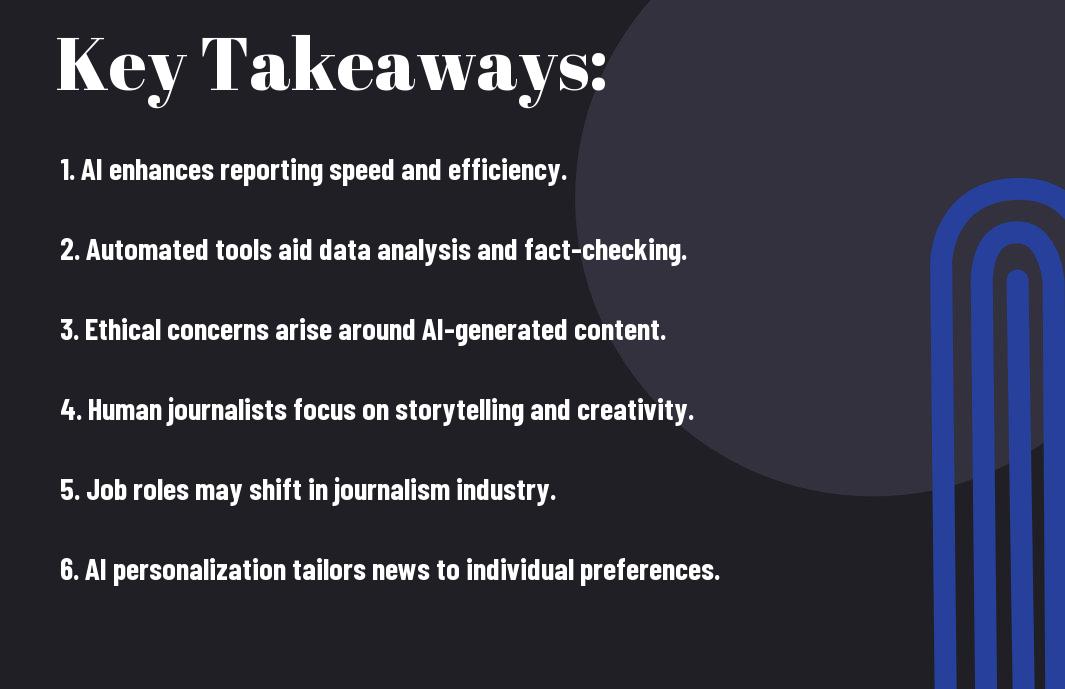
Just as technology has reshaped various industries, artificial intelligence (AI) is making significant strides in journalism. You may wonder how this evolving landscape will impact your experience as a reader or even as a participant in the field. From automated content generation to data-driven storytelling, AI is redefining the way news is produced and consumed. In this blog post, you will explore the implications of AI’s rise in journalism and what it means for the future of reporting, engagement, and information dissemination.

Understanding AI Technology

A growing presence of artificial intelligence (AI) in journalism is reshaping storytelling methods, enhancing productivity, and transforming how news is produced and consumed. This technological evolution provides tools that augment human capabilities, enabling journalists to focus on more in-depth reporting and analysis.

Definition of AI in Journalism

Technology in journalism encompasses algorithms and software designed to analyze data, generate content, and engage with audiences. By leveraging these capabilities, AI improves the efficiency and accuracy of news reporting, automates routine tasks, and offers personalized news experiences for readers.

Different Types of AI Tools

There are several types of AI tools available to journalists, each serving distinct purposes to enhance your work. Some common tools include:

  • Natural Language Processing (NLP)
  • Automated Reporting Systems
  • Data Visualization Tools
  • Sentiment Analysis Software
  • Chatbots for audience engagement

Assume that you employ these tools to streamline your reporting process and add valuable insights to your articles.

AI Tool Function
Natural Language Processing (NLP) Analyzes and understands human language
Automated Reporting Systems Generates news stories from data inputs
Data Visualization Tools Transforms data into visual representations
Sentiment Analysis Software Evaluates audience reactions
Chatbots Enhances user engagement

Tools like these significantly contribute to your efficiency and effectiveness in journalism. They allow you to focus on more creative and insightful storytelling endeavors while managing repetitive tasks efficiently.

  • Automated content generation
  • Enhanced audience insights
  • Real-time data analysis
  • Improved accuracy in reporting
  • Streamlined workflows

Assume that by integrating these AI solutions, you can elevate your journalism to new heights, ensuring that your audience receives timely and relevant information.

Type of AI Tool Benefits
Natural Language Processing Improves content comprehension and relevancy
Automated Reporting Saves time on routine news coverage
Data Visualization Enhances reports with visual data
Sentiment Analysis Helps gauge public opinion
Chatbots Facilitates user interaction and feedback

Benefits of AI in Journalism

Even in its early stages, the integration of AI in journalism offers considerable advantages. Automated tools help streamline content creation, reducing the time you spend on repetitive tasks. This technological advancement not only increases productivity but also allows you and your team to focus on storytelling and creative aspects of journalism. By leveraging machine learning and natural language processing, AI can support your endeavors in producing timely and accurate news, enhancing both the quality and accessibility of information.

Enhanced Reporting Efficiency

Along with saving time, AI facilitates more efficient reporting by automating mundane tasks such as data entry and verification. This allows you to allocate more resources to investigation and analysis. With AI tools analyzing news elements in real time, you can ensure that your coverage remains relevant and responsive to fast-changing events and stories.

Improved Data Analysis

An important advantage of AI in journalism lies in its enhanced data analysis capabilities. Advanced algorithms can sift through vast amounts of information quickly, identifying trends and patterns that may not be immediately apparent. This ability equips you to uncover deeper insights and build more compelling narratives based on real-time data.

For instance, when covering complex topics like economic trends or public health issues, AI can analyze datasets to reveal correlations and causations that support your reporting. By harnessing AI-powered analytics, you can provide more comprehensive context for your stories, sparking greater interest and engagement among your audience. This level of detail not only enhances the depth of your reporting but also establishes your credibility as a journalist committed to delivering informed content.

Challenges and Ethical Considerations

To navigate the integration of AI in journalism, you must confront various challenges and ethical dilemmas. Issues such as job displacement, bias in algorithmic outputs, and maintaining credibility demand your attention as journalists adapt to this evolving landscape. You need to reflect on your responsibility to uphold ethical standards while leveraging technology to enhance storytelling.

Job Displacement Concerns

Among the most pressing issues related to AI in journalism are the concerns about job displacement. As AI systems become more adept at generating articles and news summaries, there is fear that human journalists may find their roles diminished or even obsolete. You should consider how this trend may impact your career and the broader industry, balancing the potential benefits of efficiency with the human touch that resonates with audiences.

Issues of Bias and Credibility

Above all, you should be aware of the potential biases inherent in AI systems and the importance of maintaining credibility in journalism. AI algorithms are trained on existing data, which can perpetuate existing biases or inaccuracies. This raises significant ethical questions about the reliability of AI-generated content, challenging your duty to provide fair and accurate information to your audience.

Considerations regarding bias and credibility are vital as you embrace AI in journalism. You must scrutinize the data used to train AI systems, as biased input leads to biased outputs, undermining the integrity of your work. Ensuring transparency in how AI tools are utilized and fostering a culture of accountability will be pivotal in maintaining trust and credibility with your audience. Ultimately, your commitment to journalistic ethics will define how AI complements, rather than compromises, your role in informing the public.

Case Studies of AI in Journalism

Unlike traditional journalism, which relies heavily on human effort, AI has successfully integrated into various newsrooms, enhancing efficiency and accuracy. Here are some notable case studies:

  • The Associated Press generated over 3,700 earnings reports in 2014 using AI, significantly reducing the time taken for financial news coverage.
  • Reuters employs AI-driven tools to produce automated reports during breaking news, allowing for up-to-the-minute updates.
  • Bloomberg uses its AI software, Cyborg, to analyze data and generate concise financial reports, aiding in faster decision-making for clients.
  • Local newspapers in the U.S. utilize AI for generating sports reports, saving reporters hours of work each week.

Successful Implementations

Alongside these advancements, news organizations have highlighted successful implementations of AI, demonstrating its potential to reshape how stories are told. For example, AI-generated articles have improved report turnaround time by up to 50%, enabling journalists to focus on in-depth investigations while routine reporting is automated.

Lessons Learned

To fully understand the implications of AI in journalism, it’s necessary to analyze the lessons learned from these case studies. Organizations have recognized the importance of maintaining ethical standards and transparency while adopting AI technology.

Considering the expanding role of AI, media professionals must adapt to ensure that innovation aligns with journalistic integrity. Your focus should be on utilizing AI as a tool to enhance storytelling while upholding factual accuracy. Additionally, emphasizing collaboration between AI systems and human writers can lead to richer content, as the human element remains paramount in engaging audiences. Balancing technology with public trust is vital for fostering a sustainable future in journalism.

The Future of AI in Journalism

Your understanding of journalism will be redefined as AI continues to evolve, influencing not just how news is gathered but also how it is produced and consumed. With machine learning algorithms improving at a rapid pace, expect AI to take on more complex roles in newsrooms, enhancing accuracy and personalization in reporting. As you navigate this landscape, be prepared for significant changes in how information is disseminated and curated, enabling a more efficient flow of news to audiences worldwide.

Predictions for Industry Transformation

After years of gradual change, the journalism landscape will likely undergo a seismic shift fueled by AI technologies. You can anticipate enhanced data analysis capabilities that will streamline the reporting process, enabling journalists to focus more on storytelling rather than data collection. As AI becomes a staple in newsrooms, it is predicted that the industry could see an influx of tailored content designed to meet the specific preferences of diverse audience segments.

Potential for New Journalism Models

Future journalistic practices are poised to evolve dramatically with AI integration. You have the chance to witness the emergence of new models that blend traditional journalism with innovative technologies, allowing for interactive storytelling and real-time reporting. This transformation could facilitate collaboration between journalists and AI tools, fostering a new wave of investigative reporting that tackles complex issues efficiently.

This shift towards AI-driven models will open doors for hyper-local news initiatives, automated content creation, and enhanced reader engagement. You may find that new journalistic practices can leverage AI to source information quickly, analyze vast datasets for trends, and even provide personalized news experiences. This evolution not only enriches the reader’s experience but may also disrupt existing business models in journalism, propelling the industry into uncharted territory. As you explore these advancements, consider how they might influence your connection to the news and the role that technology plays in shaping public discourse.

Conclusion

Following this exploration of the rise of AI in journalism, you should recognize its potential to transform the industry significantly. As AI tools continue to evolve, they will impact your news consumption and production, enhancing efficiency while raising ethical considerations. You have the opportunity to engage with these advancements thoughtfully, ensuring that the essence of journalism remains intact while embracing innovation. Your understanding of this shift will empower you to navigate the future landscape of media with a critical eye and informed perspective.