Most people are starting to feel the impact of inflation on their everyday lives, whether through rising prices at the grocery store or increased costs for services you rely on. As a consumer, you might find your purchasing power shrinking, forcing you to adjust your spending habits. On the other hand, businesses are grappling with higher operating expenses, which can lead to tough decisions about pricing and staffing. In this post, we’ll explore how inflation is reshaping both your personal finances and the business landscape around you.

Understanding Inflation
As you navigate the economic landscape, understanding inflation is important. Inflation refers to the general increase in prices and the corresponding decrease in purchasing power. It can have widespread implications for both consumers and businesses, influencing spending habits, pricing strategies, and overall economic stability.
Definition and Causes
With rising prices impacting your daily expenses, it’s important to grasp the definition and causes of inflation. Factors such as demand exceeding supply, increases in production costs, and monetary policy decisions contribute to this economic phenomenon. When more money chases fewer goods, prices tend to rise, affecting your purchasing capacity.
Historical Context
The historical context of inflation reveals its patterns and effects over time. You might find it interesting to note that periods of high inflation, like in the 1970s, often coincide with economic events like oil crises and supply shocks. These instances serve as reminders of how interconnected global events can influence prices domestically.
Plus, examining the various inflationary periods can provide insight into how policy responses have evolved. For example, in the wake of hyperinflation in countries like Germany during the 1920s, governments implemented measures to stabilize their economies. Such historical lessons can aid in understanding current inflation dynamics and their potential impact on your financial decision-making.

Impact on Consumers
Even in times of rising inflation, many consumers find their wallets feeling lighter, impacting their everyday spending. You may have noticed that vital goods and services have become more expensive, leading to potential adjustments in your budgeting. The increased cost of living forces you to make difficult choices, affecting not just your purchasing decisions but your overall lifestyle.
Purchasing Power
Purchasing power reflects the quantity of goods and services you can buy with your income. As inflation rises, you may find that your earnings do not stretch as far as they once did. Essential items, from groceries to gas, may consume a larger portion of your budget, reducing your financial flexibility.
Changes in Consumer Behavior
Along with decreased purchasing power, inflation prompts shifts in your consumer behavior. You might begin prioritizing vital purchases over discretionary spending or seeking alternatives to more expensive brands. This change in behavior reflects your need to adapt to a tightening financial landscape.
Consequently, you may start looking for discounts, using coupons, or exploring second-hand options to save money. This shift indicates a more critical approach to spending; you might become more conscious of your financial habits, even considering delaying large purchases or cutting back on non-vital items. As inflation affects your choices, you are likely to adapt by being more resourceful, ultimately influencing market trends and consumer demand in significant ways.
Impact on Businesses
Keep in mind that inflation poses significant challenges for businesses, impacting everything from operational costs to consumer demand. As prices rise, companies must navigate an increasingly complex landscape to maintain profitability while meeting customer expectations. This pressure can lead to difficult decisions regarding budget allocations, employee wages, and investment in innovation.
Cost Increases
To effectively manage rising costs due to inflation, businesses are faced with the need to assess their supply chain and operational expenditures. Increases in raw material prices, labor costs, and transportation can strain budgets, prompting you to find efficiencies or alternative suppliers to mitigate these changes. Keeping a close eye on these factors will help safeguard your bottom line.
Pricing Strategies
Across various industries, companies are reevaluating their pricing strategies to cope with inflation. You may encounter adjustments to product pricing, which can either take the form of gradual increases or more immediate hikes depending on market conditions and consumer tolerance. The goal is to ensure that your business remains competitive while covering increased operational costs.
Further, you may find that adopting a flexible pricing model can be beneficial in navigating inflationary pressures. This may involve tiered pricing, promotional discounts, or loyalty programs that encourage repeat business while balancing higher costs. By transparently communicating these changes to your customers, you can foster trust and understanding, ultimately aiming to preserve your customer base while adapting to evolving market conditions.

Inflation and Employment
Despite the fluctuating economic landscape due to inflation, you may find that employment rates can be influenced both positively and negatively. As businesses adapt to rising costs, they may either cut jobs or seek new talent to remain competitive. Understanding this complex relationship is necessary for navigating your professional landscape amid inflationary pressures.
Job Market Trends
An analysis of current job market trends reveals mixed signals. While some industries experience layoffs due to tighter margins, others see an increase in hiring as companies invest in growth. Staying informed about these trends can help you position yourself effectively within a dynamic job market.
Wages and Salary Adjustments
Among the significant concerns for workers amid rising inflation are the adjustments in wages and salaries. As the cost of living increases, you may find that employers are under pressure to enhance compensation to attract and retain talent.
The challenge you face is that while some businesses may raise wages to keep pace with inflation, others might struggle to maintain profitability. Consequently, you might notice a disparity in salary adjustments across different sectors. Being proactive in assessing your skills and negotiating your compensation can enhance your financial stability during these unpredictable times.
Government Responses to Inflation
Your understanding of inflation is incomplete without recognizing the government’s responses to this economic challenge. Governments employ various tools aimed at stabilizing prices and supporting consumers and businesses alike during inflationary periods. These responses can significantly influence your financial landscape, impacting everything from your purchasing power to business operations.
Monetary Policy Measures
Any effective monetary policy measures involve adjustments made by central banks to control the money supply and interest rates. By increasing interest rates, the central bank can help curb excessive borrowing and spending, which often contribute to inflation. You may notice higher loan costs as a result, which can affect your financial decisions in both personal and business contexts.
Fiscal Policy Responses
Alongside monetary policy, fiscal policy responses also play a vital role in managing inflation. Governments can alter spending and tax policies to influence economic activity, aiming to either stimulate the economy or cool it down as needed.
Inflation can compel governments to adopt various fiscal policies, such as increasing public spending on imperative services and infrastructure or implementing tax cuts to bolster consumer spending. These measures are designed to alleviate the financial burden on you and support economic stability. By enhancing public investment or providing targeted relief, the government aims to create a balanced environment where both consumers and businesses can thrive, even amid rising prices.
Future Outlook
For many consumers and businesses, the future presents a mix of uncertainty and potential opportunity in light of current inflation trends. As you navigate these changes, staying informed about economic forecasts can help you make more strategic financial decisions. Understanding how the inflation landscape may evolve will be necessary for managing your expenditures and investments effectively.
Predictions for Inflation
Outlook suggests that inflation rates may stabilize in the coming months, but varying factors, such as geopolitical events and supply chain dynamics, could influence future trends. By keeping an eye on these indicators, you can better plan your budget and adapt to any shifts in purchasing power.
Long-Term Effects on the Economy
Among the potential long-term effects of inflation on the economy is a shift in consumer behavior and business investment strategies. As inflation impacts your disposable income, you may adjust your spending habits, prioritizing necessary goods over discretionary items.
And as inflation persists, you might see businesses shift toward automation and efficiency to manage rising costs. This transformation can lead to job restructuring and changes in labor demands. Additionally, you may find that high inflation can erode savings, prompting individuals to seek alternative investment strategies to maintain their wealth over time.
Final Words
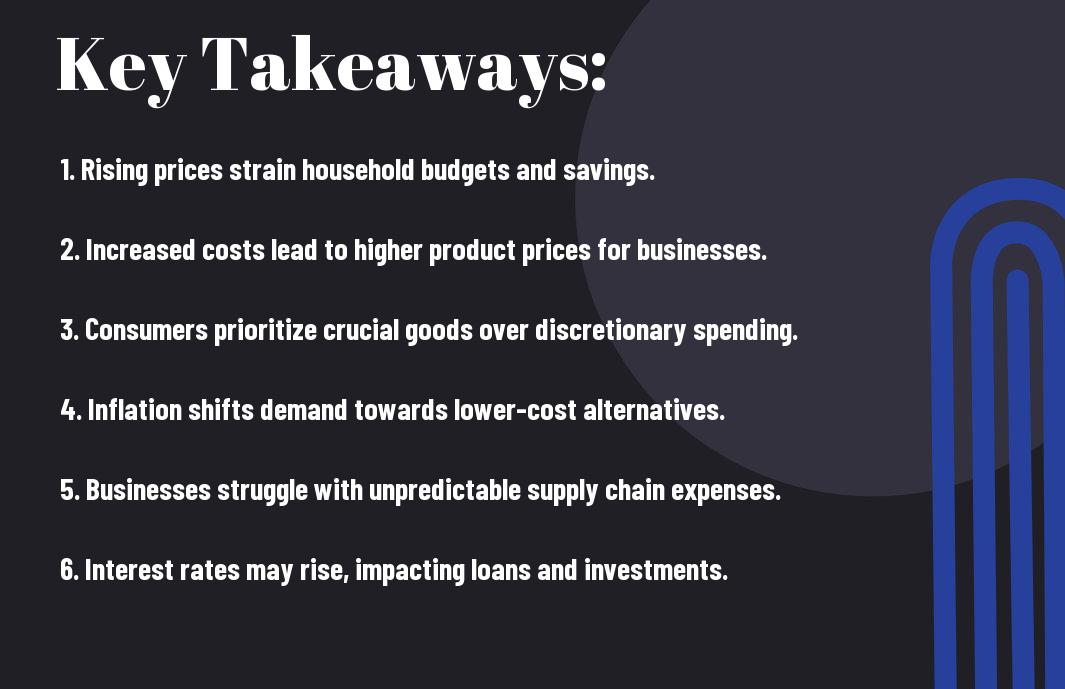
As a reminder, inflation impacts both you as a consumer and your business in various ways. Rising prices can diminish your purchasing power, forcing you to adjust your spending habits while also increasing operational costs for businesses. This can lead to higher prices for goods and services, affecting your overall financial well-being. Staying informed about inflation trends and adapting your strategies can help you navigate these challenges effectively, ensuring that you remain resilient in an ever-changing economic landscape.