
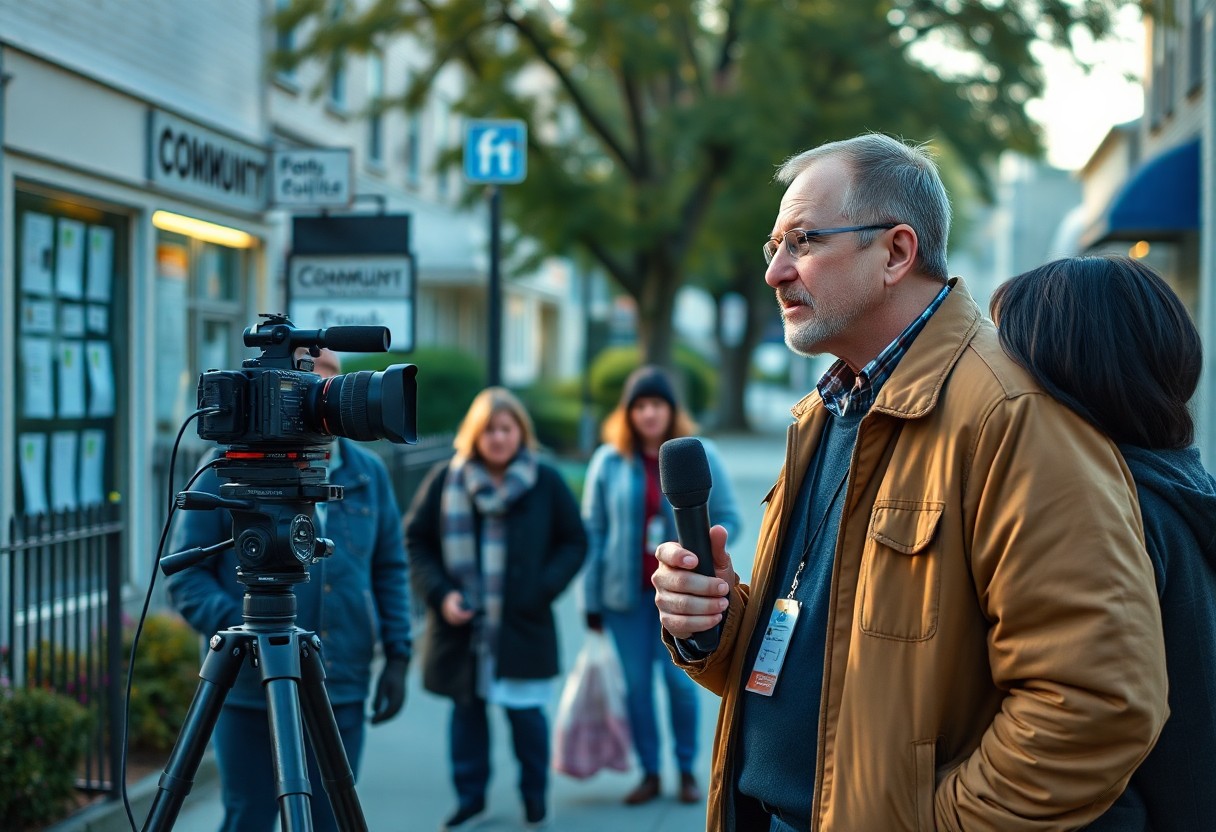
You see real change when local voices shape the stories being told. Community-based reporting puts you at the center, sharing firsthand experiences that reflect your reality. This direct connection increases transparency, reduces misinformation, and strengthens accountability, making news more relatable and trustworthy. You begin to trust what you see because it comes from people like you.
The Power of Proximity
You understand your neighborhood’s rhythms in ways outsiders rarely grasp. When reporters live and work within the communities they cover, their stories reflect authentic experiences, not assumptions. This closeness builds credibility, because you see yourself in the narrative-accurately, respectfully, and fully.
Direct Observation of Reality
You witness events firsthand when reporting happens on familiar streets. There’s no reliance on secondhand accounts or press releases. Your presence allows you to capture nuances-tone, emotion, context-that distant coverage often misses. Reality speaks for itself when you’re close enough to hear it.
Eliminating the Distant Filter
You skip the layers of interpretation that distort stories when they travel from community to newsroom. Distance often introduces bias, simplification, or sensationalism. By staying local, you deliver information as it unfolds, preserving its integrity and relevance to those who live it.
Outsiders may mean well, but their vantage point often skews perception. When stories pass through distant editors or national narratives, local truths get reshaped to fit broader agendas. You, as a community-based reporter, protect against this distortion. Your proximity ensures that context isn’t lost, voices aren’t flattened, and meaning stays intact. You report not from above, but from within-keeping the story honest because you’re part of its fabric.
Accountability to the Neighbor
You answer to real people when your reporting happens in the community you share. Your sources live nearby, your neighbors see your byline, and your credibility is measured at the grocery store, not just online. This proximity creates a natural check on accuracy and fairness, because trust is built daily through consistent, honest work.
Face-to-Face Responsibility
Seeing someone across the table changes how you report. You can’t hide behind a screen when the person affected by your story looks you in the eye. That direct connection demands honesty, context, and care-because you know you’ll be held to account in person, not just in comments.
The Cost of Deception
Lying to your community has immediate consequences. Once trust breaks, people stop talking, stop believing, and stop engaging. Your reputation doesn’t just suffer online-it unravels at school pickups, local meetings, and neighborhood events where credibility is currency.
When you misrepresent a local issue, the fallout isn’t abstract. Parents question school coverage, small businesses withdraw from interviews, and community leaders refuse to cooperate. Each broken promise narrows your access and weakens your impact. In hyperlocal reporting, deception doesn’t just damage a brand-it isolates you from the very people you’re meant to serve.
Dismantling the Ivory Tower
You break down barriers when you step outside institutional echo chambers. Journalists who embed themselves in communities stop observing from a distance and start engaging as participants. This shift doesn’t dilute objectivity-it grounds reporting in real human experience, making it more relatable and trustworthy to the people it serves.
Rejecting Institutional Bias
You challenge long-standing assumptions when you question whose voices dominate the news. Mainstream outlets often reflect the perspectives of power, but community-based reporting centers those historically excluded. By doing so, you expose blind spots and correct imbalances that erode public confidence in media.
Prioritizing Local Relevance
You earn attention by covering what truly matters to people’s daily lives. School board decisions, neighborhood safety concerns, and local economic shifts may not trend online, but they shape community well-being. When your reporting reflects these realities, audiences see themselves in the story-and trust grows.
Local relevance means more than proximity-it means understanding context. You know a zoning change isn’t just policy; it’s about whether a family’s backyard will overlook a warehouse. You report on the town council meeting not for headlines, but because residents rely on accurate summaries they can’t attend. This depth signals respect, and respect builds lasting credibility.
The Language of the People
You earn trust not just through accuracy, but through accessibility. When your reporting mirrors the way people speak and think in their daily lives, it stops feeling like an outside broadcast and starts feeling like a conversation among neighbors.
Plain Speech in Reporting
You connect best when you speak plainly. Avoiding jargon and bureaucratic phrasing allows your audience to grasp stories without translation. When you use the words people actually use, your reporting feels familiar, honest, and within reach.
Clarity Over Complexity
You serve the public best by making information easy to understand. Complex sentences and technical terms create distance. Simple, direct language removes barriers, ensuring everyone-regardless of education or background-can access the truth.
Choosing clarity means respecting your audience’s time and intelligence. You don’t need to oversimplify issues, but you do need to explain them in ways that make sense in context. When you break down complicated topics without losing accuracy, you invite people in rather than shutting them out. This openness builds credibility, one clear sentence at a time.
Reclaiming the Public Square
You are stepping back into spaces where voices once mingled freely, where stories shaped communities. Local reporting rooted in shared experience revives these forums, transforming silence into conversation and isolation into connection. This is where trust begins to take root again.
Fostering Genuine Dialogue
People in your neighborhood know what matters most. When journalists listen first, instead of declaring truths from afar, real exchanges emerge. You begin to see your concerns reflected, not filtered. That mutual respect turns skepticism into sustained engagement.
The Restoration of Faith
Trust erodes when information feels imposed. But when you see your community accurately represented-through faces you recognize and issues you’ve lived-it rebuilds. Accuracy over time proves reliability, and reliability becomes the foundation of renewed confidence in local media.
Each time a story captures the nuance of a local decision or honors a resident’s struggle, it counters past disillusionment. You no longer view the press as an outsider with an agenda. Instead, you start expecting honesty, because you’ve seen it consistently upheld. This steady accountability is how faith returns-not in grand gestures, but in daily proof.
To wrap up
So you see how community-based reporting strengthens public trust. When you hear directly from neighbors and local sources, information feels more accurate and relevant. You rely less on distant institutions and more on shared experience. Your confidence grows when reporting reflects your reality, not just headlines. That connection builds lasting trust.