

Human Rights in the 21st Century – Progress and Challenges
With rapid advancements and ongoing struggles, understanding human rights in the 21st century is imperative for you as a global citizen. You face a world where significant strides have been made in various areas, yet alarming challenges remain, affecting millions. This post will explore the achievements that have shaped modern human rights, the obstacles that threaten them, and the role you can play in promoting respect and equality for all individuals. Dive in to discover the complexities of this vital subject and how it impacts your life and community.

Historical Context
The journey of human rights has roots that trace back centuries, evolving through social, political, and cultural transformations. You may see that significant milestones have shaped the way societies view individual freedoms and protections. As you explore these developments, understanding their historical context provides a clearer perspective on the challenges and advancements in the domain of human rights today.
Evolution of Human Rights
Above all, the evolution of human rights can be understood as a response to the injustices that individuals have faced throughout history. From ancient codes of law to Enlightenment ideals, you will observe how the concept of human rights emerged to safeguard dignity across cultures and time periods.
Milestones in the 20th Century
Before the 20th century, human rights were largely unrecognized or ignored in many parts of the world. The emergence of international frameworks and documents laid the groundwork for a universal understanding of human rights that you can observe today.
Even as you examine deeper into the milestones of the 20th century, you will find pivotal events that altered the course of human rights activism. The adoption of the Universal Declaration of Human Rights in 1948 marked a momentous point in history, solidifying the belief that everyone is entitled to fundamental rights regardless of their background. Additionally, the civil rights movements and the establishment of international courts highlight your society’s efforts to uphold these principles, addressing injustices that have persisted. As you navigate these milestones, consider how they continue to influence current human rights struggles and advancements around the globe.
Current Progress in Human Rights
While the journey toward universal human rights is ongoing, notable advancements have been made in various areas. You can witness the collective efforts of nations and organizations striving to promote and protect fundamental rights for all individuals. Grassroots movements have increasingly influenced policy changes, emphasizing the importance of both local and international advocacy in fostering positive developments in human rights standards.
Global Treaties and Agreements
At the international level, numerous treaties and agreements continue to shape the human rights landscape. You benefit from these frameworks, as they establish legally binding commitments that encourage countries to adhere to human rights principles. Through platforms like the United Nations, nations collaborate to address issues like discrimination, torture, and human trafficking, hosting discussions that drive improvements in global accountability.
Advances in Civil Rights and Freedoms
Against a backdrop of historical inequalities, significant strides have been made to enhance civil rights and freedoms worldwide. You may not be aware, but social movements advocating for gender equality, LGBTQ+ rights, and racial justice have gained momentum, leading to legislative reforms and increased awareness. These changes reflect a broader societal recognition of the importance of inclusion and representation in fostering a more equitable and just world.
In fact, the growing visibility of diverse voices in political, social, and economic arenas has contributed to remarkable civil rights achievements. You can observe how legal protections for marginalized groups have expanded, allowing you to advocate for your rights and those of others more effectively. These advances also inspire and empower future generations to stand against discrimination, ensuring that the fight for equality remains a priority as we progress through the 21st century.
Major Challenges Faced
All around the world, human rights are under siege as new and pervasive challenges emerge. From government crackdowns to social inequities, you face a landscape where advocacy and awareness are more important than ever. In this context, understanding the major obstacles is crucial for fostering a culture of respect for rights and freedoms.
Authoritarian Regimes and Repression
Alongside an expanding global focus on human rights, you may notice a worrying trend as authoritarian regimes tighten their grip on power. These governments often employ censorship, surveillance, and violence to silence dissent, impeding your ability to express your views freely or challenge injustice.
Discrimination and Inequality
Behind the facade of progress, issues of discrimination and inequality continue to plague societies across the globe. You might find that marginalized groups, including ethnic minorities and LGBTQ+ individuals, still face systemic barriers that undermine their fundamental rights and opportunities.
Challenges related to discrimination and inequality are pervasive and multifaceted. In your community, you may see that access to education, healthcare, and employment often depends on your race, gender, or socioeconomic background. Such disparities not only hinder personal potential but perpetuate cycles of poverty and disenfranchisement, calling for a concerted effort towards equality and social justice.

The Role of Technology
Unlike previous centuries, technology plays an integral role in shaping human rights discourse today. It serves both as a tool for advocacy and a potential source of abuse. You can harness technology to raise awareness, mobilize support, and document violations, but it also presents challenges that can undermine personal freedoms.
Human Rights in the Digital Age
Around the world, technology has transformed how you engage with and understand human rights. The internet allows for unprecedented access to information, enabling you to stay informed and connected. However, this digital landscape also presents new hurdles, especially regarding the way rights are protected and violated in online spaces.
Surveillance and Privacy Concerns
On the other hand, the proliferation of technology has led to significant surveillance and privacy concerns that directly impact your rights. Governments and corporations increasingly gather vast amounts of personal data, often without your consent. This trend raises important ethical and legal questions about who controls this data and how it is used against you.
A growing body of evidence indicates that excessive surveillance invades your privacy and erodes trust within your communities. As you navigate the digital landscape, you must be aware of the potential implications of your data being monitored. Strengthening your privacy rights and holding governments and companies accountable are necessary steps in ensuring that your personal freedoms are respected and upheld in a technology-driven world.

Activism and Advocacy
Your involvement in activism and advocacy plays a vital role in advancing human rights in the 21st century. With many pressing issues affecting marginalized communities globally, you can contribute toward positive change by raising awareness, volunteering, and supporting grassroots organizations. Whether through participation in campaigns or educational efforts, your voice can amplify the call for justice and equality in your community and beyond.
Grassroots Movements
Below the surface of widely publicized campaigns, grassroots movements focus on community-level engagement, empowering individuals to enact change. These initiatives thrive on local knowledge and collective effort, often bringing together diverse groups united by a common cause. By supporting or joining these movements, you can help mobilize support for key issues and uplift marginalized voices in the fight for human rights.
The Impact of Social Media
Behind the scenes, social media has transformed how advocacy is conducted in the modern age. Platforms like Twitter, Facebook, and Instagram allow you to share information instantaneously, rallying support for human rights causes worldwide. These tools enable grassroots organizations to reach wider audiences and create a sense of urgency around pressing issues.
And as you engage with social media, it’s imperative to recognize its power in elevating marginalized voices and spreading awareness about human rights violations. Campaigns can go viral, inspiring collective action and drawing attention from mainstream media. However, with this reach comes the responsibility to verify information and contribute positively to discussions, ensuring that online activism translates into tangible results for those who need it most.
Future Directions
To effectively navigate the evolving landscape of human rights in the 21st century, you must stay informed about emerging trends and challenges. Advocacy efforts need to adapt to address digital privacy, environmental justice, and intersectionality while ensuring that your voice contributes to a more equitable society. The pursuit of human rights will require not just awareness, but also active participation and commitment from individuals like you.
Emerging Issues
Across the globe, new human rights issues are surfacing, driven by technological advancements, climate change, and shifting social dynamics. You may find that topics such as digital surveillance, artificial intelligence ethics, and the rights of marginalized communities demand greater attention. Engaging with these issues now can help shape a future where human dignity remains a priority.
The Role of Global Cooperation
Below the surface of national efforts lies the necessary role of global cooperation in promoting and protecting human rights. Collaborative frameworks created by countries, organizations, and individuals can amplify your efforts and create a stronger foundation for universal human rights protection.
This type of cooperation not only facilitates the sharing of resources and best practices but also strengthens collective accountability among nations. By working together on international agreements and initiatives, you can contribute to a more stable global environment where human rights can thrive. Engaging in dialogue and partnership empowers your advocacy, connecting you with like-minded individuals and organizations dedicated to promoting human dignity worldwide.
To wrap up
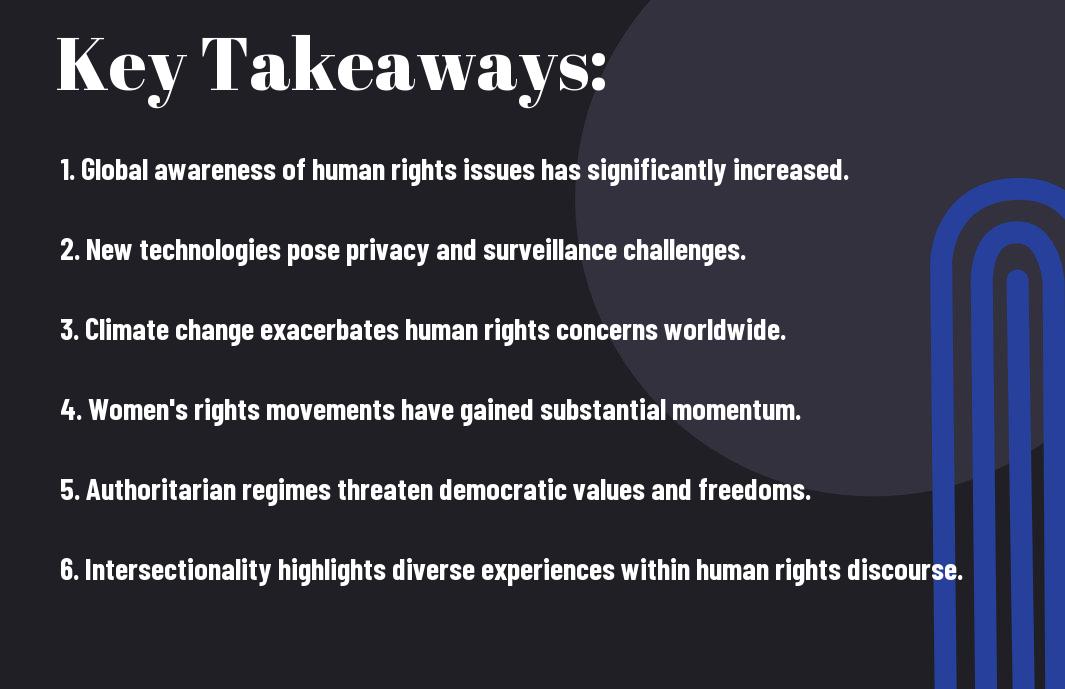
Following this exploration of human rights in the 21st century, you might recognize the significant progress made in various areas, such as gender equality and digital rights. However, you should also be aware of the persistent challenges, including systemic discrimination and the impact of conflicts on vulnerable populations. It is important for you to stay informed and engaged, advocating for the protection and advancement of human rights globally, as each individual’s efforts can contribute to a more equitable future for all.