
How Local News Shapes the Way We Understand National Issues

You may not realize it, but your understanding of national issues is heavily influenced by local news. The stories that are reported in your community often serve as a lens through which you view larger societal topics, shaping your opinions and knowledge. By highlighting local perspectives and connecting them to broader national narratives, local news helps you make sense of complex issues. This blog post will explore the vital role local journalism plays in informing your worldview and why it matters for both you and your community.

The Local Lens: Filtering National Narratives

Your understanding of national issues can often be skewed by local perspectives. Local news outlets have the power to shape narratives that resonate more with their audience, highlighting stories and angles that reflect community values and concerns. This filtering process means that the same national news story might be interpreted in diverse ways across different regions, illustrating how a local lens can influence your perception of broader issues.

The Role of Local Reporters in National Stories

Local reporters play a pivotal role in bridging the gap between community-centric concerns and national narratives. They often dig deeper into how national policies impact local contexts, providing you with insights that might escape larger news organizations. By fostering connections with community members, local journalists can amplify voices and stories that might otherwise remain unheard on the national stage.

How Community Focus Influences Framing of Issues

The way issues are framed at the community level profoundly impacts your perception of national events. Local news often prioritizes stories that resonate with residents, tailoring coverage to reflect their unique challenges and achievements. This localized focus allows you to see national issues—like healthcare, education, and immigration—from a more grounded, relatable perspective, emphasizing how policies play out in your everyday life.

For instance, consider how local news might report on a national healthcare policy. While a national outlet could present statistics and general outcomes, your local newspaper would likely feature stories from individuals in your community, sharing their personal experiences navigating the healthcare system. This approach makes the issue more tangible and relatable, as you connect with your neighbors’ struggles and triumphs. The result is a heightened awareness of how larger conversations impact your community, leading to a more nuanced understanding of national challenges and potential solutions. This personal touch strengthens civic engagement, prompting you to take action based on relatable narratives that resonate deeply with your experiences.

The Power of Local Voices in Shaping Perception

Local voices serve as powerful conduits for shaping how you perceive broader national issues. By highlighting the experiences and opinions of community members, local news outlets successfully amplify grassroots sentiments that might otherwise be overlooked. This localized perspective can influence your understanding and opinions on national matters, guiding your emotional and intellectual engagement with larger narratives. When familiar faces share their stories, it makes abstract issues feel real and immediate, fostering a connection that resonates on a personal level.

Sourcing Local Perspectives: Authenticity and Trust

Focusing on local perspectives fosters authenticity that national narratives often lack. When you tune into community concerns voiced by neighbors, friends, or local leaders, the content feels relatable and trustworthy. This sense of authenticity not only enhances your engagement but also encourages you to view local stories as credible sources of information, impacting your interpretations of national dialogues.

Community Impact Stories: Personalizing National Conversations

Community impact stories play a vital role in making national conversations personal and relatable. They transform abstract discussions—like healthcare reform or immigration policy—into stories of individuals tightly woven into the fabric of your community. By showcasing local experiences and outcomes, these stories translate complex issues into narratives that resonate deeply, allowing you to connect emotionally while prompting critical conversations.

For example, consider a local news report focusing on how changes in healthcare policy affect a local family’s ability to afford treatment for their child. This specific narrative can humanize the broader debate around healthcare, prompting you to empathize with their struggle while envisioning the implications for other families in your area. Such stories bridge the gap between national issues and local life, urging you to consider how national policies manifest in your community and, ultimately, in your day-to-day life. By engaging with these local narratives, you not only become better informed but also a more active participant in national discussions.

Geographic Disparities: When Local News Reflects National Divides

Your understanding of national issues is often influenced by geographic disparities in local news coverage. Urban areas frequently receive more comprehensive reporting on critical topics like healthcare, education, and economic policies, while rural regions may be overlooked. This situation fosters a divide in public perception and understanding of national issues, leading to stark contrasts in how individuals in different locations perceive challenges and solutions. The gap in coverage highlights the importance of acknowledging regional narratives and recognizing that local news can serve as a lens through which you see broader national divides.

The Urban vs. Rural Coverage Gap

Case Studies: Local Reporting Amplifying National Inequities

  • Healthcare Access: In a study, local news outlets highlighted that rural counties had one hospital for every 50,000 residents, compared to urban areas with one for every 10,000, drawing attention to significant disparities in healthcare resources.
  • Education Funding: Reports from small-town news sources indicated that public schools in low-income areas received $5,000 less per student compared to wealthier districts, showcasing stark funding inequities.
  • Economic Hardship: Investigative pieces revealed that rural unemployment rates were consistently 2% higher than in metropolitan areas, leading to national discussions about economic policy reforms.

The Digital Transformation: Local News in the Age of Social Media

The evolution of digital media has profoundly altered how local news operates and disseminates information. Traditional reporting methods are complemented and challenged by social media platforms where stories can go viral, reaching audiences far beyond local borders. As a result, you often encounter news that connects your community’s issues with national conversations, creating an interconnected landscape of information that reflects both local priorities and wider societal concerns.

The Rise of Hyperlocal Journalism and Its Implications

Hyperlocal journalism focuses on highly specific, community-driven content that caters to local interests and events. This approach empowers you with information that reflects your immediate environment, making it easier to engage with local governance and social issues. As more people gravitate toward these targeted outlets, you’ll notice a shift in how national problems resonate on a community level, leading to a renewed appreciation for the importance of local storytelling.

Social Media’s Role in Bridging Local and National Issues

Social media serves as the dynamic bridge between local narratives and national conversations, allowing you to engage with both realms simultaneously. By sharing local stories that touch on broader themes—like education, healthcare, or social justice—you see how events in your community echo or contrast national trends. This visibility fosters a more informed citizenry as local journalists leverage social platforms to elevate pressing issues, encouraging dialogue and action across geographical divides.

Platforms like Twitter and Facebook enable local news outlets to amplify their stories, often using hashtags and trending topics to draw national attention. For instance, a local protest about education funding might gain traction online, connecting it with nationwide conversations about public education reform. This interaction not only raises awareness but also invites participation from individuals outside your immediate community, transforming a localized issue into a front-page national story. As you engage with these platforms, you’ll notice that local stories are no longer isolated narratives but part of a larger dialogue that informs your understanding of national dynamics.

Aspirational Journalism: How Local News Inspires Broader Change

Local news has a unique ability to foster hope and drive meaningful change within communities. By highlighting stories of resilience, innovation, and grassroots activism, these outlets empower residents to envision a better future. You can often see community-led initiatives gain traction in local papers, encouraging others to join the cause and amplifying positive change across wider regions, ultimately influencing larger societal norms and practices.

Investigative Reporting with National Repercussions

Local investigative journalism often uncovers stories that resonate far beyond the immediate community. Your local journalist might reveal corruption, environmental issues, or social injustices that gain national attention, prompting policy shifts and reforms. These stories have the power to ignite public discourse, mobilizing citizens and even instigating legislative changes at a higher level.

Local Campaigns Influencing National Policies

The ripple effect of local campaigns can be astounding, as successful initiatives in one town often set precedents that challenge national policies. For instance, movements like the push for cleaner air and environmental protections spearheaded by local groups have caught the eye of policymakers, leading to legislation that addresses these issues on a national scale. Your participation in such campaigns can highlight issues that need broader attention, making a significant impact on national discussions and legislation.

Consider the successful initiatives aimed at banning plastic bags in various municipalities across the United States. These local campaigns have not only transformed community habits but also influenced broader environmental policies at the state and federal levels. When local governments adopt such measures, it pressures larger entities to reconsider their practices and align with the growing environmental consciousness. Through local engagement, you’re not just addressing community issues; you’re contributing to a movement that can shape national policy for the better.

To wrap up

Upon reflecting on the relationship between local news and national issues, it’s clear that your understanding of broader topics is often shaped by the local context. Local news provides you with nuances that inform your perspective, making complex national events more relatable. By tuning into your community’s voice, you gain insights that help you connect the dots between local stories and their national implications, enriching your overall awareness and engagement in societal discussions. Engaging with local news empowers you to better grasp how events impact your community and, ultimately, the nation as a whole.

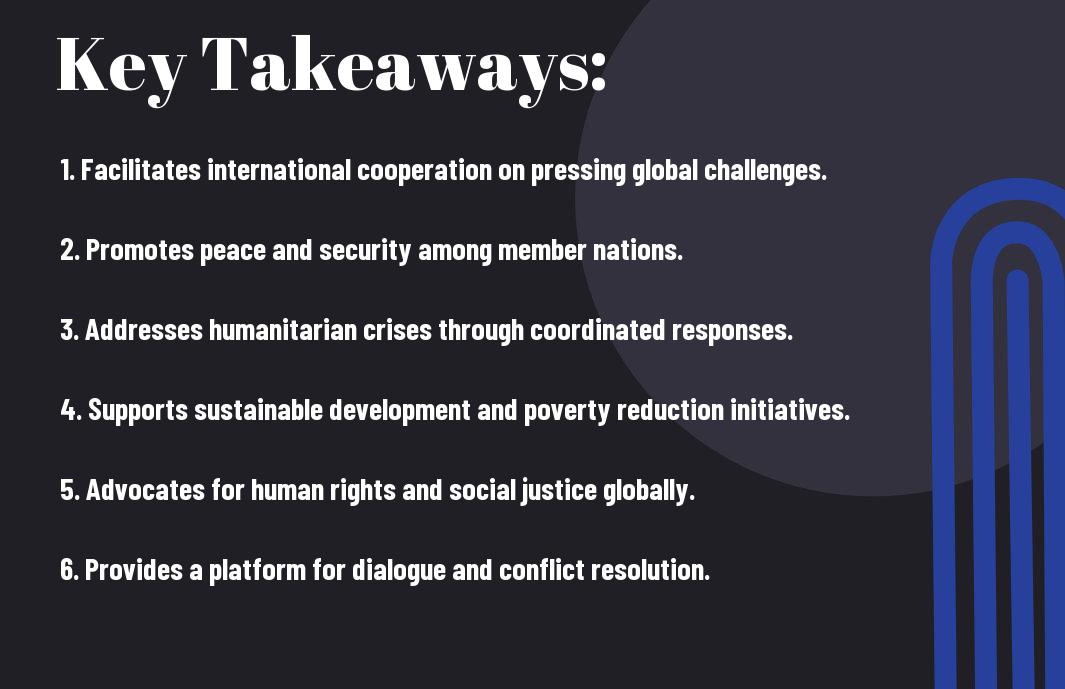
The Role of the United Nations in Addressing Global Issues

Issues that affect our world, from climate change to international conflicts, require a coordinated response. You might wonder how these complex challenges are tackled on a global scale. The United Nations (UN) plays an important role in facilitating cooperation among countries, promoting peace, and addressing humanitarian crises. By understanding the UN’s structure and its initiatives, you can better appreciate how this organization strives to coordinate global efforts and provide solutions that impact every nation’s welfare.

Historical Context of the United Nations

The United Nations (UN) was established in 1945, following the devastation of World War II, with the aim of preventing future conflicts and fostering international cooperation. This landmark event marked a commitment from member states to work together in addressing global challenges, promoting peace, and upholding human rights. The UN’s founding emerged from a desire to create a more just and secure world, paving the way for its role in various humanitarian, social, and economic initiatives.

Founding Principles and Objectives

By initiating a platform for dialogue among nations, the UN’s founding principles emphasize collective security, human rights, and social progress. You can see these objectives articulated in the UN Charter, which acts as the organization’s guiding document. It promotes diplomacy over conflict and encourages nations to cooperate in the pursuit of peace and development.

Evolution of the UN’s Role over Time

Across the decades, the UN has expanded its scope beyond traditional peacekeeping, adapting to the changing global landscape and emerging challenges.

It has taken on a more active role in addressing issues such as climate change, humanitarian crises, and health pandemics, reflecting the evolving needs of the international community. Your understanding of the UN’s changing responsibilities highlights its adaptability, as it engages in peacebuilding, development initiatives, and global partnerships. The organization now focuses on sustainable development goals (SDGs), ensuring a holistic approach to global challenges that affect you and future generations. As the world continues to face complex issues, the UN’s ability to evolve will be vital in fostering collaboration and finding effective solutions.

The UN and Global Peacekeeping

It is crucial to recognize the United Nations’ significant role in maintaining global peace through its peacekeeping missions. These operations are designed to monitor and support the implementation of peace agreements in conflict areas, facilitating stability, and promoting dialogue among conflicting parties. With over 70 years of experience, the UN’s peacekeeping forces work to create safer environments, allowing communities to rebuild and thrive.

Operations and Missions

On a global scale, the UN operates numerous peacekeeping missions, each tailored to address specific conflicts and challenges. These missions typically involve the deployment of multinational forces tasked with protecting civilians, assisting in the disarmament process, and fostering communication between warring factions. Your understanding of these operations can empower you to appreciate the complexity and diversity of peacekeeping efforts worldwide.

Challenges and Criticisms

To effectively address global conflicts, the UN faces numerous challenges and criticisms that can impact the success of its peacekeeping operations. Issues such as troop shortages, lack of funding, and the consent of host nations often hinder the effectiveness of these missions. Additionally, criticisms regarding the UN’s response time and the inability to prevent violence or protect civilians have raised important questions about its role in international peace and security.

Peacekeeping missions encounter various obstacles that hinder their effectiveness, including inadequate resources and political constraints. You may be surprised to learn that often, peacekeepers are deployed in volatile regions without sufficient training or equipment. Moreover, the complexity of local conflicts can lead to misunderstandings or misinterpretations of their mandate. These challenges can result in a lack of trust from local populations and ultimately diminish the success of peacekeeping initiatives, necessitating ongoing discussions about how to better support and enhance these vital operations.

Addressing Human Rights Issues

Once again, the United Nations plays a pivotal role in promoting and protecting human rights across the globe. By setting international standards, monitoring human rights violations, and providing a platform for dialogue, the UN aims to uphold the dignity and rights of all individuals. Through various treaties and missions, the organization works tirelessly to address issues such as discrimination, freedom of expression, and the rights of vulnerable populations, ensuring that everyone’s voice is heard.

Mechanisms for Protection

Mechanisms such as the Universal Periodic Review and the Human Rights Council provide consistent oversight of member states’ human rights practices. These frameworks ensure compliance with international norms, allowing for targeted actions against violators. By employing special rapporteurs and expert committees, the UN also gathers data and reports on specific human rights issues, enabling you to stay informed about global developments and hold leaders accountable.

Case Studies and Success Stories

Case studies highlight the effectiveness of the UN in protecting human rights. Here are some notable examples:

  • In 2018, the UN intervened in Myanmar, leading to a significant reduction of Rohingya refugees crossing borders, dropping from 1 million to 600,000.
  • Following UN-led initiatives, 40 countries committed to eliminating child labor, resulting in a 25% decrease in child labor rates in affected regions by 2021.
  • The UN’s efforts in South Sudan led to the establishment of peace agreements that reduced violent conflict by 30% in the following year.

Success stories showcase tangible outcomes achieved through UN intervention. These examples illustrate the organization’s ability to impact human rights positively across the globe. Stay informed about these developments and consider how you can support initiatives that aim to further advance human rights for all.

  • Global campaigns against human trafficking launched by the UN resulted in a 40% increase in victim identification and support services offered.
  • In Syria, UN agencies helped deliver aid to 12 million people, reflecting a 70% increase in humanitarian assistance during times of crisis.
  • The UN’s advocacy for women’s rights resulted in a 50% increase in women’s representation in political positions worldwide since 2015.

The UN’s Role in Sustainable Development

To address the complex challenges of sustainable development, the United Nations plays an vital role in promoting global cooperation and shared responsibility. By providing a platform for dialogue and collaboration, the UN supports countries in implementing policies that foster environmental sustainability, social equity, and economic growth. Your active participation in these efforts is vital to achieving a more sustainable future for all.

Agenda 2030 and the Sustainable Development Goals

At the heart of the UN’s sustainable development initiatives is Agenda 2030 and the Sustainable Development Goals (SDGs). These 17 interconnected goals serve as a universal call to action for all nations to end poverty, protect the planet, and ensure prosperity for everyone. By engaging with the SDGs, you are contributing to a global framework that seeks to create lasting change in your community and beyond.

Partnerships and Global Initiatives

Sustainable development is achieved through partnerships and global initiatives that foster collaboration among governments, the private sector, civil society, and individuals. The UN actively encourages multi-stakeholder partnerships that harness diverse perspectives and resources to address pressing global challenges. You can play a pivotal role in these partnerships by contributing your skills, knowledge, and innovation to create a more sustainable world.

This collaborative approach involves initiatives like the Global Sustainable Development Report and various UN-led programs that aim to strengthen the implementation of the SDGs. By participating in partnerships, you have the opportunity to share best practices, leverage funding, and mobilize resources that enhance local and global efforts. These collective actions not only empower communities but also create pathways towards achieving the United Nations’ vision for a sustainable future for all.

The United Nations and Climate Change

After decades of scientific warnings and increasing environmental crises, the United Nations has recognized climate change as a fundamental global challenge that requires collaborative action. With its integrated approach, the UN facilitates discussions, fosters international cooperation, and mobilizes resources to combat climate change effectively. You can see this commitment reflected in various initiatives, partnerships, and the UN’s influential role in the global arena, drawing nations together to prioritize sustainable development and reduce greenhouse gas emissions.

International Agreements and Frameworks

To address the climate crisis, the United Nations has established vital international agreements and frameworks, among which the Paris Agreement stands out as a landmark commitment. You should know that this accord unites countries in the shared goal of limiting global warming and enhancing resilience to climate impacts. By participating in these agreements, nations can collectively create binding emissions reduction targets and foster transparency, ensuring a concerted effort in the fight against climate change.

Impact of UN Efforts

After implementing various climate programs and initiatives, the UN’s efforts show a measurable impact on global climate policies and practices. You might notice that the active engagement of member states in the UN’s climate dialogues has led to increased awareness, investment in renewable energy, and stronger national emissions targets. Additionally, these efforts have promoted climate-resilient agriculture and sustainable development practices, illustrating the effectiveness of collaborative global action.

Frameworks like the UN’s Sustainable Development Goals also reinforce these efforts by providing a roadmap for addressing intertwined challenges such as poverty and environmental degradation. Your engagement with these global initiatives can inspire further action, ensuring that communities worldwide are better equipped to face climate challenges. As you explore the impact of the UN’s climate efforts, consider how these actions collectively drive change and empower individuals and nations to make a difference.

Humanitarian Aid and Global Crises

Now, the United Nations plays a vital role in providing humanitarian aid during global crises, addressing the needs of affected populations in times of conflict, natural disasters, and health emergencies. By mobilizing resources, coordinating international efforts, and ensuring the delivery of imperative services, the UN strives to alleviate suffering and support recovery. You may recognize their work through initiatives like the World Food Programme and coordinated responses to pandemics, which aim to minimize the impact of crises on vulnerable communities worldwide.

Response Mechanisms and Coordination

Before any humanitarian assistance can reach those in need, the UN establishes effective response mechanisms that rely on accurate assessment and coordination among various agencies and partners. You will find that special frameworks have been developed to streamline operations, ensuring that resources are allocated efficiently and that efforts are complementary rather than duplicative. This collaborative approach maximizes the reach and impact of humanitarian aid, which ultimately saves lives.

Evaluating Effectiveness

Coordination among various agencies makes it imperative to evaluate the effectiveness of humanitarian responses to optimize efforts and improve future interventions. You might be surprised to learn that the UN conducts thorough assessments and analyses that focus on outcomes and the overall impact of their assistance. This critical evaluation allows them to identify strengths, weaknesses, and areas for improvement, ensuring that humanitarian efforts are both adaptable and responsive to the evolving landscapes of global crises.

Even small changes in strategy can have significant implications for the lives of people affected by crises. Through systematic evaluations, the UN learns from past experiences and adjusts its approaches, which ultimately helps enhance the effectiveness of humanitarian aid. By focusing not just on immediate relief but also on long-term recovery and resilience, you can be confident that the UN is prioritizing sustainable solutions that will serve communities well beyond the crises themselves.

To wrap up

Ultimately, understanding the role of the United Nations in addressing global issues empowers you to appreciate the vital collaborative efforts that shape our world. By promoting peace, fostering development, and advocating for human rights, the UN serves as a critical platform for international dialogue and action. As you engage with global challenges, recognizing this institution’s influence can inspire your involvement in advocating for solutions that transcend borders and contribute to a more harmonious global community.