Global Conflicts and Their Effect on the Economy

You may not realize how deeply global conflicts impact your everyday life and the economy as a whole. As tensions rise in various regions, the ripple effects can lead to variations in trade, inflation, and employment rates, influencing your purchasing power and job security. Understanding the link between conflict and economic shifts allows you to navigate financial decisions more effectively. This post will explore how ongoing global tensions affect economic stability and what it means for you personally.
Historical Overview of Global Conflicts

A thorough understanding of global conflicts necessitates a look back at history. Over the centuries, various wars and disputes have shaped nations and economies alike. From colonial conquests to cold wars, each conflict has played a substantial role in developing international relations and economic frameworks. By examining these events, you can grasp how past conflicts have cemented the world’s current geopolitical landscape and shaped modern economies.

Major Conflicts of the 20th Century

For many, the 20th century stands out due to its plethora of major conflicts, including the World Wars, the Korean War, and the Vietnam War. These events significantly impacted economies through wartime production, post-war recovery, and shifts in power dynamics. As you analyze these conflicts, you’ll notice their extensive influence on global trade patterns, alliances, and the economic policies that followed.

Recent Conflicts and Trends

Behind the scenes, recent conflicts are reshaping the global economy in significant ways. Issues such as terrorism, civil wars, and trade disputes have altered economic landscapes, influencing investments and resource allocation. These conflicts often spur not just immediate economic impacts but also long-term shifts in how nations interact and trade with one another.

Further exploring recent conflicts, you’ll find that their effects extend beyond immediate economic fluctuations. The rise of cybersecurity threats and the potential for economic sanctions reflect how conflicts now encompass a broader range of issues, including technology and global commerce. You should pay attention to how these evolving trends result in collaborations or confrontations, directly affecting your economic environment, whether through job security, prices, or access to resources.

Economic Impact of War

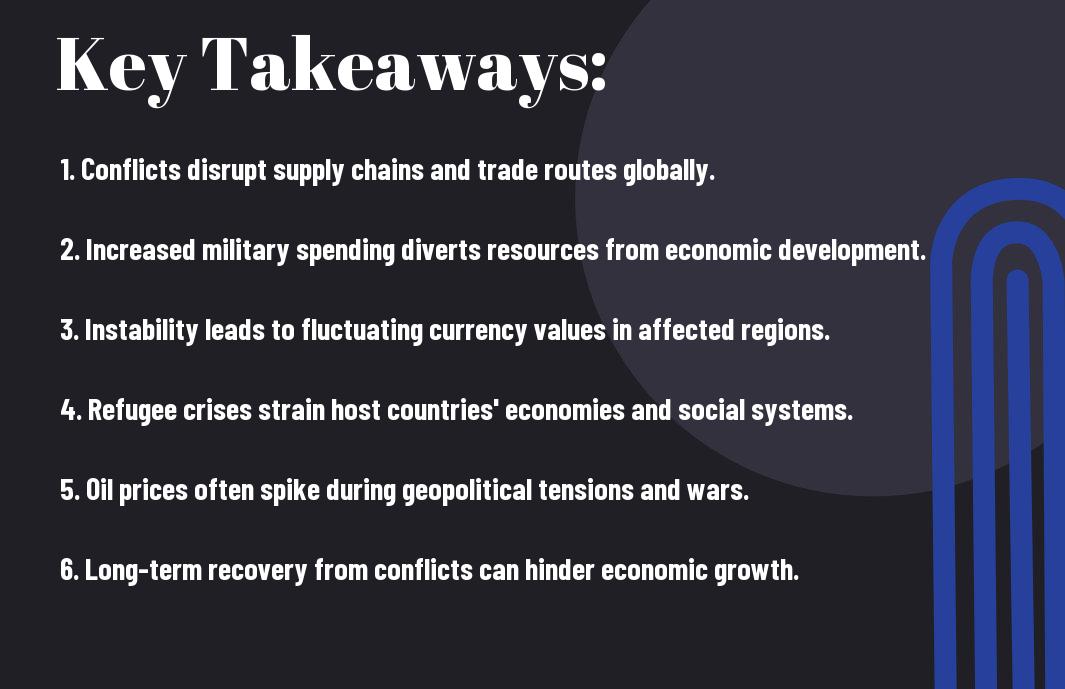
If you consider the ramifications of war, it becomes clear that the economic landscape is significantly altered. War disrupts trade, inflates prices, and reallocates government spending toward military endeavors rather than vital services, leading to overall instability. Challenges arise from damaged infrastructure, loss of workforce, and shifts in consumer confidence, all of which can diminish economic growth and magnify hardship for ordinary citizens.

Short-term Economic Effects

After the outbreak of conflict, economies often experience a sharp downturn. Investment plummets as uncertainty reigns, and resources are diverted to military spending. Consumer spending typically contracts, leading to increased unemployment and production slowdowns. Price volatility, particularly in commodities such as oil and food, can further exacerbate economic challenges for both individuals and businesses.

Long-term Economic Consequences

Against a backdrop of prolonged conflict, the long-term economic consequences can be profound. Systems can become entrenched in debt, infrastructure can suffer extensive damage, and societal divisions may deepen, impeding growth. Reconstruction efforts often take years, diverting funds from critical public services like education and healthcare, potentially downgrading the overall quality of life for future generations.

Indeed, the long-term effects of war can reshape entire economies, leaving scars that linger for decades. When infrastructure is destroyed, it takes significant resources and time to rebuild. You may find that countries emerging from conflict face challenges like high levels of debt and unemployment, which can hinder recovery efforts. Additionally, your community may struggle with increased political instability and social unrest, complicating economic development and making it difficult to attract foreign investment. This cyclical pattern can lead to a persistent state of economic fragility and reduced growth prospects for generations.

Case Studies of Specific Conflicts

Unlike other factors, specific global conflicts have historically influenced economies in multifaceted ways. Here are some case studies that illustrate these impacts:

  • 2003 Iraq War: Oil prices surged by 66% in 2003, impacting global markets.
  • Syrian Civil War: The conflict led to a displacement crisis affecting economic stability in neighboring countries, with Turkey alone bearing over $40 billion in costs.
  • U.S.-China Trade War: Tariffs initiated in 2018 impacted both economies, with U.S. goods exports to China dropping by 20% in 2019.
  • Afghan Conflict: The U.S. spent approximately $2.2 trillion over 20 years, with significant repercussions for the defense industry.

The Middle East and Oil Prices

Above all, the Middle East has been a significant player in global oil markets, where conflicts have consistently triggered price volatility. Historical events such as the Gulf War in 1990 saw prices rise by over 90% shortly after the onset of hostilities, demonstrating how regional insecurity can ripple through to your local fuel costs and influence overall inflation rates globally.

The Impact of Ukraine-Russia Conflict

One of the most notable recent examples is the Ukraine-Russia conflict, which has reverberated throughout the global economy. As a result of the war, energy prices surged, with natural gas prices in Europe increasing threefold within six months of the conflict’s start, impacting your energy bills and contributing to inflationary pressures worldwide.

East Europe, particularly countries that rely heavily on Russian energy supplies, faced immediate economic challenges following the escalation of the Ukraine-Russia conflict. This situation has prompted nations to seek alternative energy sources, leading to substantial investments in renewables and further affecting tax revenues and the profitability of traditional energy sectors. The global economy feels the strain as supply chains adjust, causing shifts in market dynamics that directly affect your purchasing power.

Global Trade and Conflicts

For businesses and economies worldwide, conflicts can have a profound impact on global trade dynamics. Interruptions due to political unrest, military actions, or diplomatic tensions can hinder free trade, resulting in rising tariffs, decreased exports, and disrupted markets. This ripple effect not only influences local economies but also affects consumers who may face increased prices and limited product availability.

Disruption of Supply Chains

On a practical level, conflicts can severely disrupt supply chains that are global in nature. When transportation routes become unsafe or blocked, you might notice delays in product delivery, shortage of raw materials, and increased operational costs. This instability can lead to a reevaluation of supplier relationships, forcing companies to find alternative sources or adjust their inventories to adapt to the new landscape.

Effects on International Trade Agreements

Below the surface, conflicts can also impact international trade agreements, potentially leading to renegotiations or cancellations. As countries impose sanctions or face diplomatic challenges, you could see a decline in trade partnerships that previously fostered cooperation and economic growth. This shifting trade environment often compels nations to seek new agreements or realign existing ones to safeguard their interests.

Plus, navigating the complexities of changing trade agreements can be daunting for you and other businesses trying to stay competitive. Uncertainties from altered tariffs, quotas, or trade regulations may require you to invest time and resources into legal consultations and strategic planning. Adjusting to these shifts is vital to maintaining market positions and ensuring compliance, influencing both short-term operations and long-term growth trajectories in the ever-evolving landscape of global trade.

Humanitarian Costs and Economic Burden

Many global conflicts create immense humanitarian costs that extend far beyond immediate loss of life, often burdening economies with significant financial strain. The repercussions manifest in decreased labor productivity, increased healthcare costs, and strained social services, impacting not just the regions directly involved but also interconnected global markets. You should note that while military expenditures rise, critical resources required for economic development are diverted, stifering growth in affected regions.

Refugee Crises and Labor Markets

Any conflict can lead to a surge in refugee populations, causing immediate disruption in local and regional labor markets. As host countries struggle to accommodate an influx of displaced individuals, you may find increased competition for jobs, affecting wages and employment opportunities for both refugees and locals. The integration of refugees into the workforce can either strain resources or, conversely, stimulate economic growth if managed effectively.

Infrastructure Damage and Reconstruction Costs

For countries embroiled in conflict, the destruction of infrastructure necessitates extensive reconstruction efforts, which can come with exorbitant costs. Damage to roads, schools, and health facilities does not just hinder daily life but also restricts economic activity and investment. You should be aware that these costs can overwhelm national budgets, diverting funds from other necessary services and slowing recovery times.

Another critical aspect of infrastructure damage is the long-term economic outlook. Rebuilding efforts often require foreign aid and investment, which may take years to mobilize. It is necessary for you to recognize that the rebuilding phase creates opportunities for companies in construction and engineering, yet without effective planning, there is a risk of mismanaged resources and prolonged stagnation. Moreover, communities may face ongoing challenges regarding access to utilities and transportation that impede their ability to engage in commercial activities fully.

Political Responses and Economic Policies

Once again, conflicts around the globe prompt governments to implement various political responses and economic policies. These measures can significantly influence both local and global economies, often leading to shifts in trade patterns, employment rates, and investment environments. As you analyze these policies, it’s vital to understand how they affect not only the immediate parties involved but also the broader economic landscape where interconnectedness plays a vital role.

Sanctions and Their Economic Ramifications

At the heart of many political responses are sanctions imposed on nations deemed to be violating international laws or human rights. These sanctions can lead to severe economic ramifications, crippling the target country’s economy while also affecting global markets. You should consider how these sanctions might not only restrict access to financial systems and resources but also disrupt trade relationships, impacting your investments and the goods available in your region.

International Aid and Economic Recovery

Between political unrest and economic instability, international aid often plays a notable role in supporting recovery efforts for affected nations. This aid can take various forms, including financial assistance, food supplies, and infrastructure development, all of which are vital for rebuilding economies and restoring stability. You might notice that nations receiving such support often experience a gradual improvement in living conditions, which in turn can stimulate economic growth and open up new opportunities.

Policies focused on international aid can significantly boost recovery by addressing immediate humanitarian needs while laying the groundwork for long-term economic stability. These strategies often involve collaboration between governments, NGOs, and international organizations, providing a comprehensive approach to rebuilding communities. As you explore this topic, consider the effectiveness of these policies in fostering resilience, as well as the potential challenges and avenues for sustainable development following a conflict.

To wrap up

Summing up, understanding global conflicts and their effect on the economy is vital for you as a global citizen. These conflicts can disrupt trade, inflate prices, and alter investment patterns, directly impacting your financial landscape. By recognizing the interconnectedness of geopolitical issues and their economic repercussions, you can make informed decisions about your investments, savings, and overall financial strategies. Keeping abreast of these dynamics empowers you to navigate challenges and seize opportunities in an ever-evolving global economy.

How Are Contemporary Educational Paradigms Reshaping The US Economy?

Most people don’t realize how deeply contemporary educational paradigms are influencing the US economy. As you explore innovative teaching methods, technology integration, and new learning models, you may begin to see how these changes are equipping a skilled workforce to meet the demands of a rapidly evolving job market. In this blog post, you will discover the key ways in which these educational shifts are not only preparing individuals for success but also driving economic growth and innovation across the country.

The Evolution of Educational Paradigms

As you explore the landscape of contemporary education, you’ll notice significant shifts that reflect societal changes. These transformations in educational paradigms highlight a growing emphasis on innovation, inclusivity, and adaptability, ultimately shaping not only the learners but also the broader economy. The transition from strictly traditional methodologies to more progressive approaches illustrates a fundamental change in how education is perceived and implemented across the United States.

Shift from Traditional to Progressive Education

About the shift from traditional to progressive education, you’ll find that this evolution focuses on engaging learners through experiential and collaborative methods. Traditional education often prioritized rote learning and standardized testing, whereas progressive practices encourage critical thinking, creativity, and problem-solving. This change promotes a more holistic development of skills that prepare students for the complexities of today’s world.

The Role of Technology in Modern Learning

With the advent of technology, modern learning has transformed dramatically, providing you with innovative tools and resources that enhance educational experiences. Digital platforms facilitate access to vast amounts of information, enabling personalized learning paths and real-time feedback, helping you tailor your education to your unique needs and preferences.

Learning in an environment rich with technology allows you to engage in interactive and collaborative experiences that expand your knowledge base. Virtual classrooms, online resources, and social media platforms create opportunities for you to connect with peers and experts globally. This connectivity not only personalizes your learning journey but also cultivates vital skills that are increasingly vital in the workforce, ensuring you remain competitive in an evolving job market.

Economic Impacts of Contemporary Education

You will find that contemporary educational paradigms are fundamentally altering the economic landscape in the United States. By emphasizing skills, adaptability, and lifelong learning, these education models are creating a more agile workforce that meets the demands of an ever-evolving marketplace. As a result, the economy is becoming increasingly driven by talent and knowledge, fostering a dynamic environment conducive to innovation and growth.

Workforce Development and Skill Acquisition

Skill development is central to workforce readiness in today’s economy. Contemporary education systems focus on equipping individuals with both technical competencies and soft skills, making them valuable assets in a competitive job market. By leveraging experiential learning, mentorship, and industry partnerships, you can enhance your employability and contribute more effectively to your organization.

Innovation and Entrepreneurial Growth

By fostering a culture of creativity and collaboration, contemporary education actively stimulates innovation and entrepreneurial activities. As you explore new concepts and technologies, the emphasis on critical thinking and problem-solving prepares you to identify opportunities and tackle challenges effectively.

The shift in focus towards innovation and entrepreneurial growth is reshaping the economic fabric of the United States. Universities and educational institutions are increasingly becoming incubators for startups and research initiatives, allowing you to engage directly with real-world problems. By cultivating an entrepreneurial mindset, you are encouraged to not only develop your own ventures but also contribute to economic resilience and diversification, ultimately leading to a more robust economy.

The Influence of Lifelong Learning on Economic Trends

Clearly, lifelong learning is becoming a cornerstone of the modern economy, fostering adaptability and innovation. As you engage in continuous education, you enhance your skills, making you more competitive in a rapidly changing job market. This shift drives demand for skilled labor, which in turn can stimulate economic growth and resilience. By prioritizing ongoing education, you’re not only investing in yourself but also contributing to broader economic survival and evolution.

Adult Education and Professional Development

For many professionals, adult education and ongoing professional development have become crucial avenues for career advancement. As you seek new skills and knowledge, you not only enhance your own employability but also address the evolving needs of your industry. This dedication to education helps you to stay relevant and competitive, aligning your growth with economic trends that prioritize skilled labor and innovative practices.

The Gig Economy and Flexible Learning Options

Learning is evolving alongside the gig economy, offering flexibility and accessibility that aligns with your lifestyle. As you pursue opportunities within this dynamic job market, you may find online courses and mobile learning platforms integral to your professional growth. These options allow you to acquire skills on your terms, accommodating your schedule while meeting the urgent demands of a fluid workforce.

At the intersection of the gig economy and flexible learning options lies a powerful opportunity for you to expand your expertise while working on diverse projects. With your unique schedule, online courses and workshops enable you to learn at your own pace, ensuring that you are not only gaining knowledge but also adapting to the numerous shifts in your field. As you balance multiple roles and responsibilities, these learning resources empower you to quickly acquire new skills relevant to each gig, thus enhancing your economic position in a fluid market.

Federal and State Policies Shaping Education

Many federal and state policies are currently influencing the educational landscape, directly impacting workforce readiness and economic growth. Initiatives such as funding for innovative teaching approaches and curricula influence how you and your peers engage with education. As outlined in Educating for Paradigm Change, these policies focus on adapting to the needs of the modern economy, preparing you for the ongoing shift in job markets.

Investment in Educational Infrastructure

The enhancement of educational infrastructure is paramount in facilitating modern learning environments. As investments flow into technology, facilities, and resources, your learning experience is significantly improved, providing greater access to quality education. These upgrades not only support traditional learning but also enrich online and hybrid models that enhance your educational journey.

Incentives for STEM and Vocational Training

Below policies that support incentives for STEM (Science, Technology, Engineering, and Mathematics) and vocational training shape your educational choices. As a result, your skills are aligned with current demands in the labor market, ensuring you remain competitive in a rapidly evolving economy.

Infrastructure investments in training facilities, alongside targeted incentives for students pursuing STEM and vocational careers, play a significant role in your future. By supporting scholarships, grants, and apprenticeships, these incentives lower financial barriers, enabling you to access quality education and training. Such an approach ensures that you are better equipped with the skills needed for higher-paying jobs, fostering economic stability and growth for both you and the broader community.

Challenges and Critiques of Current Educational Models

All educational models face scrutiny and criticism, as stakeholders examine their effectiveness and relevance in a rapidly changing world. Various PARADIGM SHIFTS IN EDUCATION: are debated, revealing significant challenges such as the need for curriculum relevance, teacher training, and the integration of technology. These challenges can hinder your learning experiences and have far-reaching implications for the economy.

Access and Equity Issues

Between differing socioeconomic backgrounds, educational access and equity remain prominent concerns. You may find that not all students have equivalent opportunities, leading to disparities in educational outcomes. This unequal access can perpetuate cycles of poverty and limit overall economic growth.

Balancing Standardization and Individual Needs

Against a backdrop of increasing standardization in education, many educators struggle to meet individual student needs. You may notice that rigid curricula often overlook diverse learning styles, talents, and interests, potentially stifling creativity and personalization in the learning process.

Also, addressing the balance between standardization and individual needs requires a careful approach. As you navigate educational systems, you might see that standardized assessments can overshadow personalized teaching methods. This emphasis on uniformity can undermine the unique strengths of each student, leading to disengagement or a lack of motivation. Encouraging innovation in teaching strategies while respecting established standards is imperative to foster an inclusive educational environment that nurtures diverse talents.

Future Directions for Education and the Economy

Unlike traditional models, contemporary educational paradigms emphasize adaptability and lifelong learning, shaping a future economy that thrives on innovation and collaboration. This evolution is deeply linked to socio-political contexts, as highlighted in How Paradigms Create Politics: The Transformation of …. As educational practices evolve, expect diverse approaches that foster critical thinking and creativity, preparing you to navigate the complexities of a rapidly changing workforce.

Predictions for Emerging Educational Trends

Against the backdrop of technological advancements, you will likely see a rise in personalized learning environments, where education is tailored to individual strengths and interests. These trends aim to enhance engagement and retention, fostering a more innovative mindset in the next generation. Expect collaborative platforms that promote knowledge sharing and skills development as core features of future learning experiences.

Preparing for an Evolving Job Market

On the horizon of a shifting job market, the ability to adapt to new technologies and workflows will become paramount. Education systems are increasingly integrating soft skills and digital literacy into their curricula, ensuring you are equipped to excel in diverse fields. This approach not only enhances your employability but also prepares you for roles that may emerge in response to disruptive innovations.

Emerging educational trends emphasize the importance of flexibility and lifelong learning, which are imperative for success in an evolving job market. As workplace dynamics continue to shift with automation and globalization, you must cultivate skills such as critical thinking, problem-solving, and emotional intelligence. Engaging in continued education, networking opportunities, and practical experiences will be vital for staying competitive. With access to diverse learning paths and resources, you can proactively shape your career trajectory and respond to the demands of tomorrow’s economy.

Conclusion

Hence, as you navigate the evolving landscape of contemporary educational paradigms, you witness how they actively reshape the US economy. By embracing innovative teaching methods and focusing on skill development, you enhance your capacity to meet the demands of a dynamic workforce. This shift not only empowers you with relevant knowledge but also contributes to a more adaptable and competitive economy. Understanding these transformations will enable you to better align your educational pursuits with economic opportunities, ultimately fostering personal and professional growth.

Comprehensive How-to Strategies For Understanding The Current Economy

Over the past few years, understanding the dynamics of the economy has become increasingly necessary for making informed decisions in your personal and professional life. In this guide, you will discover comprehensive strategies that will empower you to analyze economic trends, interpret key indicators, and understand the impact of government policies on your financial well-being. By utilizing these practical steps, you will enhance your economic literacy and gain the confidence needed to navigate today’s complex financial landscape.

Understanding Economic Fundamentals

The foundation of comprehending the current economy lies in understanding economic fundamentals, which include concepts such as supply and demand, inflation, and unemployment rates. These elements interact to shape economic growth and influence market behavior. Familiarizing yourself with these basics provides a framework for analyzing more complex economic issues, helping you make informed decisions regarding investments and personal finances.

How-to Analyze Economic Indicators

Even experienced analysts can find economic indicators daunting. To effectively analyze them, focus on the most reliable indicators such as GDP growth, employment rates, and consumer spending. By tracking these metrics over time, you can identify trends and make predictions about future economic conditions.

Tips for Interpreting Economic Data

Economic data can be overwhelming, but breaking it down can help you interpret its implications effectively. Here are a few tips to assist you:

  • Look for consistent patterns rather than isolated data points.
  • Compare current data with historical trends.
  • Pay attention to the broader context that might affect the data.

Assume that understanding these nuances will enhance your ability to draw actionable insights.

A deeper understanding of the context surrounding economic data is necessary. Factors such as geopolitical events, natural disasters, or changes in policy can influence the data you are analyzing. It’s important to supplement your data analysis with qualitative assessments:

  • Consider the credibility of the sources you use.
  • Review expert opinions and analyses for additional perspectives.
  • Stay updated on global economic trends that may relate to your data.

Assume that adopting these practices will position you to interpret economic data with greater accuracy and confidence.

Key Factors Influencing the Economy

You may wonder what key factors influence the economy. Understanding these elements is vital when interpreting economic trends and their impacts on your financial decisions. Key aspects include:

  • Monetary Policy
  • Fiscal Policy
  • Global Trade Dynamics
  • Consumer Confidence
  • Technological Advancements

Any analysis of these factors will benefit from insights on Explaining the World Through Macroeconomic Analysis.

How-to Assess Global Economic Trends

To assess global economic trends effectively, you should track various indicators such as GDP growth rates, inflation, and employment rates in major economies. Observing shifts in trade policies and international relationships also offers deeper insights into the global economic landscape.

Tips for Evaluating Local Economic Conditions

To evaluate local economic conditions, consider focusing on the following areas:

  • Local Employment Rates
  • Property Market Trends
  • Consumer Spending Patterns
  • Small Business Growth
  • Community Investment Initiatives

The evaluation process enables you to make more informed local investment or business decisions.

How to effectively conduct this evaluation involves several steps:

  • Review local news and economic reports
  • Engage with local business leaders
  • Analyze sector-specific growth.
  • Attend community meetings or forums.

The information you gather will provide a clearer picture of your local economy’s health and potential future dynamics.

Strategies for Personal Financial Planning

Now, it’s important to understand how to navigate your finances amid the current economy. By developing a strategic approach, you can gain better control of your personal finances. Consider referring to The Economist Guide to Economic Indicators: Making Sense of Economics for insights into economic trends that affect your financial decisions.

How-to Create a Budget Based on Economic Trends

Planning your budget with an awareness of economic trends allows you to allocate your resources effectively. Start by tracking your income and expenses, while also examining forecasts related to inflation and job growth. This will help you adjust your spending and savings goals based on current conditions.

Tips for Investing in a Changing Economy

Little adjustments in your investment strategy can significantly impact your financial success in a dynamic economy. Consider the following tips to enhance your investment approach:

  • Diversify your portfolio to cushion against market fluctuations.
  • Stay informed on economic indicators that could affect your investments.
  • Adjust your risk tolerance based on current market conditions.
  • Consider long-term investments that may perform well in stable environments.

This approach will help you adapt your financial strategies during uncertain economic times.

Strategies for investing in a changing economy require vigilance and adaptation. Begin by reviewing your investment goals and adjust them as the economic landscape shifts. Utilize the following methods:

  • Reallocate assets regularly to align with market performance.
  • Focus on sectors that provide stability and growth potential.
  • Engage with financial advisors to tailor your investment strategies.

This will ensure your portfolio is prepared for both volatility and opportunity.

Navigating Economic Policies

Your understanding of economic policies is key to comprehending how government actions shape the market. Familiarize yourself with 4 ways to make economic growth sustainable, resilient and inclusive to gain insights into the long-term impacts of these policies. Stay informed about monetary and fiscal strategies to better understand the overall economic landscape.

How to Understand Government Economic Policies

Economic policies are designed to influence growth, inflation, and employment. By studying key indicators such as interest rates and government spending, you can assess how these factors impact your financial landscape. Follow news updates and policy analyses to stay informed about any changes that may affect your personal and business financial decisions.

Tips for Engaging with Economic Advocacy

With effective economic advocacy, you can play a role in influencing policy changes that align with your values. Consider the following tips to engage meaningfully:

  • Stay updated on current economic issues.
  • Join community groups focused on economic development.
  • Attend public forums to express your views and opinions.
  • Support policies that promote fair wages and economic equity.

Knowing how to engage effectively will empower you to advocate for changes that matter most to your community.

To create a significant impact, focus on building connections with like-minded individuals and organizations. Here are some strategies to enhance your advocacy:

  • Participate in local economic forums and discussions.
  • Collaborate with advocacy groups to amplify your voice.
  • Share informative resources on social media.
  • Educate others about economic policies and their impacts.

Knowing these strategies will enhance your confidence and effectiveness in advocating for meaningful economic change.

To wrap up

From above, you can see that understanding the current economy requires a multi-faceted approach. By employing comprehensive strategies such as staying informed through reliable sources, analyzing economic indicators, and observing market trends, you can enhance your knowledge and make informed decisions. Engaging in discussions and seeking expert opinions further enriches your understanding. With these strategies, you are better equipped to navigate the complexities of economic changes and their impacts on your personal and professional life.

In-Demand Skills In 2023 – How Education Is Adapting To The Evolving Economy

Over the past few years, the job market has witnessed significant shifts, prompting a need for you to stay informed about the in-demand skills for 2023. As automation, digitalization, and global concerns reshape industries, education systems are responding by integrating new curriculums that prioritize imperative competencies. This post will explore the skills you should focus on and how educational institutions are adapting to equip you better for the challenges ahead in the evolving economy.

Key In-Demand Skills in 2023

For those looking to thrive in today’s job market, understanding the key skills employers seek is necessary. The evolving economy places a premium on agility, adaptability, and a well-rounded skill set. As industries transform, you must focus on both technical and soft skills that enhance your professional profile and make you an attractive candidate.

Technical Skills

InDemand technology-related competencies continue to grow in importance as businesses embrace digital transformation. Proficiency in data analytics, programming languages, and cybersecurity is invaluable. You should consider developing skills in emerging technologies like artificial intelligence and machine learning, ensuring you remain relevant and competitive in your field.

Soft Skills

By honing your interpersonal skills, you enhance your ability to navigate the modern workplace effectively. Communicative clarity, emotional intelligence, and teamwork are vital as you collaborate in diverse environments and lead initiatives.

In fact, soft skills are often the differentiators in hiring and promotions. Employers appreciate candidates who can adapt, resolve conflicts, and foster collaboration. Your ability to listen actively, provide constructive feedback, and express empathy can significantly impact your career trajectory, helping you build strong relationships and an influential professional network.

The Role of Education in Skill Development

Assuming you are considering your career trajectory, education plays a pivotal role in developing the skills needed to thrive in today’s evolving economy. Institutions are increasingly focusing on aligning their curricula with the Skills demands analysis – ETF (europa.eu) – European Union, which helps you identify emerging skills that are in high demand across various sectors.

Traditional Education Updates

Between the rapid technological advancements and shifting workplace expectations, traditional education systems are revising curricula and incorporating more hands-on, practical experiences to ensure you acquire relevant competencies.

Alternative Learning Pathways

After recognizing the limitations of conventional education, there has been a surge in alternative learning pathways that cater to different learning styles and career goals, offering you flexibility and targeted skill development.

Plus, these alternative pathways, such as online courses, boot camps, and apprenticeships, provide you with the opportunity to gain practical experience and certifications tailored to specific industries. Not only do they cater to your individual learning pace, but they also allow you to integrate real-world projects into your education, equipping you with the skills employers are actively seeking. By embracing these options, you can position yourself better in a competitive job market.

Industry-Specific Skill Requirements

There’s a growing emphasis on industry-specific skills as job markets evolve. Employers now prioritize competencies that align with their specific demands and challenges. This shift necessitates that educational institutions adapt their curricula to ensure that you acquire the necessary skills tailored to your chosen industry, equipping you for success in a rapidly changing work environment.

Technology Sector

About the technology sector, your ability to adapt to emerging tools and software is key. Proficiency in programming languages, data analysis, and cybersecurity are highly sought after. As technology continues to advance, staying updated with the latest trends and innovations will enhance your employability and capacity to contribute effectively in tech-driven roles.

Healthcare Sector

Alongside technology, the healthcare sector also demands specific skills. You will benefit from knowledge in telehealth services, electronic health records management, and patient care technologies. These skills enable you to leverage advancements in medical practices, thereby improving patient outcomes and operational efficiency.

Further, understanding regulatory frameworks and compliance issues in healthcare is crucial for navigating the complexities of modern medical environments. You should also consider developing interpersonal skills, as effective communication with patients and other healthcare professionals can significantly impact health service delivery. Adapting your education to encompass these multifaceted aspects will empower you to excel in the dynamically evolving healthcare landscape.

The Impact of Remote Work on Skill Development

Now, as remote work continues to redefine workplace dynamics, you need to equip yourself with skills that foster productivity and adaptability. The shift to virtual environments has accelerated demand for workers who are proactive in learning and adaptation. By participating in initiatives like the Reskilling Revolution, you can stay ahead of the curve and enhance your career prospects in this changing economy.

Virtual Learning Environments

With the rise of online platforms, virtual learning environments have become a key factor in your skill development. You now have access to a wealth of resources that cater to various learning styles. These environments not only allow you to learn at your own pace but also provide opportunities to connect with peers and industry experts from around the world.

Collaboration and Communication Skills

Along with technical skills, effective communication and collaboration have become imperative in a remote work setting. You must learn how to express your ideas clearly and work seamlessly with others, regardless of location. These skills are vital for ensuring that team projects run smoothly and are completed successfully.

Even as remote work changes the landscape, mastering collaboration and communication skills can significantly enhance your professional value. You need to become adept at using various digital tools for seamless interaction and teamwork. Building relationships in a virtual space requires not just verbal communication but also emotional intelligence, to navigate the nuances often missed in written exchanges. By investing time in developing these skills, you improve your ability to work effectively within diverse teams and drive projects to success.

Partnerships Between Educational Institutions and Employers

Many educational institutions are forging partnerships with employers to ensure that your learning experiences align with the skills needed in the workforce. These collaborations lead to more relevant training programs, making it easier for you to transition from education to employment. By working together, schools and companies can create pathways that increase your job readiness and enhance your competitiveness in a rapidly changing job market.

Curriculum Development

To meet the demands of the evolving economy, educational institutions are collaborating with employers to shape their curricula. This means your coursework will increasingly focus on the skills and knowledge that are sought after in your desired field. Through these partnerships, you can benefit from updated learning materials and real-world applications that better prepare you for future employment.

Internship and Apprenticeship Opportunities

The establishment of internship and apprenticeship opportunities is another significant outcome of partnerships between educational institutions and employers. These programs provide you with hands-on experience in a real work environment, allowing you to apply the skills you’ve learned in class while gaining valuable insights into the industry.

At the heart of these partnerships are rich internship and apprenticeship programs designed to immerse you in real-world scenarios. By participating, you not only enhance your resume but also develop crucial competencies that employers value. These experiences enable you to build a professional network and give you a competitive edge when applying for jobs, as you will have both experience and connections within your industry of interest.

Lifelong Learning and Continuous Skill Improvement

Your ability to thrive in today’s rapidly changing economy hinges on your commitment to lifelong learning and continuous skill improvement. Embracing the need to adapt ensures you remain relevant in your field. As industries evolve, educational institutions are adjusting to equip you with the most sought-after skills. Explore How Higher Ed Can Provide the Most Sought-After Skills in 2024 for insights on the educational trends shaping the workforce.

Online Learning Platforms

Any time is a good time to enhance your skills, and online learning platforms make this easier than ever. With a variety of courses available at your fingertips, you can tailor your learning experience to fit your schedule and interests. These platforms offer flexibility, allowing you to learn at your own pace and revisit materials as needed.

Business and Professional Development Courses

Any professional in today’s economy can benefit from business and professional development courses. These programs focus on enhancing your expertise in specific areas that are often needed in the workforce, such as project management, leadership, and digital marketing strategies. Investing time in these courses not only builds your resume but also provides valuable networking opportunities with industry professionals.

To maximize your career potential, consider enrolling in business and professional development courses tailored to your career goals. These courses offer practical skills that can be immediately applied to your job, making you a more attractive candidate in competitive job markets. By participating in these programs, you also gain insights from experienced instructors and the chance to connect with peers, fostering a community of like-minded professionals dedicated to self-improvement.

Final Words

Taking this into account, you should recognize that in-demand skills in 2023 are heavily influenced by the evolving economy. Education is dynamically adjusting to prepare you for a rapidly changing job market, emphasizing technical proficiency, adaptability, and soft skills. By actively pursuing learning opportunities and embracing innovative training programs, you equip yourself to thrive amidst these changes, ensuring your professional relevance and success in your career journey.

Economic Challenges In The U.S. – How They Influence Educational Access And Equity

Many factors contribute to the ongoing economic challenges in the U.S., and these issues have far-reaching implications for your access to quality education. As funding for schools becomes increasingly strained, disparities in educational resources and opportunities emerge, affecting students from diverse backgrounds. Understanding how rising costs, budget cuts, and economic inequality play a role in shaping the educational landscape is imperative for recognizing the obstacles many face. This post will research into these economic challenges and their impact on educational access and equity, highlighting the need for systemic change.

Overview of Economic Challenges in the U.S.

For many individuals and families in the United States, economic challenges have become a significant barrier to educational access and equity. Factors such as income inequality and fluctuations in the job market contribute to disparities in educational opportunities. These issues not only impact enrollment rates but also affect the quality of education that students receive, leading to long-term consequences for both individuals and society as a whole.

Income Inequality

One of the most pressing issues affecting educational access is income inequality, where the gap between the wealthy and the poor continues to widen. This disparity creates an uneven playing field, limiting resources and opportunities for students from lower-income families. As a result, your access to quality education, advanced coursework, and extracurricular activities may be impeded, perpetuating cycles of disadvantage.

Unemployment and Job Market Changes

On the other hand, high unemployment rates and changes in the job market also significantly impact educational opportunities. When job security is low, many families struggle to afford important costs associated with education, such as tuition, supplies, and transportation. These economic factors can directly influence your decision to pursue further education or training, often leading to lower enrollment rates in higher education.

Also, shifts in the job market, including the rise of automation and the demand for new skills, can leave many individuals feeling unprepared and anxious about their future. If you find yourself in a rapidly changing job landscape, the need for ongoing education and training becomes critical. Unfortunately, economic instability can hinder your ability to invest in such opportunities, further exacerbating educational disparities and limiting your potential for upward mobility.

Impact of Economic Challenges on Education Funding

While economic challenges in the U.S. result in reduced funding for education, this limitation hinders your access to quality resources, facilities, and programs. Budget cuts at federal and state levels force schools to make difficult decisions on staffing, materials, and extracurricular activities. Consequently, you may find increased congestion in classrooms and decreased support for students, further exacerbating inequities among educational institutions.

State and Local Funding Sources

Impact of economic fluctuations often alters state and local funding sources, as education heavily relies on property taxes, sales taxes, and state allocations. When economic activity declines, your school district might suddenly face budget shortfalls, resulting in limited programs and reduced staffing. This reliance on geographically-based funding can disproportionately affect low-income communities, where property values and local revenues are significantly lower.

Disparities in Education Budget Allocation

Challenges in education budget allocation lead to significant disparities in the quality of education you receive. Wealthier districts can allocate more resources, resulting in advanced placement courses, extracurricular activities, and modern facilities. In contrast, underfunded districts struggle to provide basic educational needs, limiting your opportunities and undermining your potential.

Sources of funding inequality often originate from systemic issues, including historical reliance on property taxes, which can deepen existing divides. When you attend a school in a low-income area, you might discover outdated textbooks and insufficient technology, impacting your learning experience. The funding gaps exacerbate the challenges learners face, leaving you at a disadvantage compared to peers from more affluent districts. Addressing these disparities requires a comprehensive re-evaluation of funding strategies to ensure equitable access to quality education for all students.

Access to Educational Resources

Some students face significant barriers in accessing educational resources, leading to disparities in learning opportunities. Factors such as funding inequalities, resource allocation, and socioeconomic statuses contribute to this issue. As highlighted in the report Education inequalities at the school starting gate: Gaps, …, these disparities often begin early, affecting long-term academic success and equity.

Technology and Connectivity Issues

By acknowledging the divide in access to technology, you can better understand how connectivity issues hinder educational opportunities. Many students lack reliable internet access and devices, especially in underserved areas, creating barriers to online learning and digital resources. This disparity can exacerbate existing inequalities and limit your ability to engage fully with educational content.

Availability of Qualified Educators

Technology has ensured that access to quality educators remains uneven across different regions and communities. You may find that many schools in low-income areas struggle to attract and retain experienced teachers, which can directly impact the quality of education you receive. The absence of qualified educators often means larger class sizes and reduced individual attention, further hindering student success.

Another aspect of educational access is the challenge of finding qualified educators, particularly in underserved regions. You may encounter situations where schools lack teachers with the necessary certifications or experience in crucial subjects, which can limit your learning experience. The ongoing struggle to address this issue requires systemic changes and investment in professional development to ensure every student has access to knowledgeable and supportive educators.

Effects on Student Performance and Outcomes

Many factors influence student performance and outcomes, particularly economic challenges that create barriers to access and equity in education. These barriers often lead to differing levels of resources and support, impacting students’ academic success. For insight into creating a more equitable educational landscape, explore Equity in Education: Evidence Based Strategies.

Achievement Gaps

Among various demographics, achievement gaps persist, reflecting disparities in resources that disproportionately affect low-income students. These gaps not only impact academic performance but also contribute to a cycle of inequality that is difficult to break.

Long-term Socioeconomic Implications

Implications of these educational disparities extend far beyond the classroom, as they often result in reduced economic opportunities for students. Lack of access to quality education can limit your career prospects, ultimately affecting your long-term financial stability.

Understanding the long-term socioeconomic implications means recognizing how educational inequities can shape your future opportunities. When students lack access to quality education, they may struggle to obtain higher-paying jobs, leading to a reliance on low-wage employment. This cycle can perpetuate poverty within families and communities, making it even more challenging for future generations to succeed academically and economically.

Policy Responses to Economic Barriers

To address the economic barriers affecting educational access and equity, policymakers must develop and implement targeted initiatives. These responses can include funding reforms that aim to distribute resources more equitably among school districts, alongside programs that support low-income families in accessing educational opportunities. You will see a growing emphasis on partnerships between government entities and organizations that focus on educational equity, helping to create a more inclusive framework for students at all socioeconomic levels.

Government Initiatives

Across the U.S., various government initiatives have emerged to mitigate economic barriers impacting education. Programs like Title I, which provides financial assistance to low-income schools, aim to level the playing field for students. By enhancing funding for teacher training, after-school programs, and resources, these initiatives ensure that every child, regardless of their economic background, receives quality education. Your engagement with local education policies can help foster support for these initiatives in your community.

Community-Based Solutions

Solutions tailored to local needs have proven effective in addressing educational inequities. You can find programs that bring together community organizations, businesses, and educational institutions to create a support network for students and families. These grassroots efforts often focus on providing mentorship, resources, and scholarships, ensuring that economic challenges do not hinder educational success.

CommunityBased solutions leverage the strengths and resources found within neighborhoods to support educational advancement. For instance, local non-profits may offer tutoring and skill-building workshops designed to meet specific community needs. Additionally, partnerships between schools and local businesses can create internship opportunities that expose students to real-world experiences. By being proactive in community initiatives, you can contribute to a more equitable education system that responds effectively to your area’s unique challenges.

Equity in Educational Opportunities

All students deserve equitable access to quality education, regardless of their socioeconomic status. Unfortunately, disparities exist that hinder this ideal. The Education and Socioeconomic Status Factsheet highlights the impact of income and resources on educational opportunities, underscoring the need for systemic change to foster inclusivity and support for all learners.

Addressing Systemic Disparities

With an awareness of the various barriers that students face, it becomes imperative to identify and dismantle systemic disparities. Focusing on community engagement, policy change, and resource allocation can help create a more level playing field. Collaboration among educators, policymakers, and community members can provide the necessary support to address these inequities in your local education system.

Strategies for Inclusive Access

On the path to ensuring that all students can benefit from equitable education, implementing strategies for inclusive access is vital. This includes providing resources such as tutoring, scholarships, and mentorship programs that target underserved populations, enabling them to thrive in educational environments. It also involves creating inclusive curricula that reflect diverse perspectives and experiences.

Indeed, fostering an inclusive educational landscape requires a multifaceted approach. Initiating partnerships with local organizations can offer valuable resources and support networks. Additionally, investing in professional development for educators will equip them with the tools to recognize and meet the diverse needs of their students. By advocating for policies that prioritize equity and inclusivity, you can contribute to a more just educational system that supports every learner’s potential.

Summing up

Presently, you must recognize that the economic challenges in the U.S. significantly impact educational access and equity. Your understanding of how factors like income inequality, funding disparities, and socio-economic barriers shape the educational landscape will empower you to advocate for change. These influences create obstacles that can hinder your opportunities and the opportunities of those around you. By staying informed and engaged, you can contribute to efforts aimed at promoting a more equitable education system for everyone.

Lifelong Learning – The Role Of Education In A Thriving U.S. Economy

It’s vital to recognize that education and lifelong learning play a significant role in driving a robust U.S. economy. As you navigate your career and personal growth, the skills and knowledge you gain will not only enhance your employability but also contribute to the greater economic landscape. Embracing continuous learning allows you to adapt to changing market demands, fostering innovation and productivity. In this blog post, you’ll explore the intricate relationship between lifelong learning and economic vitality, and discover how investing in your education can yield significant benefits for both you and society.

The Concept of Lifelong Learning

For you to thrive in today’s fast-paced world, embracing lifelong learning has become crucial. This mindset encourages continuous personal and professional development, enabling you to adapt to changing job markets and evolving technology. Lifelong learning ensures that you remain competitive and relevant in your field, fostering both personal growth and economic vitality.

Definition and Importance

Along with formal education, lifelong learning encompasses informal and self-directed pursuits that enhance your skills and knowledge throughout your life. The importance of this ongoing process lies in its ability to empower you to navigate challenges, adapt to new circumstances, and maintain your competitive edge in an ever-changing economy.

The Evolution of Lifelong Learning in the U.S.

With the rise of technology and shifting workplace demands, the concept of lifelong learning has significantly evolved in the U.S. Over the decades, you have seen a transition from traditional educational models to more flexible and accessible learning opportunities. This transformation reflects a growing recognition that formal education alone cannot equip you for a lifetime of career transitions and advancements.

Even as industries change and new skills emerge, lifelong learning has adapted to meet your needs. Initiatives such as online courses, workshops, and professional development programs have become increasingly popular, allowing you the freedom to learn at your own pace. The shift towards lifelong learning also reflects a broader cultural acknowledgment that education is an ongoing process, driven not only by career advancement but by personal curiosity and the desire for holistic growth.

Educational Institutions as Lifelong Learning Hubs

Assuming that education is a dynamic process, educational institutions serve as vibrant hubs for lifelong learning. These settings not only facilitate traditional academic pursuits but also offer diverse programs tailored to meet the ever-evolving demands of the workforce. You can take advantage of the various resources and opportunities provided by these institutions to continually upgrade your skills and knowledge throughout your life.

Role of Traditional Universities

Among the key players in lifelong learning, traditional universities play an integral role by offering a broad spectrum of undergraduate and graduate programs. These institutions also increasingly provide online courses and continuing education opportunities, allowing you to engage with new subjects and advance your knowledge regardless of your schedule. This flexibility enables you to pursue personal and professional development alongside your other commitments.

Community Colleges and Adult Education Programs

Among the important components of lifelong learning, community colleges and adult education programs provide accessible pathways for individuals seeking to upgrade skills or start anew. These institutions emphasize practical training and flexible schedules, allowing you to fit education into your lifestyle. You can turn to them for short-term certifications, vocational training, or even degree programs tailored to adult learners.

To enhance your skillset and expand your career opportunities, many community colleges offer specialized adult education programs designed to meet local economic needs. These courses often cover in-demand fields such as healthcare, technology, and trades. By participating in these programs, you can acquire practical skills that make you competitive in today’s job market, all while enjoying a supportive learning environment tailored to adult learners like yourself.

The Impact of Technology on Lifelong Learning

If you want to understand the profound effect of technology on lifelong learning, consider how access to information has transformed education. Technology has enabled new pathways for learning, making it crucial for economic growth. Explore more about this connection in How Important is Education for Economic Growth? – XQ Institute.

Online Learning Platforms

Among the most accessible tools for lifelong learning are online learning platforms, which offer a wide range of courses tailored to various skill levels and interests. Their flexibility allows you to learn at your own pace, anytime and anywhere, breaking down traditional barriers to education.

The Role of Emerging Technologies

About the role of emerging technologies, innovations such as artificial intelligence and virtual reality are playing an increasingly vital role in shaping educational experiences. These technologies enhance engagement, provide personalized learning paths, and simulate real-world scenarios, thereby facilitating a deeper understanding of complex subjects.

Understanding how emerging technologies influence education equips you to navigate the evolving landscape of lifelong learning. By leveraging tools like AI and VR, you can engage in more interactive, customized educational experiences. These advancements not only make learning more enjoyable but also help you acquire the skills necessary to thrive in a rapidly changing economy.

Lifelong Learning and Workforce Development

All individuals must embrace lifelong learning to remain competitive in today’s rapidly evolving job market. As you advance your career, education transforms into a continuous journey rather than a finite endeavor. Engaging in ongoing education is not merely a personal choice but also imperative for fostering a robust economy. Explore the educational and economic necessity of lifelong learning to understand its broader implications for workforce development.

Skills Gap and Economic Competitiveness

Along with the changing landscape of jobs, a significant skills gap threatens economic competitiveness. As technology advances, many find their skills inadequate for modern roles, leading to unfilled positions and inefficiencies in the labor market. Staying informed and upskilling can bridge this gap.

Corporate Training and Employee Growth

Competitiveness is deeply intertwined with company efforts in corporate training and employee development. Organizations that prioritize employee growth not only enhance individual skill sets but also boost overall productivity and innovation within their teams.

Considering effective training programs can lead to a more skilled workforce, you enhance your employee’s job satisfaction and loyalty, which can translate into reduced turnover rates and increased performance. By investing in training initiatives, companies equip workers with the necessary tools to adapt and thrive, especially in an environment characterized by constant change and technological advancements.

Policy Implications for Lifelong Learning

Despite the growing recognition of lifelong learning’s significance, there is still a need for comprehensive policies that incentivize individuals and organizations to engage in continuous education. Effective policies must address access and equity issues while promoting high-quality educational opportunities. Investing in education not only fosters individual growth but also strengthens the economy. For more insights, check out Investing in Quality Education for Economic Development …

Federal and State Initiatives

Before venturing into the specifics, you should be aware that federal and state initiatives play a pivotal role in promoting lifelong learning. These programs often focus on providing resources, educational pathways, and support for diverse populations, ensuring that everyone has the opportunity to engage in continuous development.

Funding and Resource Allocation

Against the backdrop of limited budgets, you may find that funding and resource allocation for lifelong learning initiatives often falls short of expectations. Policymakers must prioritize effective investment strategies that align with workforce needs and educational demands, fostering environments where learning can thrive.

It is important to advocate for better funding mechanisms that ensure resources are allocated to initiatives supporting lifelong education. By highlighting the importance of sustainable funding models, you enable a system that not only assists students but also prepares the workforce for future challenges, ultimately leading to a more competitive economy. Ensuring funds are available for programs that address the skills gap is crucial for empowering individuals and supporting overall economic progress.

Case Studies: Success Stories in Lifelong Learning

After examining the impact of lifelong learning, you can draw inspiration from compelling case studies that demonstrate its effectiveness:

  • The National Institute for Lifelong Education reported a 35% increase in job placement rates for participants in their adult education programs.
  • Georgia State University’s adult degree completion program saw a 50% increase in graduation rates for non-traditional students.
  • The Upskill America initiative noted that companies investing in employee training observed a 20% increase in productivity.
  • The IBM Skills Academy trained over 500,000 individuals, with 65% finding jobs in tech-related fields within a year.

Innovative Programs Across the U.S.

Before diving deeper, recognize that various innovative programs have emerged across the U.S. aiming to facilitate lifelong learning. For instance, community colleges offer affordable classes tailored to adult learners, and tech boot camps have gained popularity for equipping individuals with in-demand skills. Organizations like Coursera and edX provide online courses that enable you to learn at your own pace and advance your career.

Measurable Outcomes and Economic Growth

Growth in the U.S. economy is often a direct result of successful lifelong learning initiatives. Numerous studies indicate that for every $1 spent on education, there can be a return of $4 to $6 in economic impact. This educational investment not only enhances individual earning potential but also contributes to a more skilled workforce, which is important for driving innovation and competitiveness in today’s evolving job market.

A 2022 report by the Georgetown University Center on Education and the Workforce highlighted that individuals who engage in lifelong learning can earn up to $400,000 more over their lifetimes compared to those who do not pursue further education. These measurable outcomes illustrate the profound connection between lifelong learning and economic growth, affirming that your development fosters not only personal success but also advances the broader economy.

To wrap up

With these considerations, you can see that lifelong learning is necessary for navigating the complexities of today’s economy. Education not only equips you with the skills needed for your career but also fosters adaptability and innovation. By committing to continuous learning, you enhance your professional value and contribute to a dynamic workforce, ultimately driving economic growth. Embracing this journey will ensure that you remain competitive and empowered in a rapidly changing job market.