
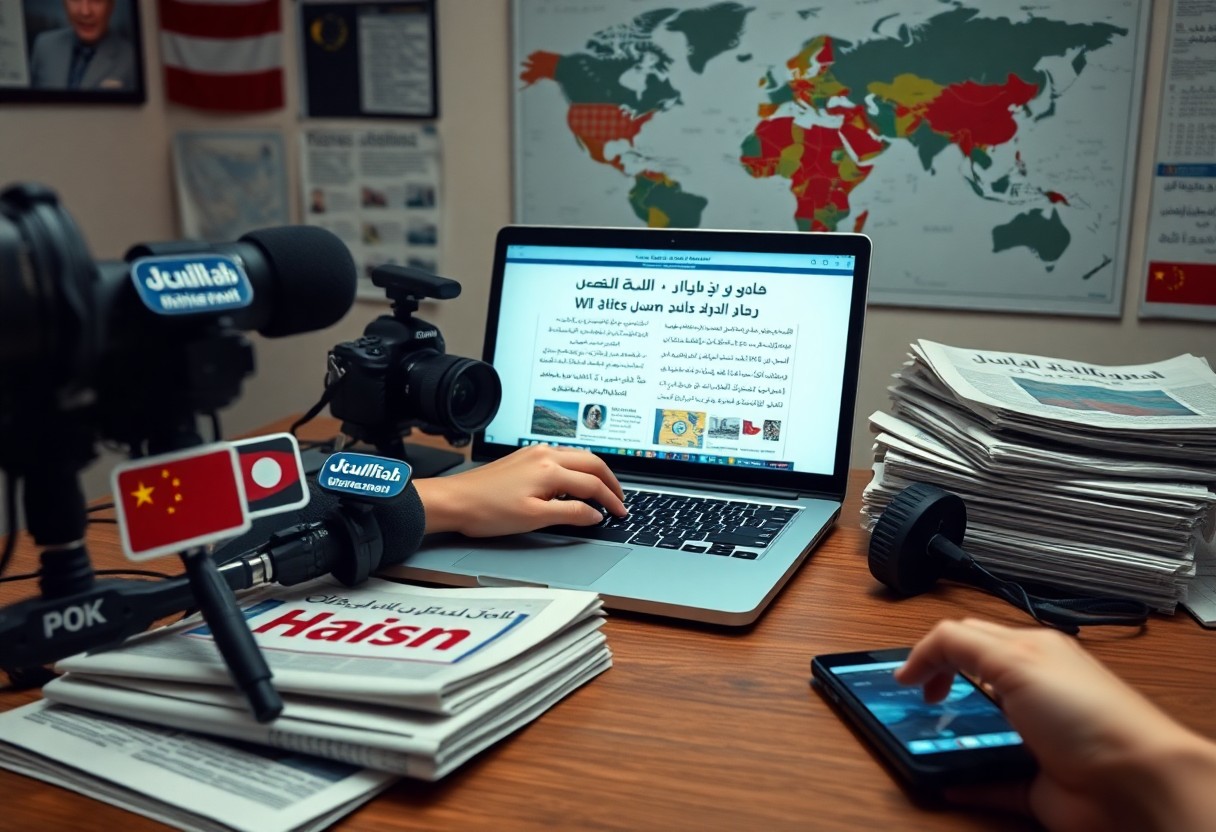
How Cultural Identity Influences Modern Journalism
Journalism shapes how stories are told, and your cultural identity influences how you interpret them. Your background affects which voices you amplify, how you frame events, and what you consider newsworthy. As global perspectives merge in newsrooms, your awareness of cultural context becomes central to fair, accurate reporting in today’s interconnected world.
The Ghost in the Machine
Every journalist carries an unseen weight-their cultural identity-woven into the way stories are framed and told. You don’t report from a vacuum; your upbringing, language, and traditions shape what you see as important, even when you aim for objectivity. That silent presence, the ghost in the machine, is always at work beneath the surface of the text.
Inherited perspectives on the page
Your worldview didn’t emerge from nowhere. The values passed down through family, community, and national narratives subtly influence how you interpret events. Even when writing in a neutral tone, inherited assumptions about power, morality, and truth color the narrative in ways you may not immediately recognize.
The fallacy of the neutral eye
You’ve been taught to strive for impartiality, but true neutrality is a myth. Every editorial choice-from which sources to quote to which details to highlight-bears the imprint of cultural conditioning. Pretending otherwise doesn’t erase bias; it only makes it invisible, and therefore more dangerous.
Consider how a reporter raised in a collectivist society might emphasize community impact over individual rights in a crime story, while another from an individualist background centers the accused’s personal journey. These aren’t flaws-they’re reflections of deeper cultural logics. Recognizing this doesn’t weaken journalism; it strengthens your honesty about where stories truly begin.
The Syntax of Belonging
Language carries more than meaning-it holds identity. The way you structure a sentence, the rhythm of your phrasing, even the silence between words often reflects where you come from. In journalism, these subtle linguistic patterns shape how stories resonate with different audiences, revealing a deeper connection between voice and cultural rootedness.
Cultural idioms in breaking news
You notice it in the phrasing after a crisis-a metaphor drawn from folklore, a proverb slipped into a quote. These idioms aren’t just color; they anchor events in shared experience. When reporters use familiar expressions, they make distant tragedies feel immediate, translating chaos into terms your community already understands.
How heritage shapes the scoop
Your background influences what you see as newsworthy. A story about a local festival might seem minor to some, but to you, it signals cultural continuity. Journalists often spot significance in moments others overlook, guided by the values, memories, and histories they carry from their communities.
Heritage informs not only what you cover but how deeply you dig. You might pursue a lead about a neighborhood dispute because you recognize the underlying tensions from your own upbringing. This lived context gives your reporting texture and authenticity, allowing you to ask better questions and uncover layers that outsiders might miss. Your roots become a lens, sharpening your instinct for truth.
The Localized Truth
Truth often wears different faces depending on where you stand. You understand that journalistic narratives shift when filtered through cultural lenses, shaping what communities accept as fact. Local values, histories, and shared experiences inform how stories are told and received. This isn’t fragmentation-it’s authenticity in motion.
Community bonds as journalistic currency
Trust grows from familiarity, and you know credibility in reporting stems from shared identity. When journalists emerge from the communities they cover, their work carries an implicit authenticity. You rely on these connections because they signal respect, context, and accountability-qualities no distant correspondent can replicate without time and genuine engagement.
The decline of the universal anchor
One voice no longer speaks for all. You’ve noticed how the era of the singular, authoritative news presenter has faded, replaced by diverse storytellers rooted in specific cultures. This shift reflects a deeper demand for representation, where audiences seek faces and voices that mirror their own realities.
That single anchor once symbolized objectivity, but you now recognize that neutrality was often a mask for homogeneity. As global audiences question who gets to define truth, media institutions can no longer assume authority without cultural legitimacy. You expect journalists to reflect the complexities of identity, not erase them in favor of a false universalism. This evolution isn’t a loss of standards-it’s a recalibration toward honesty.
Power and the Editorial Line
Power shapes every editorial decision, often reflecting whose stories are prioritized and how they’re framed. You operate within institutions where historical biases influence what counts as “news.” Recognizing this helps you challenge inherited norms and make space for voices long excluded from mainstream narratives.
Institutional memory versus lived experience
Tradition often upholds established reporting methods, but your lived experience offers a different kind of truth. When institutional memory dismisses personal context, coverage risks misrepresenting communities. You bring insight that challenges outdated assumptions and deepens journalistic integrity.
Shifting the center of gravity
Centering marginalized perspectives changes the focus of news production. You redefine what’s considered relevant by elevating stories from the edges. This shift doesn’t just diversify content-it transforms how audiences understand power, truth, and belonging in public discourse.
When you place community knowledge at the core of reporting, journalism becomes more accurate and accountable. Mainstream outlets once treated certain cultures as “niche,” but your work proves they are central to the national conversation. By redefining expertise and sourcing beyond press releases, you reshape not only stories but the systems that produce them.
The Virtual Tribe
You belong to communities that exist beyond geography, shaped by shared values, languages, and experiences expressed online. These digital affiliations influence how you consume and interpret news, creating echo chambers that reinforce cultural narratives. Journalists now tailor stories to resonate within these virtual tribes, where identity often matters more than location.
Digital fragments of the self
You present different versions of yourself across platforms, each curated to fit specific audiences. These digital fragments shape how you engage with journalistic content, often aligning with the cultural tone of the space you’re in. News no longer speaks to a unified identity but to the layered personas you perform daily.
Global stories through narrow windows
You access international events through feeds filtered by algorithms trained on your behavior. These narrow windows determine which global crises gain your attention and which remain invisible. What you see is not the world, but a reflection of your digital habits and cultural positioning.
Your understanding of distant conflicts or cultural movements often comes through a single viral post or a trending hashtag, stripped of context. These snapshots may spark awareness, but they risk reducing complex realities to emotional soundbites. Journalists face the challenge of breaking through these narrow views without reinforcing them, offering depth where algorithms prioritize speed and sentiment. You’re exposed to more stories than ever, yet your perspective remains tightly framed by design.
Final Words
So your cultural identity shapes how you interpret news, what stories you prioritize, and how you engage with audiences. Modern journalism reflects diverse worldviews, and your background informs both the questions you ask and the truths you reveal. Recognizing this influence strengthens credibility and deepens public trust in an era of global connectivity.