

Music Industry Trends – What’s Next for Artists and Fans?
Trends in the music industry are continually evolving, shaping the connection between artists and their fans. As you navigate this ever-changing landscape, you’ll discover new ways to experience music and engage with your favorite musicians. Innovations in technology, shifts in listener behavior, and emerging platforms are redefining how you access and enjoy music. This post will guide you through the latest trends and what you can expect in the near future, ensuring you stay informed and connected in this dynamic environment.
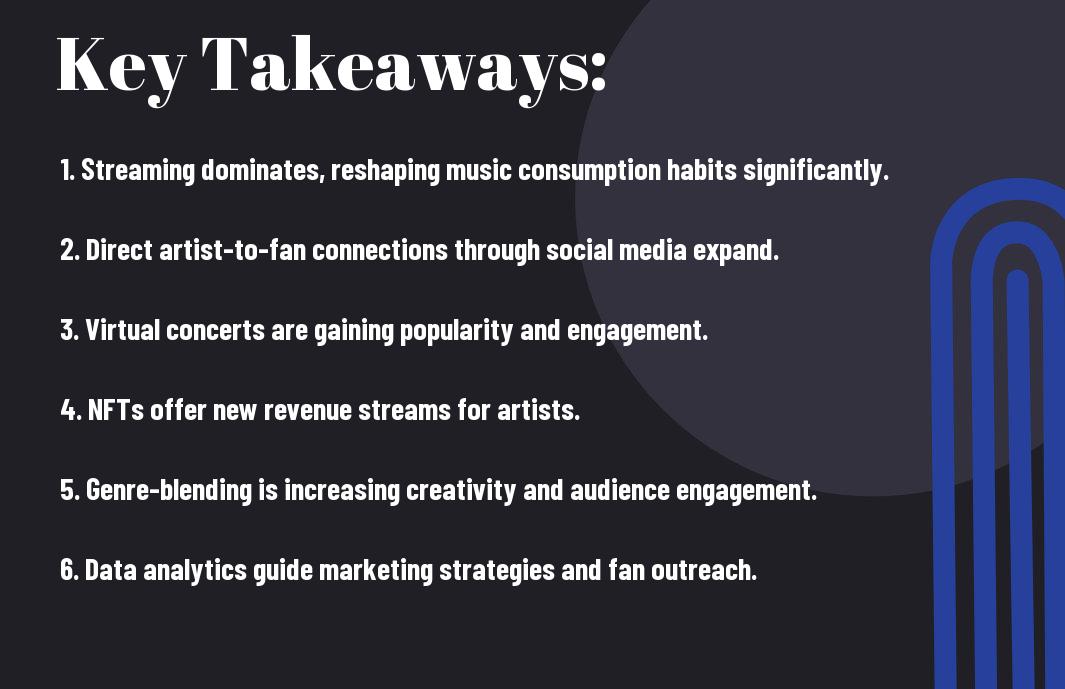
The Rise of Streaming Services
Before the advent of streaming, the music industry was dominated by physical sales and downloads. Today, streaming services have transformed how you access and enjoy music, giving you vast libraries at your fingertips. The convenience and affordability of platforms like Spotify, Apple Music, and Amazon Music have reshaped your listening habits and interaction with artists.
Impact on Music Consumption
With the rise of streaming, the way you consume music has dramatically changed. You can now explore diverse genres, discover emerging artists, and create personalized playlists effortlessly. This shift has not only increased accessibility for you but also fostered a more exploratory approach to music, allowing you to broaden your horizons like never before.
Subscription Models and Artist Revenue
Rise in streaming has led to a variety of subscription models that provide you with different levels of service. These models can impact artist revenue significantly. While you may enjoy unlimited access for a low monthly fee, many emerging artists struggle to earn enough from these platforms to sustain their careers.
Even though subscription models give you affordable access to music, they can complicate how artists earn a living. With payouts often based on streams rather than sales, many musicians receive only a fraction of a cent per play. This has sparked a debate on fair compensation in the streaming era, prompting artists to explore additional revenue streams like merchandise sales, live shows, and crowdfunding to supplement their incomes. As a listener, your choices can influence which artists thrive in this new economy.

The Role of Social Media
You play a significant role in shaping the music industry landscape through social media. Platforms like Instagram, TikTok, and Twitter have become vital tools for artists to connect with fans, share their work, and market their music. The ability to engage directly with your audience not only builds loyalty but also creates opportunities for collaboration and exposure, allowing you to navigate the ever-evolving world of music more adeptly.
Engaging Fans and Building Communities
Before venturing into your next project, consider how you can engage fans effectively. Social media allows you to create communities around your music, fostering loyal followings. By sharing behind-the-scenes content, asking for fan input, and facilitating discussions, you strengthen your connection with your audience and humanize your brand, making your music more relatable.
Viral Trends and Their Influence on Releases
Above all, keeping an eye on trends can dictate how you approach your releases. Watching what goes viral can inform your marketing strategies and inspire your artistic decisions, enhancing your visibility in a saturated market.
Engaging with viral trends is vital for ensuring your release resonates with current consumer sentiments. Capitalizing on popular challenges, memes, or sounds on platforms like TikTok can significantly amplify your reach, introducing your music to new audiences. By integrating trendy elements into your releases or promotional materials, you position yourself strategically within the music landscape, making your work not only more relatable but also more shareable, which can greatly enhance your career trajectory.
The Evolution of Live Performances
Despite the challenges faced by the music industry, live performances continue to adapt and transform. Artists are now exploring innovative ways to engage their audiences, merging technology with creativity to create unforgettable experiences. With the rise of digital platforms and changing consumer preferences, the future of live music promises to be more diverse and accessible, offering something for everyone. As an artist or fan, embracing these changes means participating in a vibrant and evolving landscape of music entertainment.
Hybrid Concert Experiences
Hybrid concert experiences blend in-person attendance with virtual participation, allowing fans from around the world to connect with artists and each other. By attending concerts both physically and online, you can enjoy a unique experience tailored to your preferences, making live music more inclusive than ever. This format enables artists to reach a broader audience while offering fans the flexibility to engage with their favorite performers in whichever way suits them best.
Virtual Reality and Augmented Reality in Live Music
Virtual reality and augmented reality in live music are revolutionizing how you experience performances, providing immersive opportunities that were once unimaginable. These technologies allow you to step into the moment, whether by attending a concert from your living room or exploring an artist’s world like never before, creating a sense of connection and presence that enhances your enjoyment.
Indeed, virtual reality (VR) and augmented reality (AR) are rapidly gaining traction in the live music scene, transforming traditional concert formats. Imagine donning a VR headset and being transported to the front row of a sold-out show, complete with interactive visuals and immersive soundscapes that make you feel like you’re right there. On the other hand, AR allows you to engage with live performances through your smartphone, enhancing the visual experience with digital layers. This combination not only enriches your connection to music but also creates new revenue streams for artists and venues alike, paving the way for the future of live entertainment.

Changes in Genre Popularity
Your understanding of music trends is vital as genre popularity shifts rapidly in today’s landscape. With the rise of digital platforms and social media, niche genres can gain significant traction, allowing diverse sounds to break into mainstream awareness. This evolving environment means artists must not only stay true to their unique styles but also remain adaptable to stay relevant in a highly competitive market.
Emerging Genres and Sounds
Above the traditional genres that have defined music for decades, you can observe the rise of emerging sounds that blend styles and challenge existing boundaries. Genres such as lo-fi, bedroom pop, and even hyperpop are taking center stage, appealing to younger audiences who seek fresh and innovative music experiences. As these genres continue to gain popularity, they provide artists numerous opportunities for creative expression and connection with fans.
Cultural Influences on Music Trends
Before you examine the music scene, it’s important to consider how cultural influences shape trends. Music often reflects social movements, technological advancements, and generational shifts, making it a mirror of society. Artists are increasingly drawing inspiration from various cultural backgrounds, incorporating diverse elements that resonate with widespread audiences, ultimately creating a rich tapestry of sounds.
Due to globalization and increased connectivity, you will notice how cultural influences are more pronounced than ever in today’s music. The blending of traditional sounds with modern production techniques allows artists to explore new narratives and themes that reflect a more inclusive and diverse world. This crossover not only enriches the music landscape but also encourages collaboration between artists from different backgrounds, resulting in a more vibrant and innovative industry. As a listener, you are part of this evolution, supporting creative expressions that truly represent the global stage.
The Shift Toward Independent Artists
Once again, the music industry is witnessing a seismic shift as artists increasingly embrace independence. This trend is driven by the growing access to technology and platforms that empower you to create, distribute, and market your music without the need for traditional music labels. As you harness these resources, the boundaries of artistic expression continue to expand, enabling you to connect directly with your fans like never before.
DIY Music Production and Distribution
Music production has become more accessible than ever, allowing you to record and distribute your work from the comfort of your home. With affordable software and online distribution channels, you have the power to produce professional-quality music and share it widely, engaging your audience on your terms.
The Role of Music Labels in the Modern Era
Behind the scenes, music labels are adapting to a landscape where independent artists are thriving. While they once held a firm grip on the industry, many labels now focus on providing targeted services rather than controlling the entire process.
Even so, music labels can still play a significant role in your career by offering resources such as marketing support, funding, and industry connections. In this evolving environment, you may find that partnering with a label can provide strategic advantages, but the power ultimately lies in your hands as an independent artist, allowing you to choose how and when to collaborate.
Future Technologies in Music
Not only is technology reshaping how you experience music, but it is also transforming the creation and distribution processes. Innovations in artificial intelligence, blockchain, and virtual reality are paving the way for new opportunities for both artists and fans, ultimately redefining the music landscape as you know it.
Artificial Intelligence and Music Creation
Across the music industry, artificial intelligence is making waves by assisting artists in composing and producing music. AI algorithms can analyze your musical preferences and even generate new melodies, allowing for more personalized listening experiences. With this technology, you might soon encounter collaborative works between AI and musicians, pushing creative boundaries further than ever before.
Blockchain and the Future of Copyright
With blockchain technology, the future of music copyright is becoming more transparent and reliable. By securely recording ownership and rights to music, you can ensure that artists receive fair compensation for their work, eliminating some of the traditional intermediaries in the process.
At the heart of blockchain’s potential are smart contracts, which execute automatic payments to artists every time their music is streamed or purchased. As an emerging artist or a devoted fan, you can benefit from a more equitable system that accurately tracks royalties, encouraging innovation and creativity in the music industry. With each transaction recorded on an immutable ledger, the risk of copyright infringement is significantly reduced, fostering a safer environment for both creators and consumers.
Conclusion
Drawing together the insights from current trends in the music industry, you can anticipate a landscape increasingly shaped by digital innovation and fan engagement. As artists continue to explore new platforms and formats, your role as a fan will evolve, allowing for deeper connections and personalized experiences. Staying informed about these shifts will empower you to navigate the changes ahead, ensuring that your relationship with music remains vibrant and relevant.